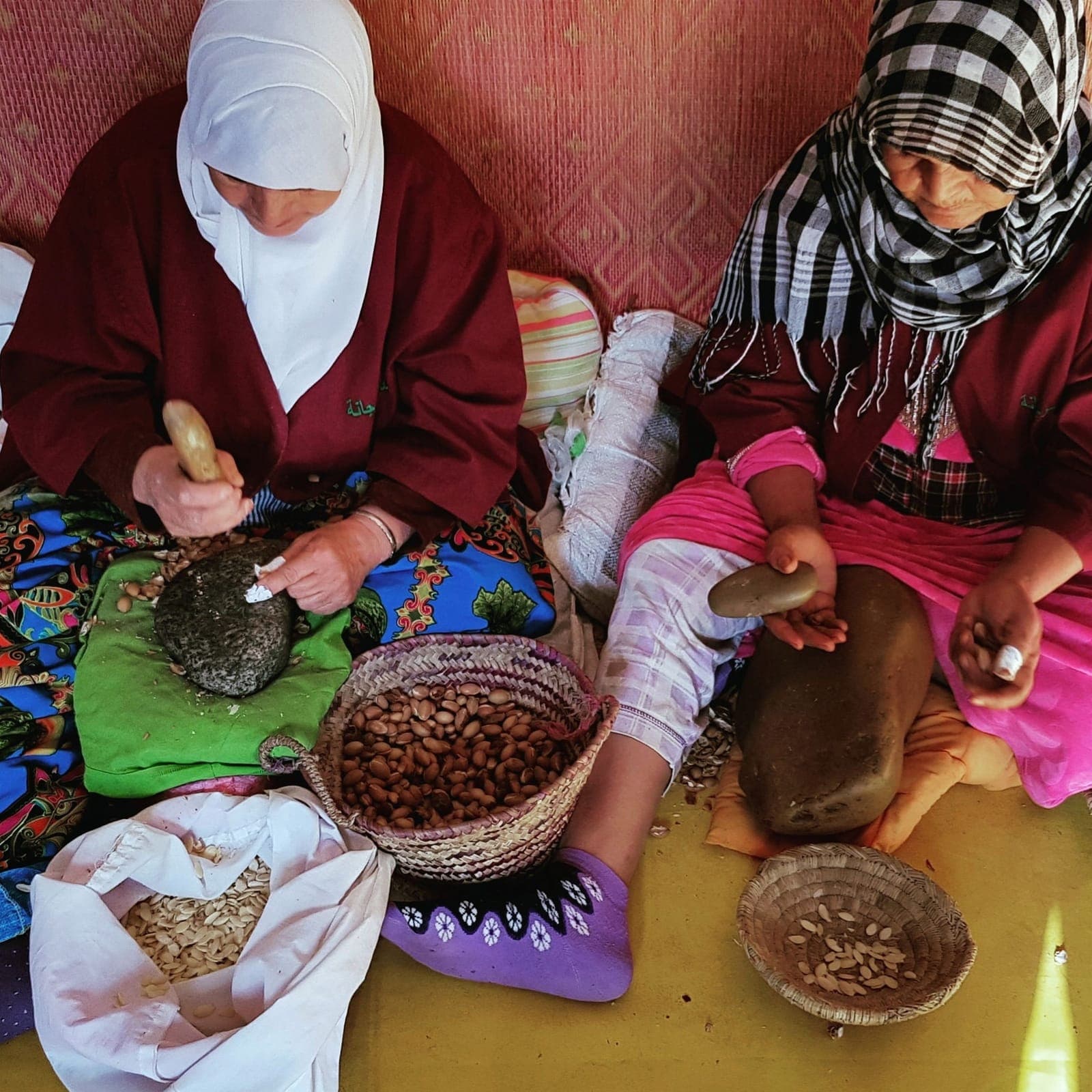
The argan tree grows almost nowhere else on earth. In the Souss Valley behind Agadir you can watch the oil pressed by hand, meet the women's cooperatives, and eat in a Berber home.
A tree that grows almost nowhere else
The argan tree (*Argania spinosa*) is a botanical near-endemic: it grows in commercial quantity in exactly one place on earth — the Souss plain and the slopes of the Anti-Atlas behind Agadir. UNESCO recognised the whole region as a biosphere reserve because of it. The gnarled, thorny trees dot the semi-desert like something out of a fable, and in some villages you'll even see goats standing in the branches to reach the fruit. The oil pressed from the kernels inside that fruit is one of Morocco's signature exports and the backbone of the rural economy here.
Our Souss Valley argan and Berber culture tour is built to show you the real thing, not a roadside show.
How the oil is really made
Argan oil is famously labour-intensive, and seeing the process is what makes the visit worthwhile. At a genuine women's cooperative, you'll watch each stage done by hand: cracking the hard nut between two stones (a skill that takes years to do quickly), roasting the kernels for culinary oil — or leaving them raw for cosmetic oil — grinding them on a stone quern, and slowly kneading the paste to release the oil. A litre of oil takes the better part of a day and around thirty kilos of fruit. The cooperatives matter: they put the income directly into the hands of the Amazigh (Berber) women who do the work.
Best for: cultural travellers, food lovers, ethical shopping, families.
Honey, saffron, and a family lunch
The Souss is more than argan. Many itineraries add a honey village, where beekeepers produce thyme, eucalyptus, and rare euphorbia honeys, and — in season — a look at the small-scale saffron and almond growing that supplements village income. The heart of the day, though, is usually a lunch in a Berber home: tagine cooked over wood, fresh bread, argan oil and *amlou* (the addictive almond-argan-honey spread) to dip it in, and mint tea poured from height.
Making it a bigger trip
Argan and the Souss pair beautifully with the region's other inland days. Add the walled market town of Taroudant, an hour further east, for ramparts and souks; or cool off afterwards in the palm-shaded pools of Paradise Valley north of Agadir. Together they turn a beach holiday into a real encounter with southern Morocco.
Trips that go here
Guided by the team who wrote this guide.
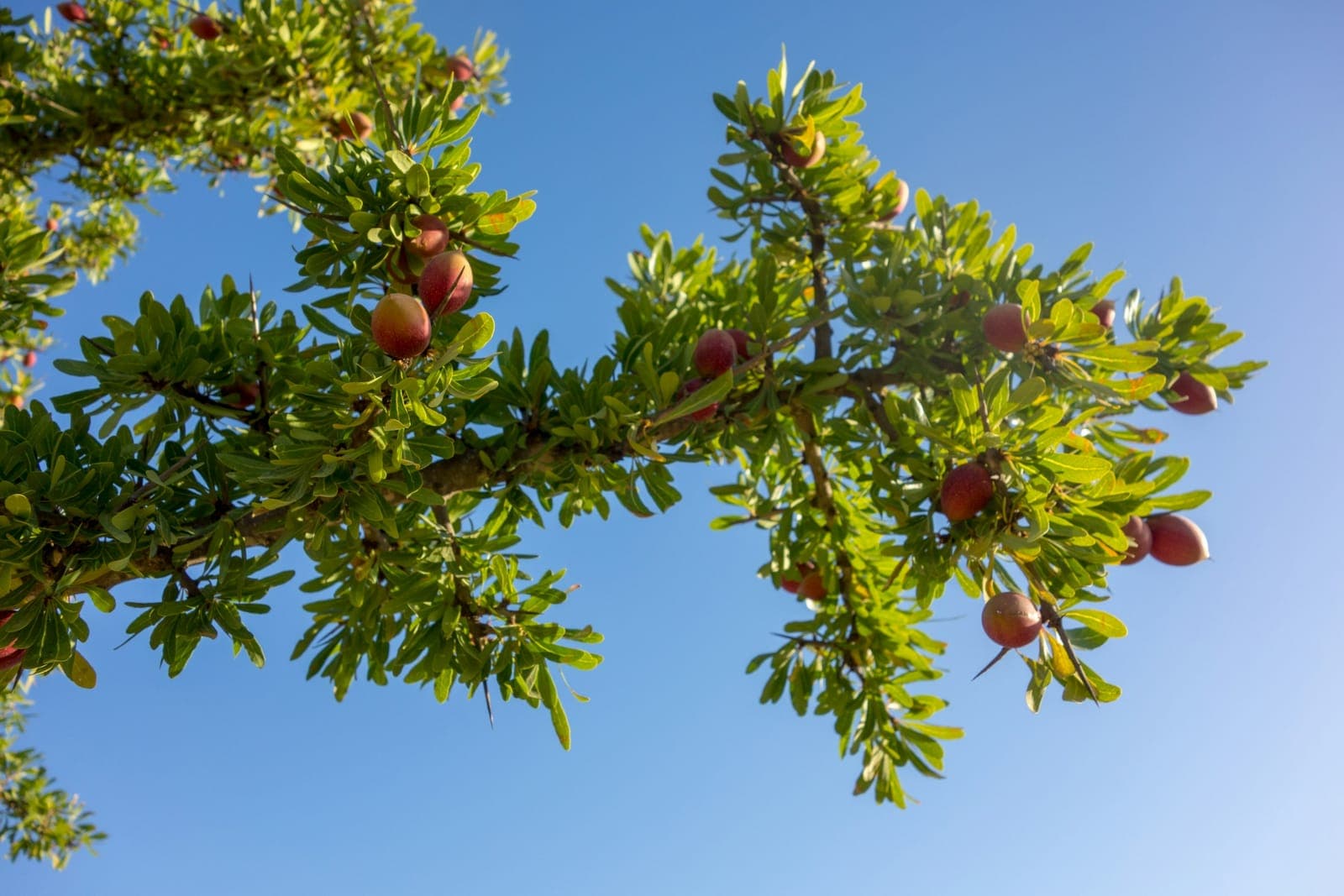
Agadir to Souss Valley — Argan & Berber Culture Tour
- Women-run argan oil cooperative visit and tasting
- Honey village — local beekeeper demonstration
- Traditional Berber family lunch
€26 / person for 6+
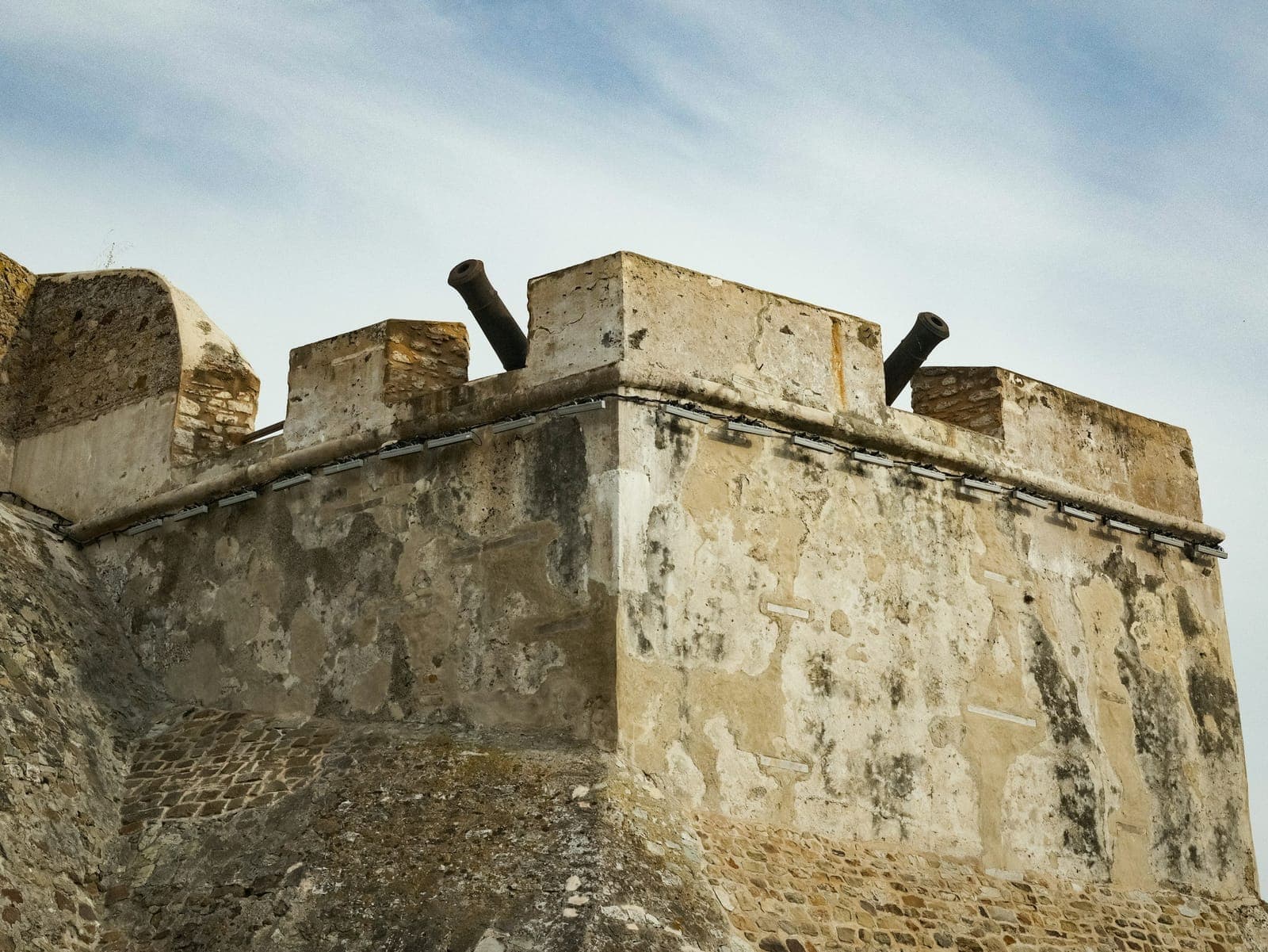
Agadir to Taroudant — Day Trip
- 16th-century ramparts — best preserved in Morocco
- Authentic Berber market and spice souk
- Taroudant tanneries (smaller and less crowded than Fes)
€29 / person for 6+
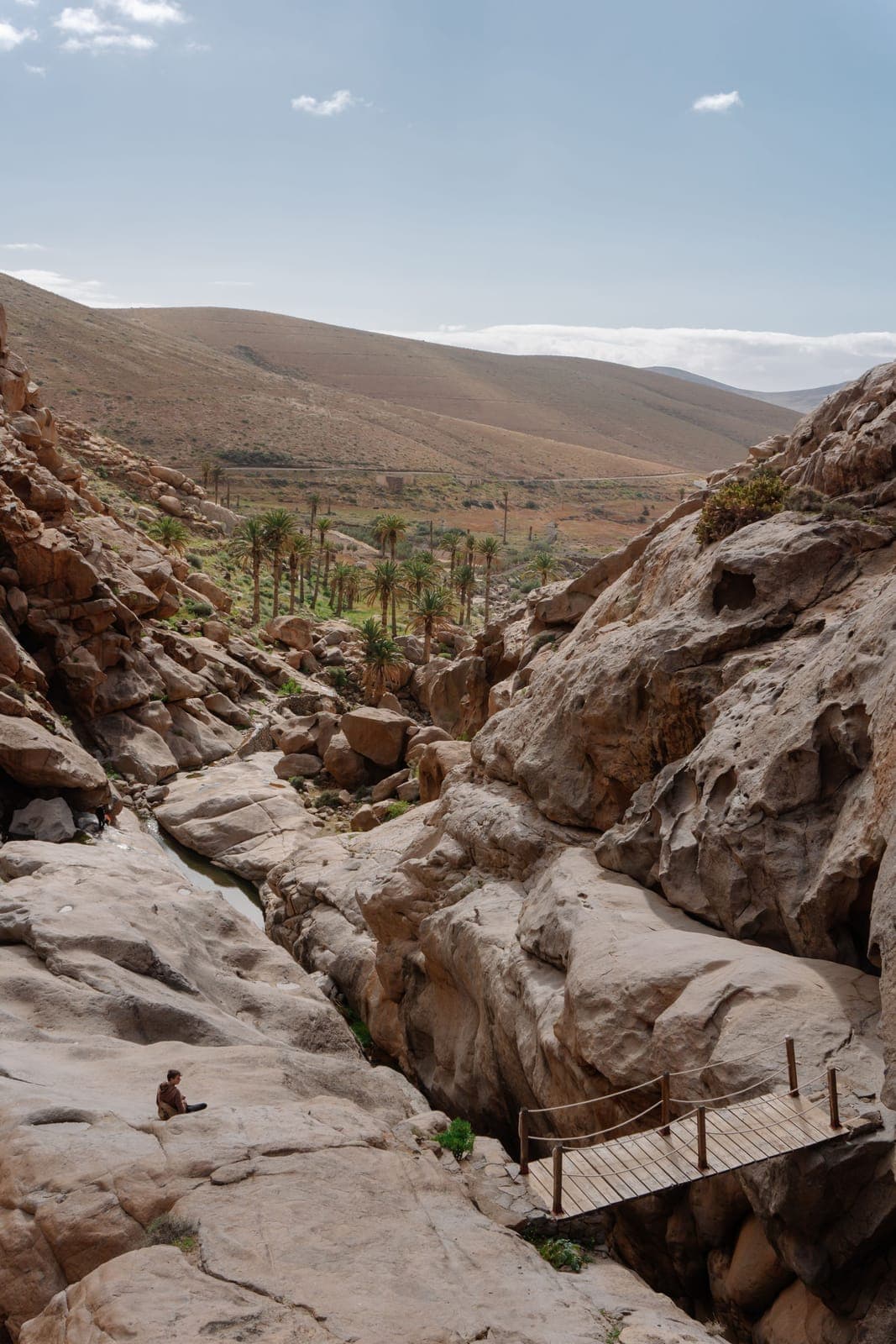
Agadir to Paradise Valley & Immouzer Waterfalls
- Natural swimming pools in a palm gorge
- Hike through dramatic canyon scenery
- Immouzer waterfall (seasonal)
€22 / person for 6+