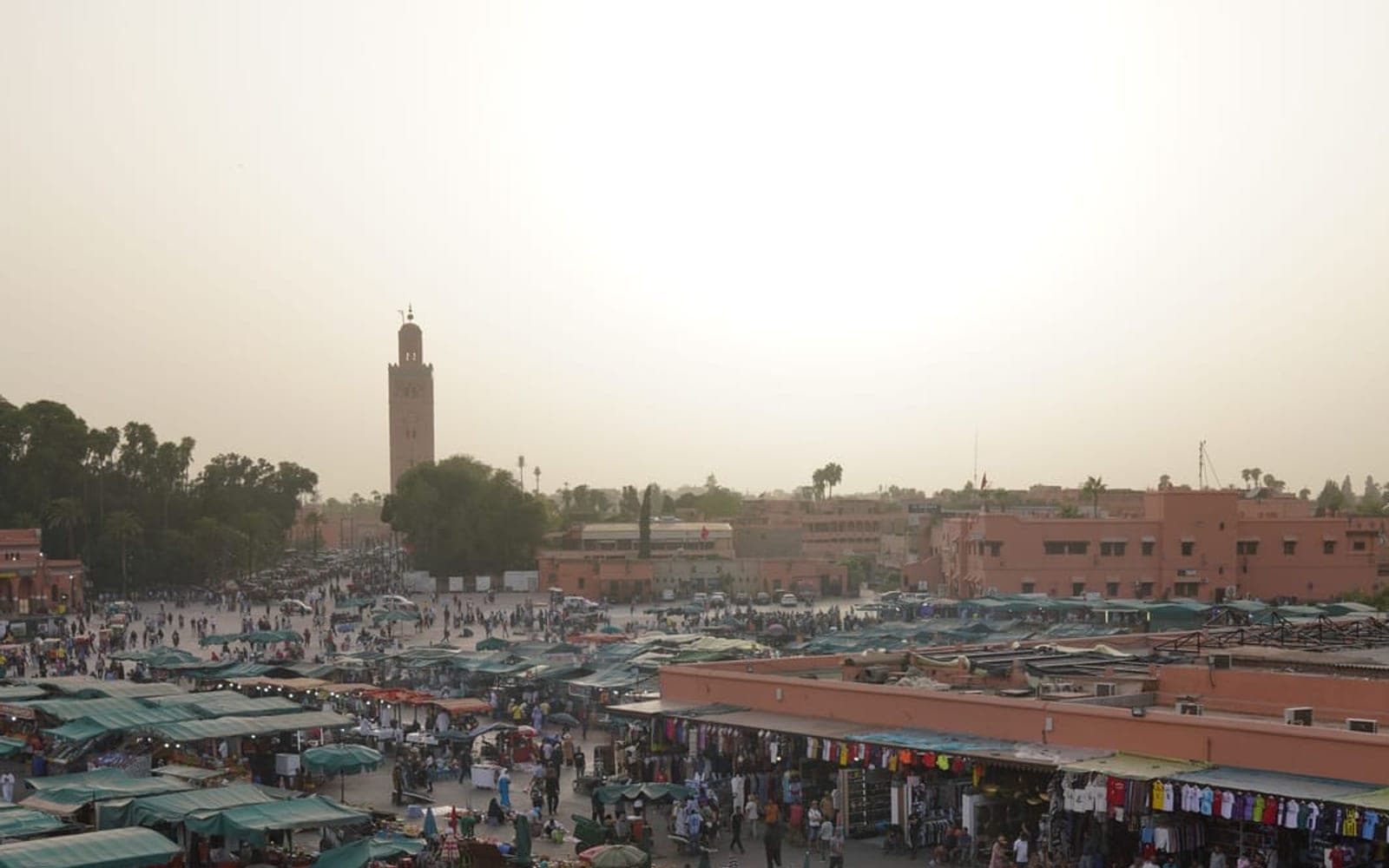
Marrakech to Toubkal Summit — 4-Day Trek
- Summit Jbel Toubkal at 4,167 m — highest peak in North Africa
- Sleep in traditional Berber mountain refuges at 3,207 m
- Start in the trailhead village of Imlil, deep in the Atlas
€260 / person for 6+

Fès-Meknès
The Living Medieval City
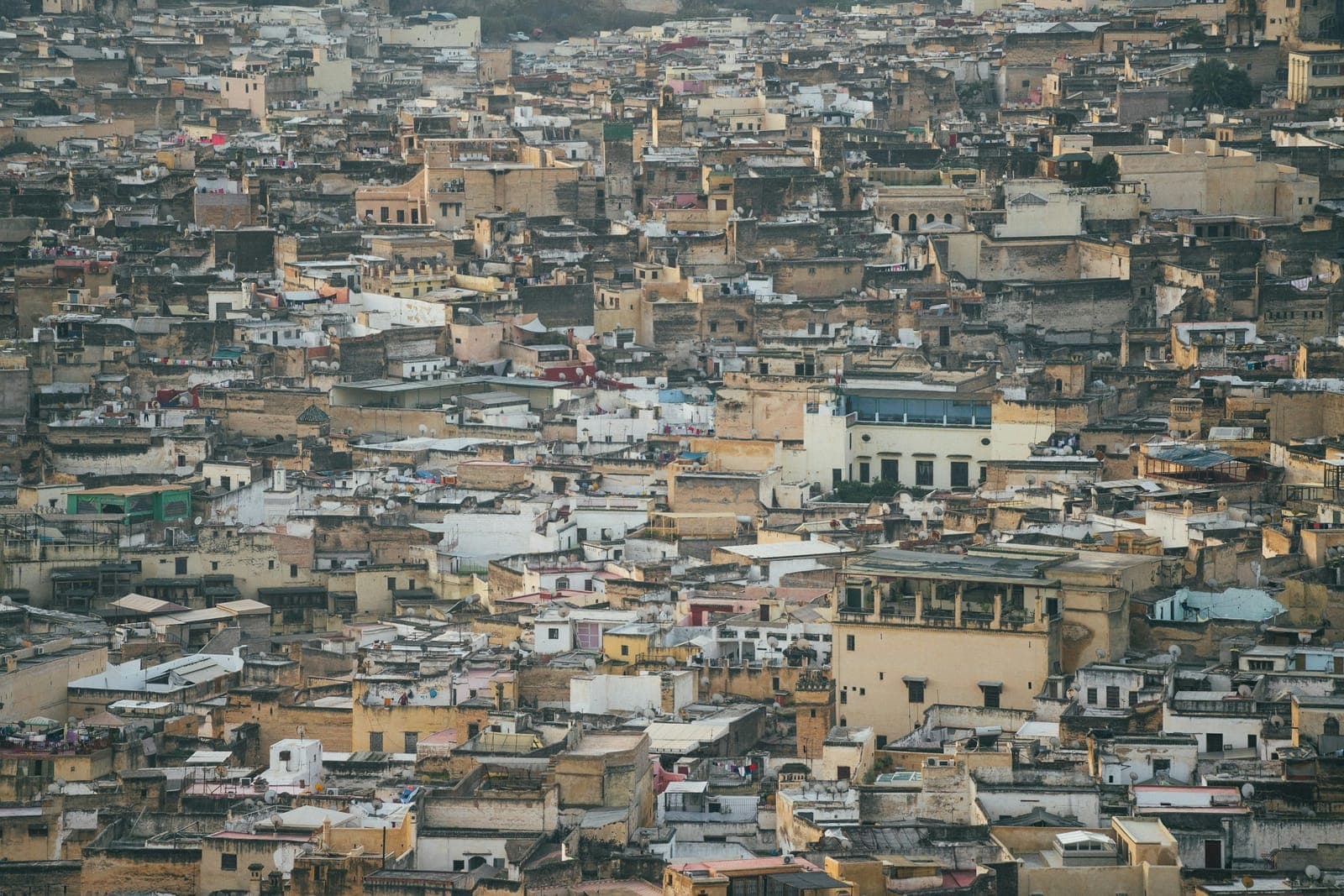
Fes el-Bali is arguably the most remarkable urban survival on earth — a fully functioning medieval city of 156,000 people, covering 256 hectares, that has been continuously inhabited since 789 AD. It is the world's largest car-free urban area. Every street in its 9,400-alley labyrinth carries goods by hand or by mule. The same crafts have been produced in the same workshops for a thousand years: leather tanning, ceramic glazing, brass inlaying, zellige tilework. The city was founded by Moulay Idriss I and expanded under the Marinid dynasty into the great seat of Islamic learning it remains today.
The most photographed sight in Morocco after the Sahara. Stone vats filled with dye (saffron, poppy, henna, indigo) where leather workers stand knee-deep, processing hides in exactly the same way as 800 years ago. Best viewed from the leather shop terraces overlooking the pits.
Founded in 859 AD by a woman (Fatima al-Fihri), al-Qarawiyyin is recognised by UNESCO as the world's oldest continuously operating university. Non-Muslims cannot enter the mosque, but the courtyard glimpsed through the carved doorways is one of Morocco's great architectural sights.
Unlike Marrakech's medina, Fes is genuinely labyrinthine — even experienced guides use landmarks rather than mental maps. Getting slightly lost is the best way to find the real Fes: tiny bakeries, carpet weavers, neighbourhood mosques, and small squares where old men play cards.
The Jewish quarter of old Fes, once home to one of North Africa's most important Jewish communities, contains magnificent mid-20th century architecture, a restored synagogue, and the city's best views from its elevated terraces and cemetery.
March–May: pleasant temperatures (18–26°C), long evenings, green surroundings.
June–August: very hot (35–40°C). The medina becomes oppressive. Morning-only visits recommended.
September–November: perfect climate, harvest season, Fes Festival of Sacred Music (November).
December–February: cool and occasionally rainy. The tanneries are less busy and more accessible.
Our certified local guides are available for private and small-group tours year-round.
Plan My TripChat on WhatsAppGuided Adventures
€260 / person for 6+

€230 / person for 6+

€26 / person for 6+

€22 / person for 6+

€56 / person for 6+

€31 / person for 6+
Chefchaouen is Morocco's most photogenic town — a labyrinth of blue-washed alleyways tucked into the Rif Mountains. Here is everything you need to know before you visit.
8 min readMoroccan cuisine is one of the most complex and aromatic in the world — built on centuries of Berber, Arab, Andalusian, and Jewish influence. Here are the 15 dishes that define it.
9 min readDjemaa el-Fna, the souks, the palaces, the hammams — Marrakech's medina is one of the most intense and rewarding urban experiences on earth. Here is how to navigate it without getting lost, ripped off, or overwhelmed.
9 min readFes el-Bali is the most complete surviving medieval city on earth — a UNESCO World Heritage labyrinth of 9,400 alleyways, 785 mosques, and a tannery unchanged since the 12th century. Here is how to do it justice.