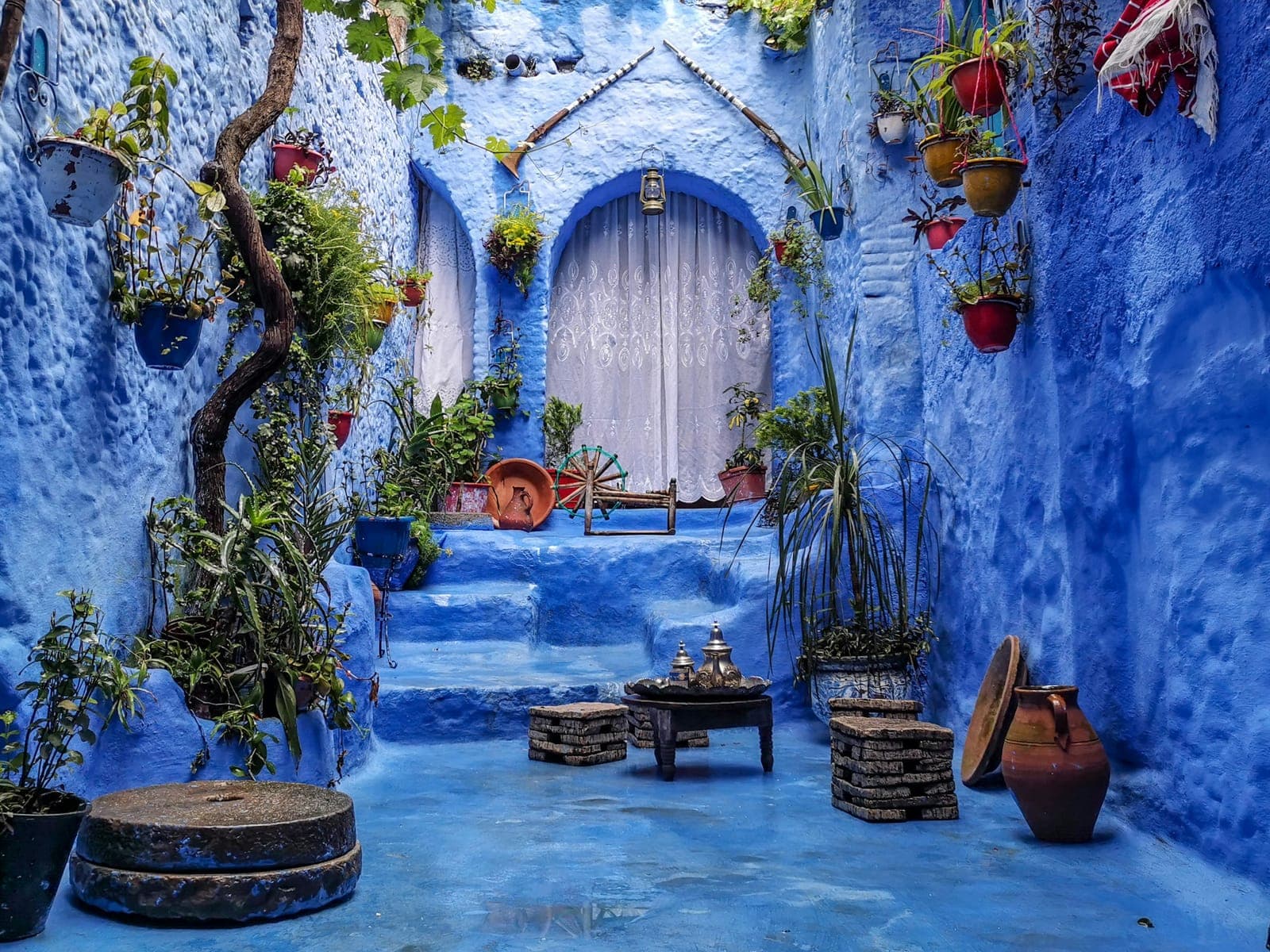
Chefchaouen is Morocco's most photogenic town — a labyrinth of blue-washed alleyways tucked into the Rif Mountains. Here is everything you need to know before you visit.
Why Is Chefchaouen Blue?
The blue walls of Chefchaouen have sparked more debate than almost any other question in Moroccan travel. The most accepted explanation: the town's significant Jewish population in the 15th–20th centuries painted their homes blue to represent the sky and heaven, a tradition with deep roots in Jewish culture across the Mediterranean. After the Jewish community largely emigrated to Israel in the 1950s, the remaining population maintained and expanded the tradition — partly for aesthetic reasons, partly because it became central to the town's identity.
Today, every shade of blue appears on Chefchaouen's walls: cobalt, cerulean, cornflower, periwinkle, and every blue-grey in between. The effect at dawn, when the medina is quiet and the light is soft, is genuinely beautiful.
A City Founded to Keep People Out
The blue is the famous part, but the town's origin story explains why it feels so different in character from Marrakech or Fes. Chefchaouen was founded in 1471 by Moulay Ali Ben Rachid, a local leader who built it explicitly as a military base from which to resist the Portuguese, who had seized the coastal city of Ceuta decades earlier. What began as a small hilltop fortress — the kasbah still standing on Uta el-Hammam Square today — grew rapidly after 1492, when the fall of Granada sent waves of Muslim and Jewish refugees fleeing Spain, many of them settling here and bringing genuinely Andalusian building traditions with them: the narrow, twisting alleys and inward-facing courtyard houses that still define the medina.
What is less widely known is how deliberately closed the town stayed afterward. For roughly 450 years, non-Muslim foreigners — Christians in particular — were effectively barred from entering Chefchaouen, a policy that held until the Spanish occupation of the region began around 1920. That long isolation is part of why the town's character and its Andalusian-refugee cultural imprint stayed so distinct and so intact; unlike the imperial cities, which were always crossroads, Chefchaouen spent centuries being somewhere outsiders simply could not go.
Getting There
From Fes (3–3.5 hours): The most common approach from the east. Regular CTM buses and shared taxis.
From Tangier (2.5 hours): If you're arriving by ferry from Spain, Chefchaouen is a natural first stop.
From Marrakech (6–7 hours): Long but doable as an overnight bus journey or a fly-drive using the Fes hub. Because the drive is the hard part, most travellers coming from the south fold it into a longer trip: our 4-day Marrakech to Chefchaouen tour breaks the journey with a night in Fes rather than doing it in one sitting, and there is a 5-day version from Agadir if you are starting further down the coast. What each option actually costs, including the bus and self-drive routes, is broken down in Marrakech to Chefchaouen tour cost.
There is no train to Chefchaouen. The nearest train station is Fes.
The Medina: What to See
Uta el-Hammam Square
The heart of Chefchaouen — a broad, fountain-centred plaza surrounded by café terraces. The 15th-century kasbah on the north side of the square houses a small ethnographic museum and a beautiful garden courtyard. Worth the 10 MAD entry fee.
The Blue Alleyways
No map required. Getting genuinely lost in the medina is the point. The most photogenic streets are in the upper medina, above the main square — particularly the Rue Sidi Abdelhamid area, where stacked blue pots and draped textiles create impossibly perfect compositions.
Ain Tissimane Spring
The natural spring at the top of the medina, where local women do laundry and residents fill water containers. One of the most authentic corners of the town, often overlooked by tourists focused on the lower medina.
Spanish Mosque
A 15-minute walk above the medina, the former Spanish colonial mosque (now a ruin open to visitors) offers the best panoramic view of Chefchaouen and the Rif Mountains. Go at sunset.
Where to Stay
Chefchaouen's riads are excellent value — you can stay in a beautiful blue-tiled room with mountain views for €30–60 per night. Book in advance in spring and autumn.
Budget: Pension La Castellana (family-run, great rooftop)
Mid-range: Dar Echchaouen or Dar Mounir (both beautiful riads inside the medina)
Splurge: Lina Ryad & Spa (the most luxurious option, with a genuine spa)
Where to Eat
Bab Ssour Restaurant: The terrace overlooking the medina gate is one of the best lunch spots. Traditional Rifi cuisine — harira soup, msemen bread, slow-cooked lamb.
Restaurant Tissekmadin: In the upper medina, often overlooked. Outstanding lamb tagine with prunes and almonds. Local crowd, fair prices.
Aladdin Restaurant: On the main square. Reliable, open late, good for watching the plaza at night.
Day Trips from Chefchaouen
Talassemtane National Park (30 minutes): Cedar and fir forest with hiking trails and the dramatic "God's Bridge" natural arch. Barbary macaques are present.
Akchour Waterfalls (1 hour): A 2.5-hour hike through river gorges leads to a spectacular 100-metre waterfall. One of the finest day hikes in northern Morocco.
Practical Tips
- Visit in spring (April–May) or autumn (September–October) for cool temperatures and good light
- Morning light is everything — the medina before 9:00 am is extraordinary and nearly empty
- Respect photography boundaries — some residents, particularly older women, do not want to be photographed. Always ask.
- Haggle at the market but with humour and patience — Chefchaouen's sellers are generally more relaxed than Marrakech
- Cannabis is prevalent in the Rif region — visitors should be aware that possession, while widely tolerated locally, remains technically illegal in Morocco
Trips that go here
Guided by the team who wrote this guide.
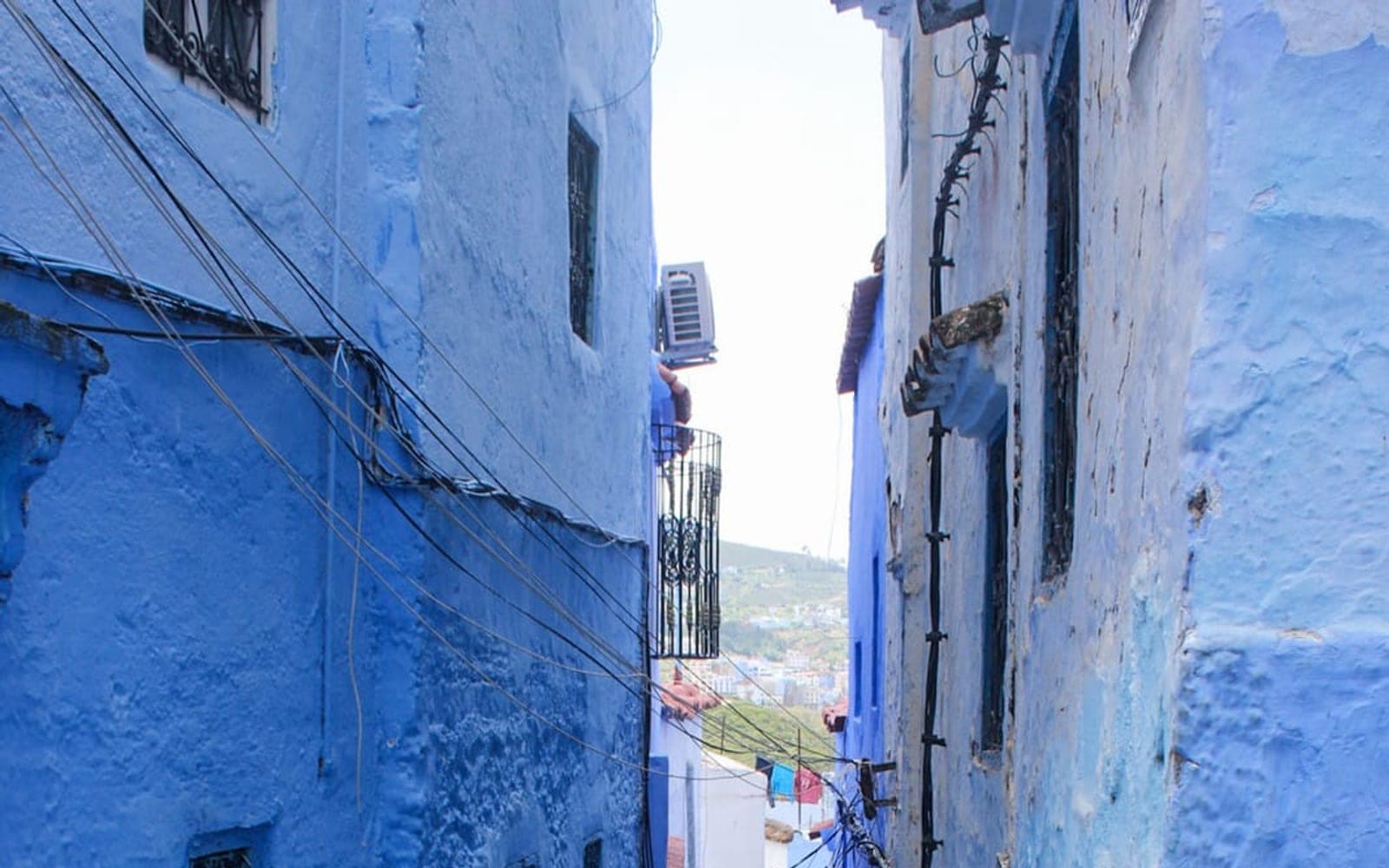
Marrakech to Chefchaouen — 4-Day Blue City Tour
- Chefchaouen — the Blue City of the Rif Mountains
- Fes el-Bali UNESCO medina and Chouara Tanneries
- Cedar Forest of Azrou and wild Barbary macaques
€185 / person for 6+
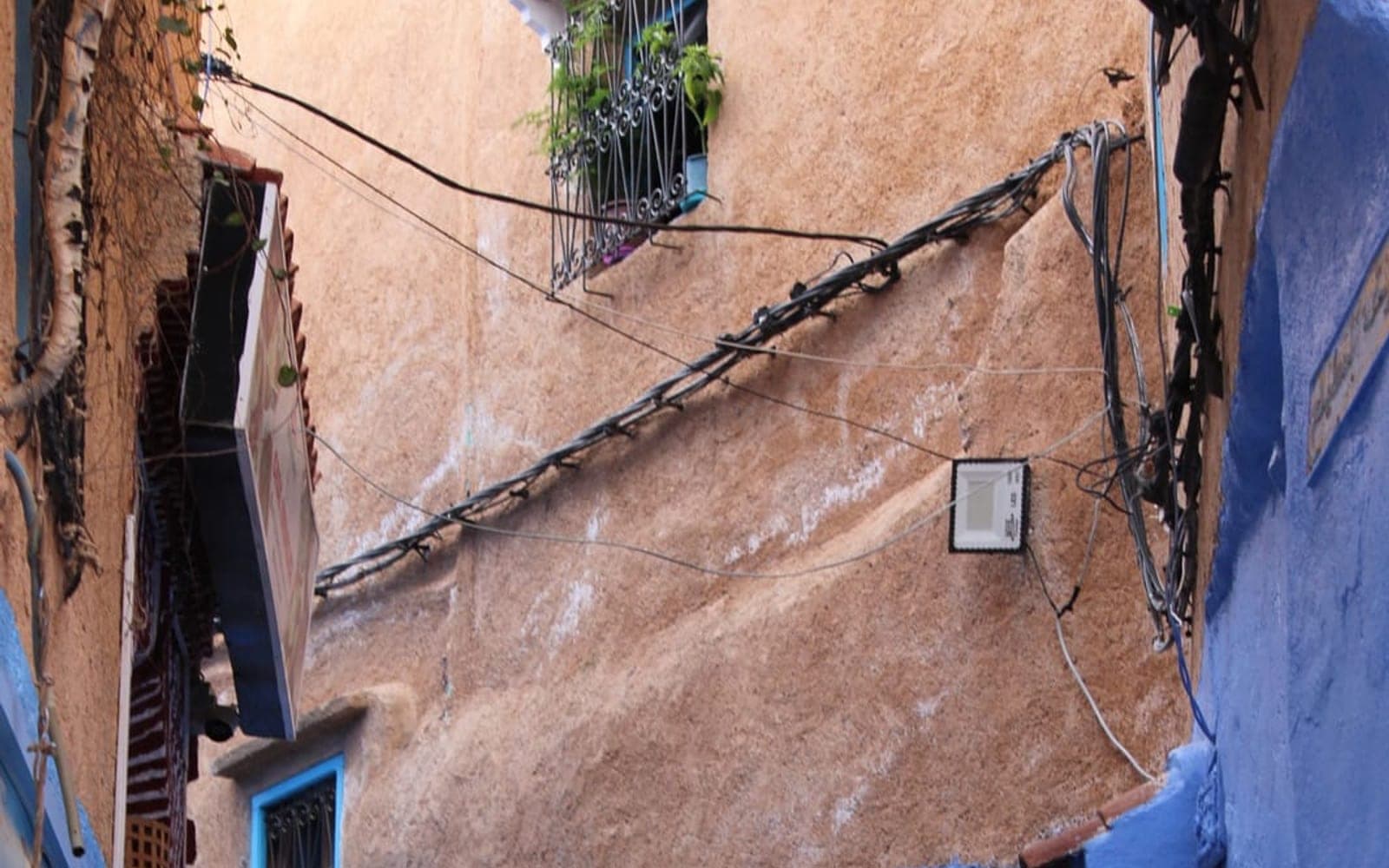
Agadir to Chefchaouen — 5-Day Blue City Tour
- Chefchaouen — the Blue City of the Rif Mountains
- Fes el-Bali UNESCO medina and Chouara Tanneries
- Cedar Forest of Azrou and wild Barbary macaques
€228 / person for 6+