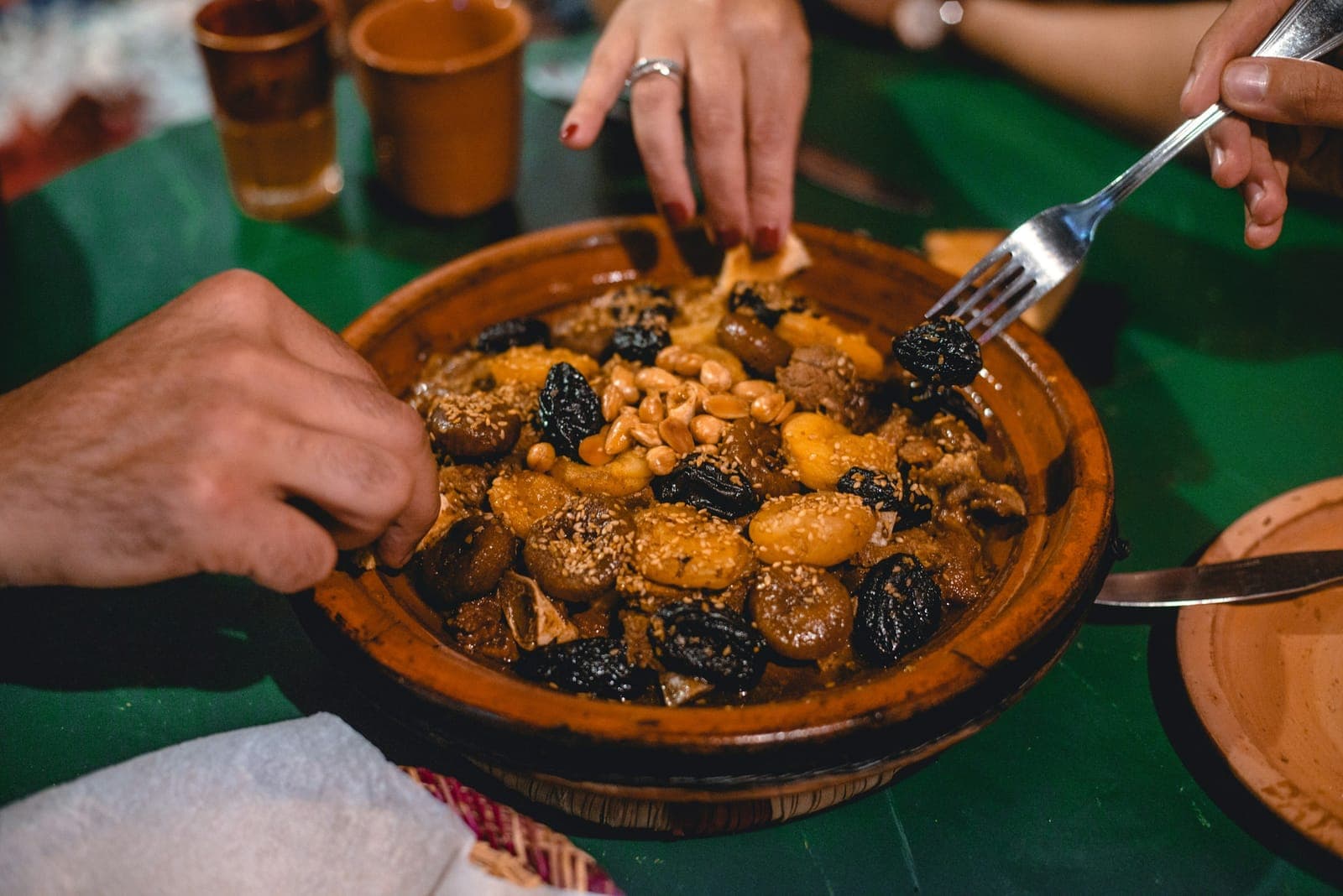
Moroccan cuisine is one of the most complex and aromatic in the world — built on centuries of Berber, Arab, Andalusian, and Jewish influence. Here are the 15 dishes that define it.
Why Moroccan Food Is Extraordinary
Moroccan cuisine is the product of more than a thousand years of layered influence. The Amazigh (Berber) foundation — preserved lemons, olives, argan oil, hand-ground spices — was enriched by Arab spice routes, Andalusian refinement (the Moors expelled from Spain brought their recipes with them), Jewish culinary traditions, Ottoman touches in the north, and French colonial technique in the cities. The result is a cuisine of extraordinary depth and subtlety.
The Essential 15
1. Tagine
Morocco's most famous dish is named after the conical clay pot it's cooked in. The slow-cooking method concentrates flavours over hours, producing extraordinarily tender meat. The most classic combinations:
- Lamb tagine with prunes and almonds — sweet, savoury, and complex
- Chicken tagine with preserved lemon and green olives — the definitive Moroccan flavour
- Kefta tagine — spiced meatballs with eggs in tomato sauce
Where: Every riad restaurant serves tagine. For an exceptional version, seek out a local family restaurant rather than a tourist-facing establishment. Better still, learn to build one yourself — a Marrakech cooking class teaches the layering and the spice base rather than a single recipe.
2. Couscous
By tradition, couscous is the dish of Friday — prepared by hand, steamed over a broth of seven vegetables, and served with slow-cooked lamb or chicken. The Friday couscous at a family home is incomparably better than any restaurant version.
3. Bastilla (Pastilla)
A Fassi speciality and arguably Morocco's most technically complex dish. Thin warqa pastry layered with spiced pigeon (or chicken) cooked with eggs and almonds, then dusted with cinnamon and sugar. The sweet-savoury combination is startling at first and addictive thereafter.
Where: Fes is the home of bastilla. In Marrakech, Dar Yacout and Dar Moha serve reliable versions.
4. Harira
The soup that breaks the Ramadan fast each evening — a thick, warming broth of tomatoes, lentils, chickpeas, lamb, and fragrant herbs. Served with honey-dipped sfenj (doughnuts) or dates during Ramadan; available year-round at soup stalls in every medina.
5. B'ssara
Northern Morocco's breakfast soup — a thick purée of dried broad beans with olive oil, cumin, and paprika. Eaten with crusty bread, it is one of the most comforting and sustaining breakfasts imaginable.
Where: The stalls outside Bab Boujloud in Fes serve the finest b'ssara in Morocco, from dawn.
6. Mechoui
Whole lamb slow-roasted in an underground clay oven for 4–6 hours until the meat falls from the bone. A celebratory dish, traditionally served at weddings and festivals. In Marrakech, the Djemaa el-Fna square has several mechoui stalls that serve it by the kilo.
7. Rfissa
A richly spiced stew of chicken, lentils, and fenugreek served over shredded msemen (flatbread). Traditionally prepared for new mothers to aid recovery, it is one of the most flavourful dishes in Moroccan home cooking.
8. Zaalouk
A smoky aubergine and tomato salad, cooked down with olive oil, garlic, and cumin. Served at room temperature as a starter (kemia). One of the essential flavours of a Moroccan meal.
9. Taktouka
Similar to zaalouk but made with roasted green peppers and tomatoes. Slightly sweet, slightly spicy. Often served alongside zaalouk as part of the opening kemia spread.
10. Msemen and Meloui
Layered, flaky flatbreads — msemen is square and folded, meloui is spiral-shaped. Both are griddle-cooked and served warm with argan oil and honey for breakfast. The single best breakfast in Morocco.
11. Makouda
Deep-fried potato fritters, sold by street vendors in every medina. Crispy outside, fluffy inside, served in a bread roll with harissa. The Moroccan fast food.
12. Seffa
Sweet couscous or vermicelli dusted with cinnamon, icing sugar, and raisins, topped with butter. Served as a dessert or between courses at a traditional feast. An unexpected and wonderful dish.
13. Chebakia
Honey-glazed sesame pastry, shaped into a flower, deep-fried and soaked in orange-blossom-scented honey. The signature sweet of Ramadan, sold in vast quantities in the weeks before the holy month.
14. Argan Oil
Not a dish but an ingredient so central to Moroccan cuisine it deserves its own entry. Cold-pressed from the fruit of the argan tree (found only in southwestern Morocco), culinary argan oil has a distinctive toasted-nut flavour. Poured over couscous, mixed into amlou (a paste of argan oil, almonds, and honey), or served with bread for breakfast.
15. Atay (Moroccan Mint Tea)
Gunpowder green tea brewed strong, poured from a height (to create foam), and served intensely sweet. Offered to guests as a sign of welcome everywhere in Morocco. Refusing it is considered impolite. Accepting three glasses is the norm, and the tradition of three is not arbitrary — it traces to an old Tuareg saying, often quoted across North Africa, that likens the three successive glasses to three stages of life, though which glass gets which meaning varies depending on who is telling it. Practically, there's a simpler reason behind the custom too: the same gunpowder tea leaves keep yielding flavour through repeated infusions, so each of the three glasses actually tastes subtly different as the leaves are steeped again and again, getting progressively lighter and sweeter.
Eating Well in Morocco: Practical Tips
- Eat where locals eat. The best Moroccan food is not in restaurants designed for tourists. Follow the crowds, look for places with no English menus, and trust your nose.
- Lunch is the main meal. Moroccans eat their largest meal at midday. The best-value and most authentic food is available at lunch.
- Vegetarians are well-served — Moroccan vegetable tagines, salads, soups, and breads are excellent. Communicate clearly: "ana nabati" (I am vegetarian).
- Avoid tap water in all cities. Bottled water or filtered water only.
Trips that go here
Guided by the team who wrote this guide.
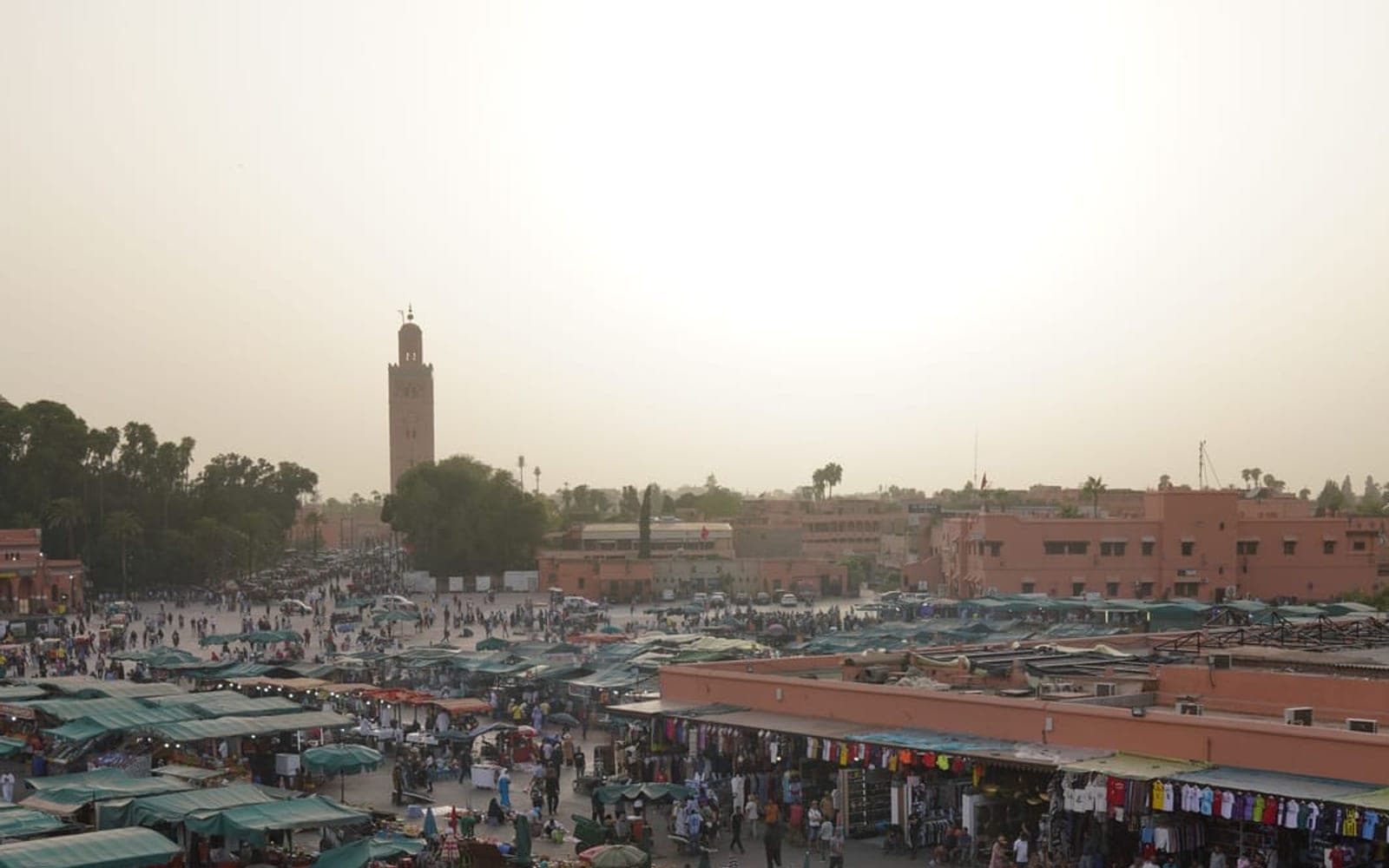
Marrakech Medina — Cultural Tour
- Djemaa El-Fna square at its most vibrant
- Leather tanneries viewed from a private rooftop
- Ben Youssef Madrasa — 16th-century Islamic college
€31 / person for 6+
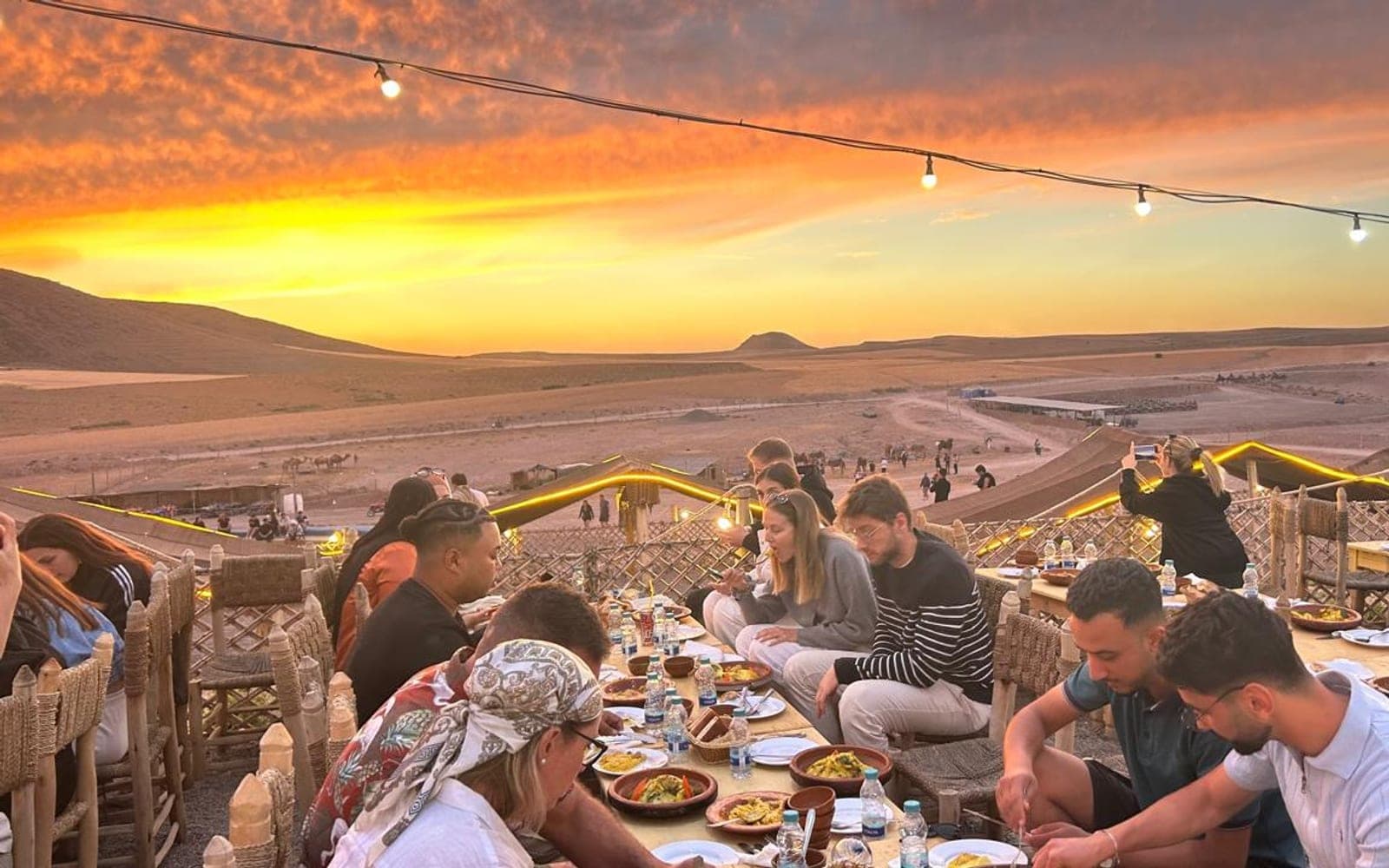
Marrakech to Agafay Desert — Sunset & Dinner
- Quad biking across the Agafay stone desert
- Camel ride to the sunset viewpoint
- Traditional Berber dinner in a desert camp
€56 / person for 6+