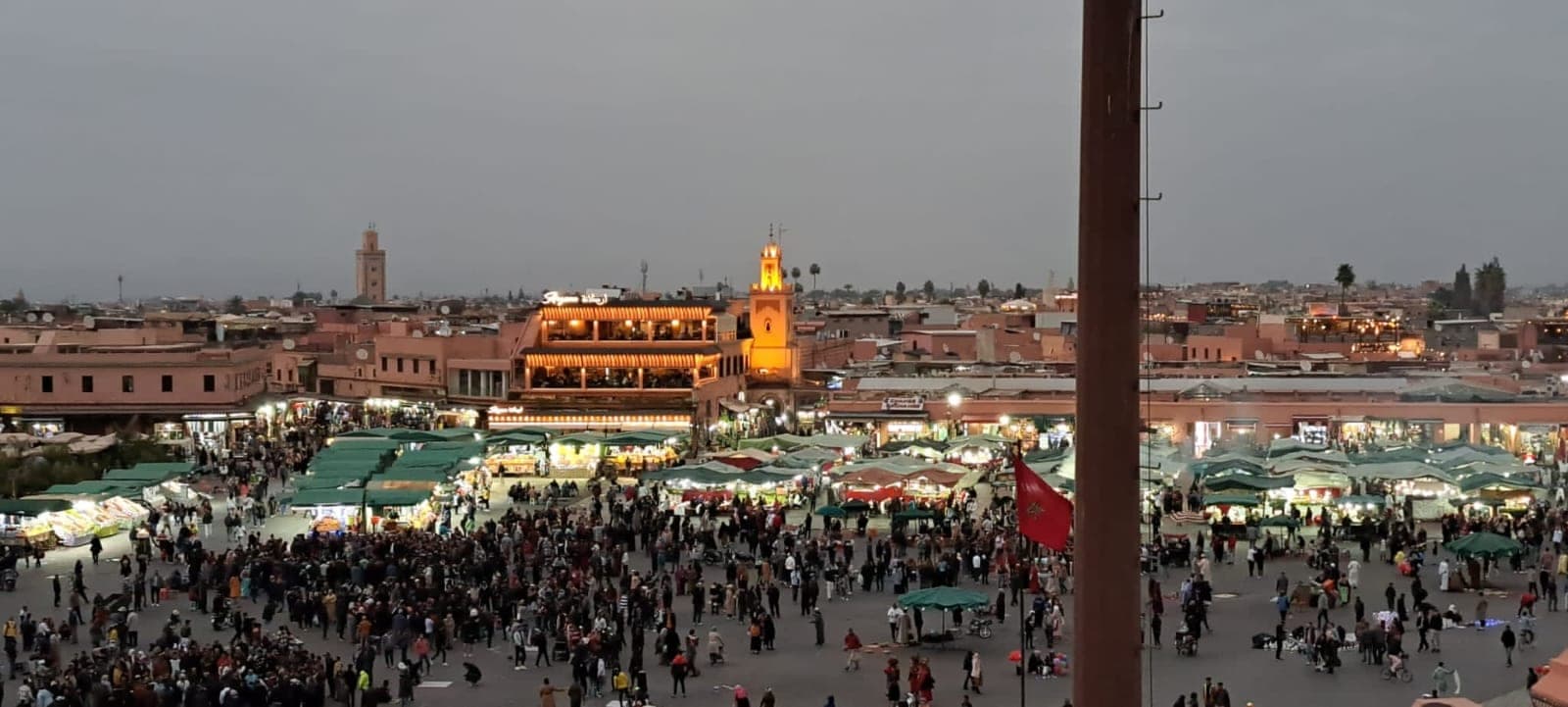
Djemaa el-Fna, the souks, the palaces, the hammams — Marrakech's medina is one of the most intense and rewarding urban experiences on earth. Here is how to navigate it without getting lost, ripped off, or overwhelmed.
The Medina at a Glance
Marrakech's medina (old city) was founded in 1070 by the Almoravid dynasty and has been continuously inhabited for nearly a thousand years. It is a UNESCO World Heritage Site, home to around 200,000 people, and contains some of the most important Islamic architecture in North Africa. It is also intensely commercial, perpetually noisy, and designed — architecturally speaking — to disorient outsiders.
That disorientation is not a bug. The medina's labyrinthine layout was intentional: defensive in origin, neighbourhood-oriented by function, and utterly resistant to the logic of a grid city. Getting lost is part of the experience. The trick is knowing how to get unlost.
Djemaa el-Fna: The World's Greatest Square
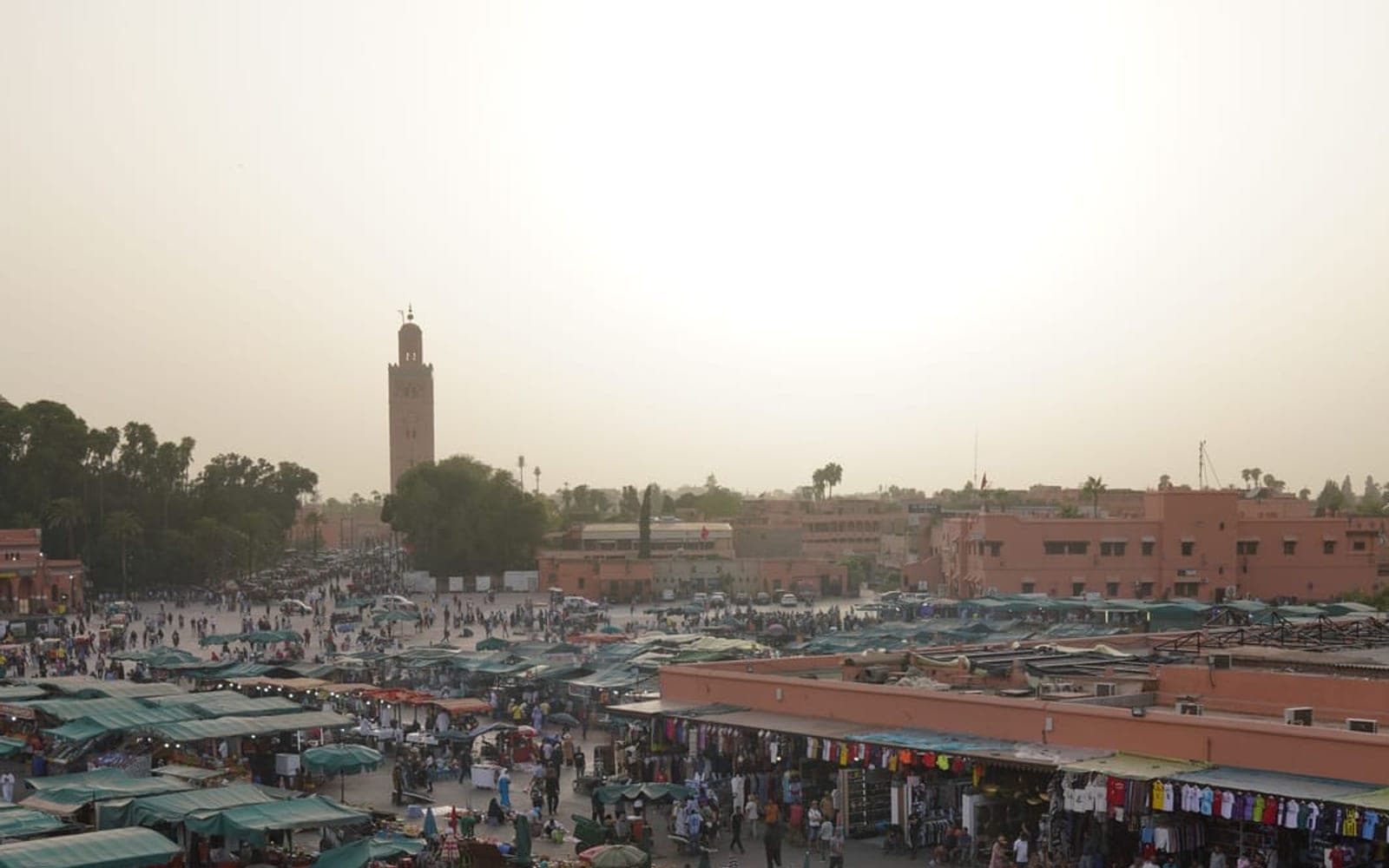
The UNESCO-designated "Masterpiece of the Oral and Intangible Heritage of Humanity" at the centre of the medina is Marrakech's beating heart. At midday it is a relatively quiet square — juice vendors, a few snake charmers, some henna artists. At sunset, it transforms.
By 7:00 pm, the square is filled with perhaps 100 food stalls, each with its own barker, its own smoke, its own smell. Acrobats, storytellers, Gnawa musicians, fortune tellers, and the extraordinary Halqa (circle storytellers) perform simultaneously. The noise is tremendous. The food is excellent.
What to eat at the square:
- Harira soup — thick, warming, filling. 10–15 MAD per bowl.
- Snail soup — a Djemaa speciality. Unusual and good.
- Merguez sandwiches — grilled spiced lamb sausage in bread. 15 MAD.
- Freshly squeezed orange juice — the vendors on the perimeter squeeze to order. 4 MAD a glass, best in Morocco.
What to avoid: Agreeing to a price after service begins. Sit down, point at what you want, confirm the price before they bring it. The square's food stalls are famous for flexible pricing with tourists who do not ask first.
The Souks
The souks (markets) occupy the northern half of the medina, roughly between Djemaa el-Fna and the Ben Youssef Mosque. They are organised by trade — historically, each craft had its own street or neighbourhood.
Key souks:
- Souk Semmarine — the main artery. Leather goods, textiles, lanterns. Starts immediately north of Djemaa el-Fna.
- Souk des Teinturiers (Dyers' Souk) — hanks of freshly dyed wool hung to dry above a narrow alley. One of the most photogenic spots in the medina.
- Souk Cherratin — leather goods and the smell of the tanneries nearby.
- Souk des Bijoutiers — silver jewellery. The Mellah (old Jewish quarter) adjacent has excellent antique pieces.
- Souk Haddadine — the blacksmiths' souk. Loud, smoky, genuine. Visit for the atmosphere, not to buy.
On bargaining: It is expected and unavoidable. The opening price is typically 3–5× the acceptable price. Stay calm, show interest without urgency, and be willing to walk away — the vendor will often call you back with a better offer. Never accept the first price for anything. Never.
The Palaces
Bahia Palace (free, open daily): A 19th-century vizier's palace of 150 rooms, built to be the most beautiful in all of Morocco. The craftsmanship — carved cedar ceilings, zellij tilework, painted stucco — is extraordinary. Allow 45 minutes.
El Badi Palace (ruins, 70 MAD entry): The 16th-century Saadian palace, commissioned by Sultan Ahmad al-Mansur from 1578 onward and built with marble, gold and materials imported from as far as Italy and Mali, was once described as the most magnificent in the Islamic world. Its downfall came a century later at the hands of the Alaouite Sultan Moulay Ismail, who had it systematically stripped for building materials — marble, tilework, cedar, entire decorative panels — to construct his own new capital at Meknes. Historical accounts differ on exactly when this happened, with some sources dating the order to 1696 and others to as late as 1707, but they agree the dismantling itself was a slow, thorough job that reportedly took roughly a decade to complete. Saadian material salvaged from these walls is thought to have ended up not only in Meknes but even as far as Fes, in the decoration of the Zawiya of Moulay Idris II. What remains in Marrakech today is atmospheric ruins — vast empty courtyards, sunken gardens, and stork nests on every wall. Better than Bahia for atmosphere.
Saadian Tombs (70 MAD): The royal mausoleum of the Saadian dynasty, sealed for 200 years and only rediscovered in 1917. A small, exquisite space of exceptional craftsmanship. Queue early — it is small and gets crowded.
Ben Youssef Mosque and Medersa
The Ben Youssef Medersa (Islamic college, 14th century, rebuilt 16th century) is the finest example of Moroccan-Andalusian architecture in Marrakech. The central courtyard, with its carved stucco, cedar woodwork, and zellij tilework rising three storeys, is one of the most beautiful interiors in North Africa. Entry 70 MAD. Non-Muslims may not enter the mosque but the medersa is open to all.
Hammams
A visit to a traditional hammam (bathhouse) is one of the defining Marrakech experiences. There are two types:
Hammam beldi (local public hammam): Cheap (10–20 MAD), no-frills, authentic. You bring your own black soap (savon beldi) and kessa glove (exfoliating mitt), both available in any souk pharmacy. No English, no menus — watch what others do. Separate hours or spaces for men and women.
Tourist hammam: Cleaned up, English-speaking staff, full treatment packages (scrub, massage, tea). 150–400 MAD depending on the package. Recommended for first-timers. Les Bains de Marrakech and Hammam de la Rose are reliably good.
Practical Tips
- Start early. The medina before 9:00 am is a different city — local, quiet, atmospheric. The tourist wave arrives at 10:00 am.
- Wear comfortable shoes. The alleyways are uneven, sometimes wet, and you will walk 8–12 km in a full day.
- A guide is worth it for the first half-day. Not because you cannot navigate alone, but because context transforms what you see. A good guide knows which doors to knock on, who to greet, and what the buildings meant. Book through your riad rather than accepting approaches on the street.
- The walls are pink because of the iron oxide in the local limestone. The entire medina is built from the same material. The law requires all new buildings inside the ramparts to maintain the traditional pink tone.
- Carry small change. Most transactions are 5–50 MAD. 200 MAD notes cause problems at small stalls.
Trips that go here
Guided by the team who wrote this guide.
Marrakech Medina — Cultural Tour
- Djemaa El-Fna square at its most vibrant
- Leather tanneries viewed from a private rooftop
- Ben Youssef Madrasa — 16th-century Islamic college
€31 / person for 6+