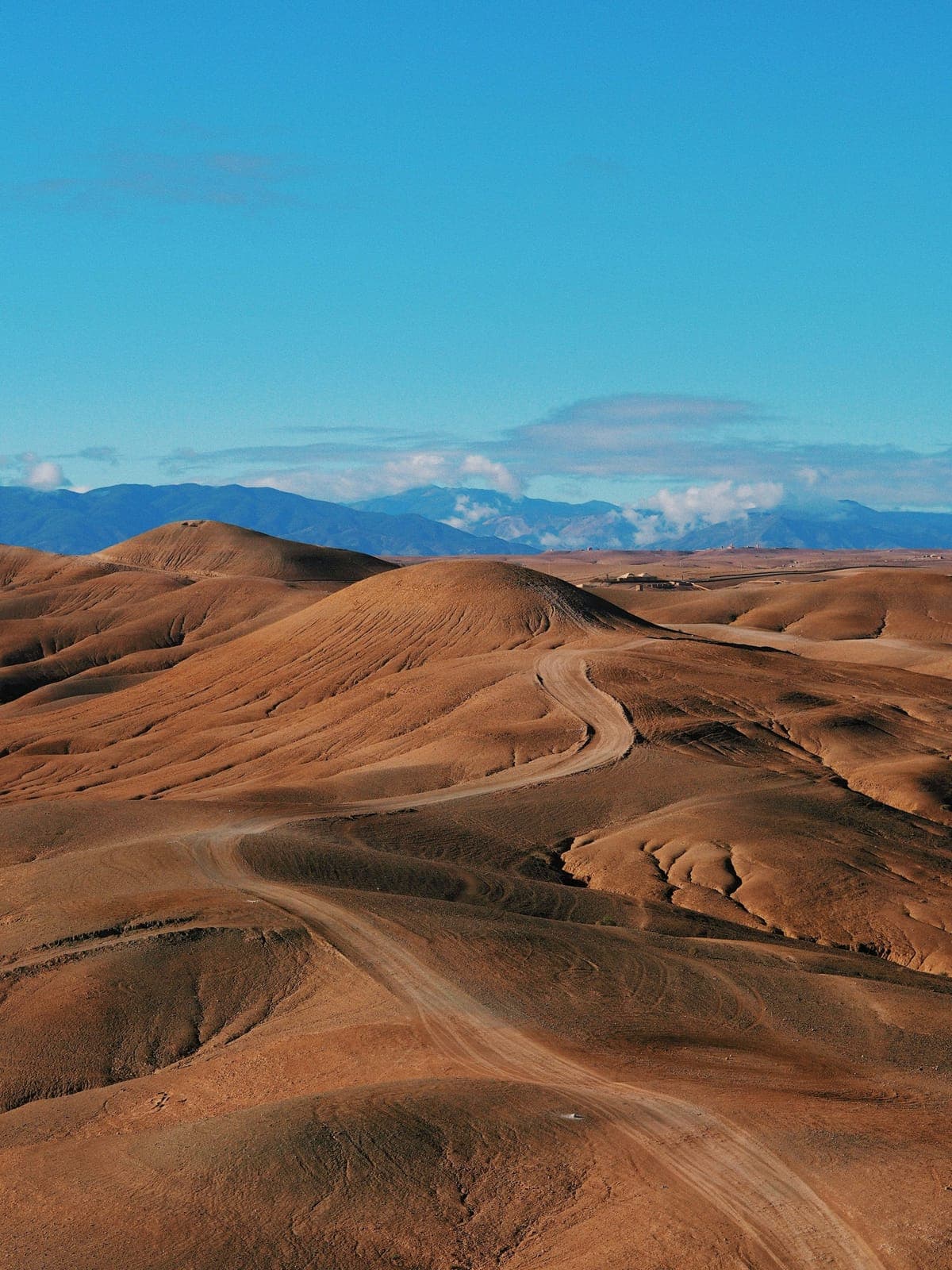
Forget the Sahara for a moment — just 40 km from Marrakech lies the Agafay Desert, a vast lunar landscape of stone and silence. Here is why it deserves a place on every Morocco itinerary.
What Is the Agafay Desert?
The Agafay Desert is not a sand desert — it is a stone desert. A vast hammada (rocky plateau) of compressed earth, limestone outcrops, and dried riverbeds stretching south and west from Marrakech towards the High Atlas foothills. At sunset, the plateau turns amber and red, and the jagged silhouette of the Atlas range fills the entire southern horizon.
It is one of the most dramatic and atmospheric landscapes in Morocco, and it is just 40 km from Marrakech — a 45-minute drive.
The ground underfoot has a real geological story, not just a scenic one: this roughly 180 km² basin, sitting at 600–700 metres of altitude, was a prehistoric lake before it dried out, leaving behind the compact clay, marl, and volcanic sediment — eroded down over millennia from the High Atlas above it — that now forms the plateau's surface. A hammada by definition is what's left once wind has stripped a landscape of its loose sand, leaving hard, pale rock behind; Agafay is a textbook example, averaging only around 120mm of rainfall a year.
Long before it became a sunset day-trip destination, the plateau had a working life: nomadic Berber communities used it seasonally for grazing, moving sheep and goats in after winter rains produced brief flushes of grass. The tourism infrastructure — camel treks, glamping camps, quad circuits — is a genuinely recent development, accelerating mainly from the early 2010s onward as travellers looked for a desert experience without the full day's drive to Merzouga or Zagora. The land's older use hasn't entirely disappeared either; you'll still occasionally see herders and flocks crossing ground that's also, on the same afternoon, hosting a sunset camel trek for visitors.
Agafay vs. the Sahara: What's the Difference?
Both are deserts. Neither has the other's defining feature.
| Agafay | Sahara (Erg Chebbi) | |
|---|---|---|
| Surface | Rocky stone hammada | Golden sand dunes |
| Distance from Marrakech | 40 km (45 min) | 550 km (9–10 hours) |
| Best for | Half-day or overnight from Marrakech | Multi-day desert experience |
| Dunes | None | Up to 150 m high |
| Atlas views | Spectacular | Limited |
| Crowds | Low | Moderate |
Agafay is not a substitute for the Sahara — it is a completely different experience. But for travellers short on time, or those wanting wilderness without a 10-hour drive, it is extraordinary value.
What to Do in Agafay
Camel Trek at Sunset
The classic Agafay experience: a 45-minute camel trek across the plateau as the Atlas peaks catch the last light. The sky over Agafay at dusk is extraordinary — no light pollution, total silence, and the pink and orange tones on the mountains.
Quad Biking
The flat, open plateau is ideal for quad biking — 1–2-hour circuits through the rocky landscape at speed. Available through several operators at the desert edge.
Hot Air Balloon
Marrakech's balloon operators often fly over the Agafay plateau at dawn — the views of the Atlas from 1,000 m above the desert are stunning. Book well in advance; flights operate at sunrise only.
Overnight Desert Camp
The glamping camps at Agafay have developed significantly over recent years. The best offer private tent-suites with proper beds, en-suite bathrooms, and dining terraces looking directly at the Atlas. Dinner under the stars with a Gnawa musician is a genuinely magical experience.
Top camps: Scarabeo Camp, Desert Luxury Camp, and Agafay Desert Camp are among the most established.
Practical Details
Getting there: Private taxi or guided tour from Marrakech. The road to Agafay is paved all the way to the main camp area. No public transport.
Half-day tour: Depart Marrakech at 3:30 pm, camel trek at sunset, dinner, return by 10:00 pm. The most popular option.
Overnight: Arrive late afternoon, sunset camel trek, stargazing dinner, breakfast, return to Marrakech by 10:00 am. Strongly recommended over the half-day — the night sky over Agafay (no moon nights especially) is one of the most memorable experiences in Morocco.
Best season: Year-round, but October–April is ideal. Summer days are very hot (40°C+); the evenings are always cooler.
What to bring: Warm layer for the evening (the plateau loses heat rapidly after sunset), camera with low-light capability, lip balm and sunscreen.
Why the Night Sky Is the Real Headline
Marrakech itself is a poor place to see stars — the city's own lights wash most of them out. Agafay solves that problem almost by accident: the plateau sits low enough behind its own ridgeline, and far enough from the city glow, that the sky above it is commonly rated Bortle 2–3 on the scale astronomers use for darkness, meaning the Milky Way is visible with the naked eye on a clear, moonless night. That is a genuinely rare thing to find 45 minutes from a city of over a million people. Several of the overnight camps now lean into this directly, setting up telescopes and running a short guided constellation session after dinner rather than treating the sky as background scenery.
If Agafay leaves you wanting more, the High Atlas goes further still. Oukaimeden, roughly 80 km south of Marrakech, is a genuine professional observatory site — Morocco's own national observatory sits there, chosen originally for its altitude and clean air rather than for tourism. It is not something you visit on a standard Agafay evening, but it is worth knowing the same mountain range that frames Agafay's sunset is also one of the reasons Morocco has become a serious base for stargazing tourism in its own right. For a longer, purpose-built version of this experience further into the desert proper, see our dedicated Sahara stargazing trip.
For what an evening out there actually runs to, see
Frequently asked questions
Can you ride a camel in the Agafay?
Is there a half-day Agafay tour?
Can you go quad biking in the Agafay?
Trips that go here
Guided by the team who wrote this guide.
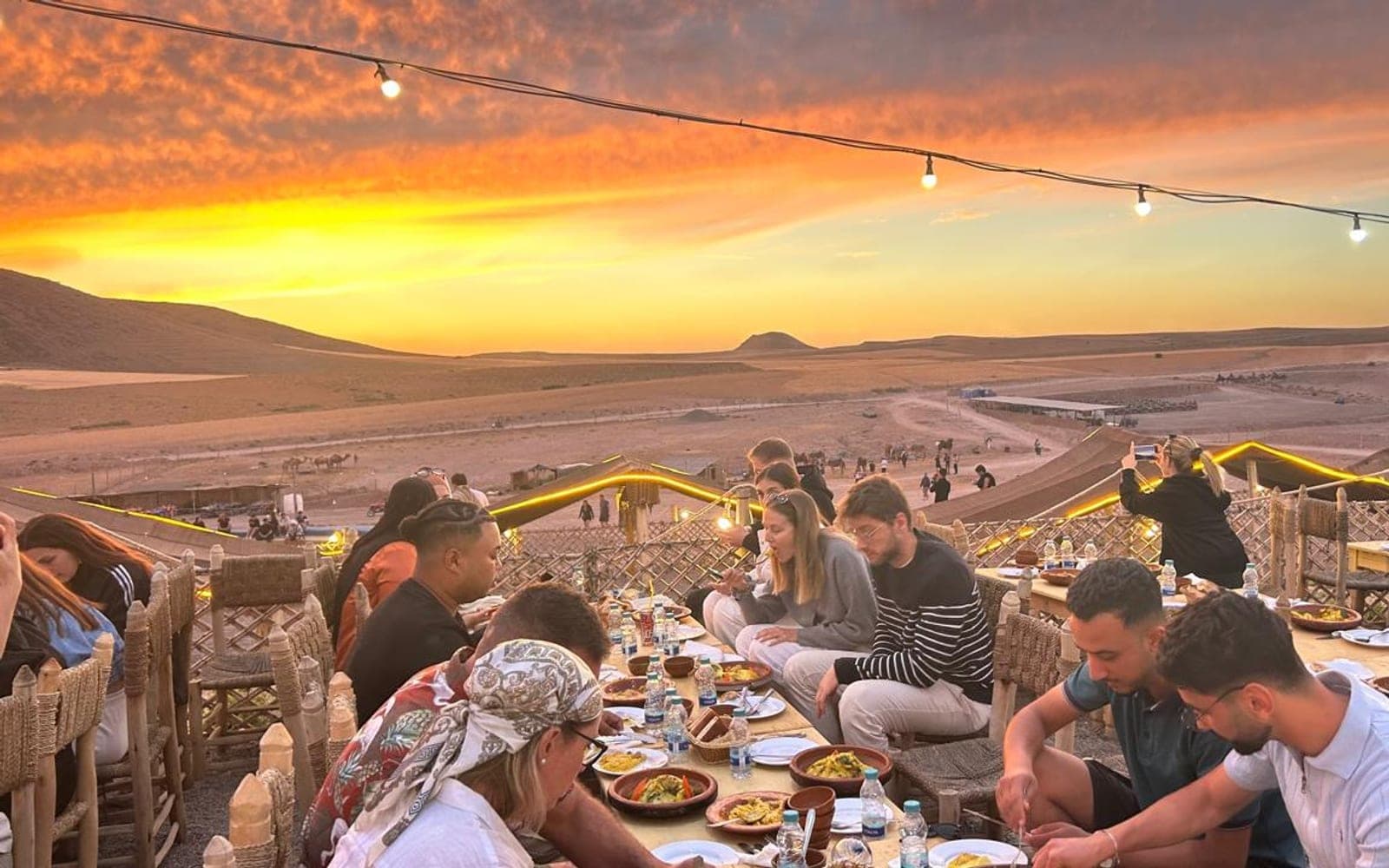
Marrakech to Agafay Desert — Sunset & Dinner
- Quad biking across the Agafay stone desert
- Camel ride to the sunset viewpoint
- Traditional Berber dinner in a desert camp
€56 / person for 6+
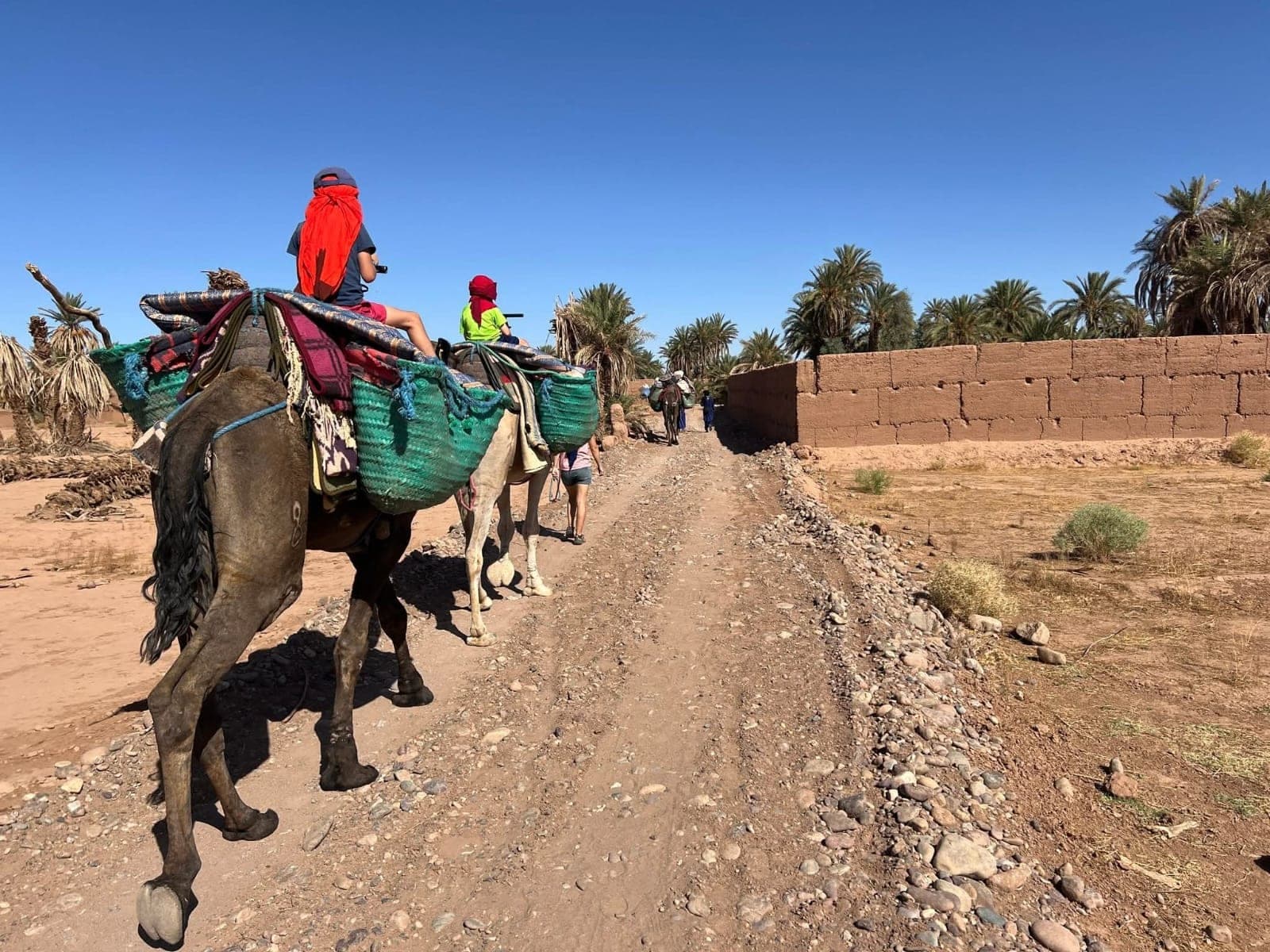
Marrakech to Zagora — 2-Day Desert Tour
- Draa Valley — Morocco's longest oasis, 200 km of date palms and kasbahs
- Camel trek on the Erg Lehoudi dunes at sunset
- Overnight in a Berber desert camp with traditional music
€98 / person for 14+