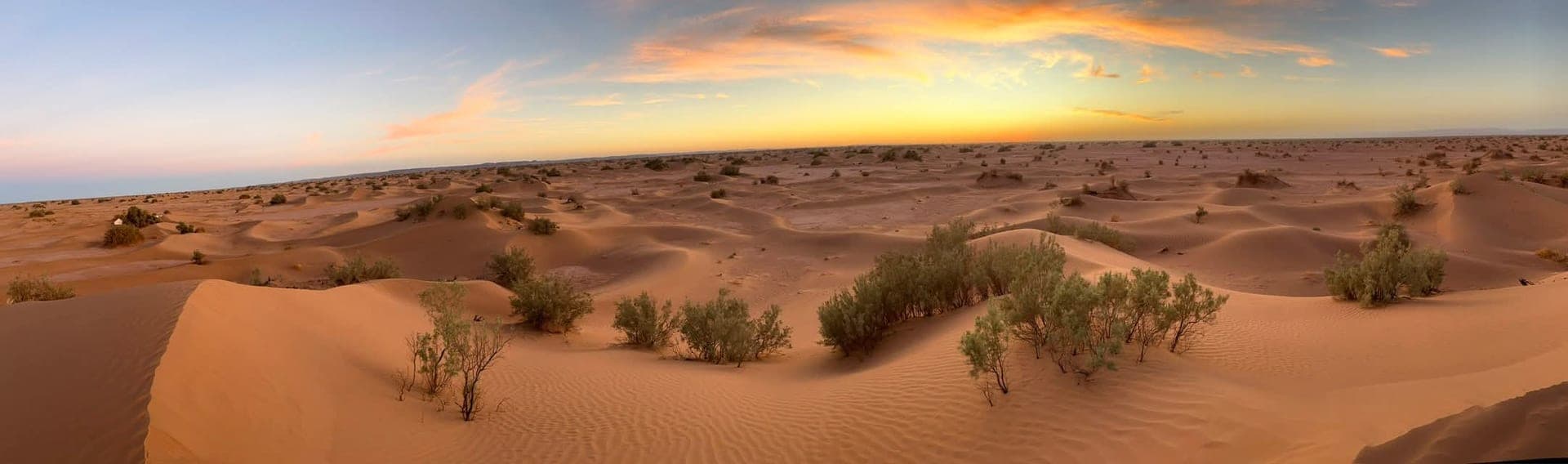
The Sahara is unlike anything else on earth. Here is an honest guide to the Moroccan Sahara — which dunes are worth the journey, what a desert camp is really like, and how to avoid the tourist traps.
Two Saharas, Two Experiences
When people say "the Sahara from Marrakech," they usually mean Erg Chebbi near Merzouga — the most famous dune field in Morocco, with photo-perfect orange dunes rising to 150 metres. It is spectacular and genuinely worth the journey. It is also the most visited.
Erg Chegaga, accessible from Agadir or M'hamid, is Morocco's larger and more remote dune field. Fewer tourists, longer drives (but more dramatic scenery along the route), and a stronger sense of true desert isolation. If solitude matters to you, this is your Sahara.
What a Desert Camp Is Really Like
The term "luxury desert camp" covers a wide range — from genuine glamping (proper beds, private bathrooms, solar lighting, quality food) to basic tents with thin mattresses and chemical toilets. Ask the right questions before you book:
- Is the camp inside the dunes or beside the road?
- Is bedding private or shared?
- What is included in dinner?
- Is there a toilet inside the tent or shared outside?
A good camp will be transparent about all of this. Our camps are inside the dune field, accessible only by camel — the road stays behind you.
The Camel Ride Reality
The sunset camel trek into the dunes is the centrepiece of any Sahara trip. In truth, the ride lasts 45–60 minutes. One small point of accuracy worth mentioning: the animals you will actually be riding are technically dromedaries, the one-humped camel species that has adapted to hot, arid North Africa and the Middle East, rather than the two-humped Bactrian camel of Central Asia. "Camel" is what everyone calls them, guides included, and that is not wrong exactly — dromedary is simply the more precise species name for this particular desert-adapted animal, which has carried trade and travellers across the Sahara for thousands of years. Camels are not comfortable — they lurch heavily when standing and can feel unsteady. Almost everyone finds it worth it. A few people with back issues prefer to walk alongside.
The sunrise camel return is shorter and usually done at a gentle walk. The light at 6:00 am over the dunes is extraordinary.
Best Time to Visit
October–April is the ideal window. Desert temperatures are comfortable during the day (15–25°C) and cold at night (5–10°C). The Milky Way is at its clearest in autumn and winter.
May–September is hot — very hot. Midday temperatures regularly reach 45°C+. Night skies are still spectacular, but the heat is genuinely difficult during travel days.
What Nobody Tells You
The drive is part of the experience. The 9–10-hour drive from Marrakech to Merzouga crosses the High Atlas via Tizi n'Tichka, commonly cited around 2,260 metres and the highest major mountain pass in North Africa, drops into the dramatic Draa Valley palmery, and passes the UNESCO Ksar of Aït Ben Haddou. The pass itself follows a route far older than the paved road — a historic caravan trail across the Atlas that French colonial engineers converted into a proper motor road in the 1920s, the first time the crossing was reliably passable by vehicle rather than pack animal. It is not dead time — it is some of the most cinematic driving in Africa, and it is also, quite literally, a much newer way of making a much older journey.
The dunes are cold at night. Even in summer, desert nights are significantly cooler than the day. Bring a warm layer for the sunset and a light down jacket for the evening around the campfire.
Sand gets everywhere. In your bags, your shoes, your camera. Bring a dry bag or ziplock for electronics. A buff or scarf for your face on windy days.
Erg Chebbi vs Erg Chegaga: Which Is Right for You?
| Erg Chebbi (Merzouga) | Erg Chegaga (M'hamid) | |
|---|---|---|
| Dune height | Up to 150 m | Around 50 m, but a far larger dune field overall |
| Crowds | Moderate | Low |
| Drive from Marrakech | 9–10 hours | 8–9 hours |
| Drive from Agadir | 7–8 hours | 5–6 hours |
| Best for | First-time visitors | Those wanting solitude |
Practical Tips
- Book a camp that is inside the dunes, not beside the road. The difference in experience is enormous.
- Bring cash. There are no ATMs in the deep desert. Merzouga town has one unreliable machine.
- Protect your phone camera from sand. A thin ziplock bag works perfectly.
- Pack earplugs if you are a light sleeper — the pre-dawn call to prayer from nearby mosques carries far in the desert air.
For the numbers behind that — highs, lows and the best months to come — see Sahara weather month by month.
Frequently asked questions
How long does it take to reach the Sahara from Marrakech?
What is a night in a desert camp actually like?
Is there phone signal or wifi in the desert?
Do you need to be fit for a desert tour?
What should I wear in the Sahara?
Can you shower at a desert camp?
Is the Sahara safe for tourists?
Are there scorpions or snakes in the Sahara?
Is a desert tour suitable for children?
Can you go sandboarding on the dunes?
How long is the drive from Marrakech to Merzouga?
Does a Merzouga desert tour stop at Aït Ben Haddou?
Is the camel ride at sunset or sunrise?
What is the Sahara like in winter compared with summer?
Trips that go here
Guided by the team who wrote this guide.
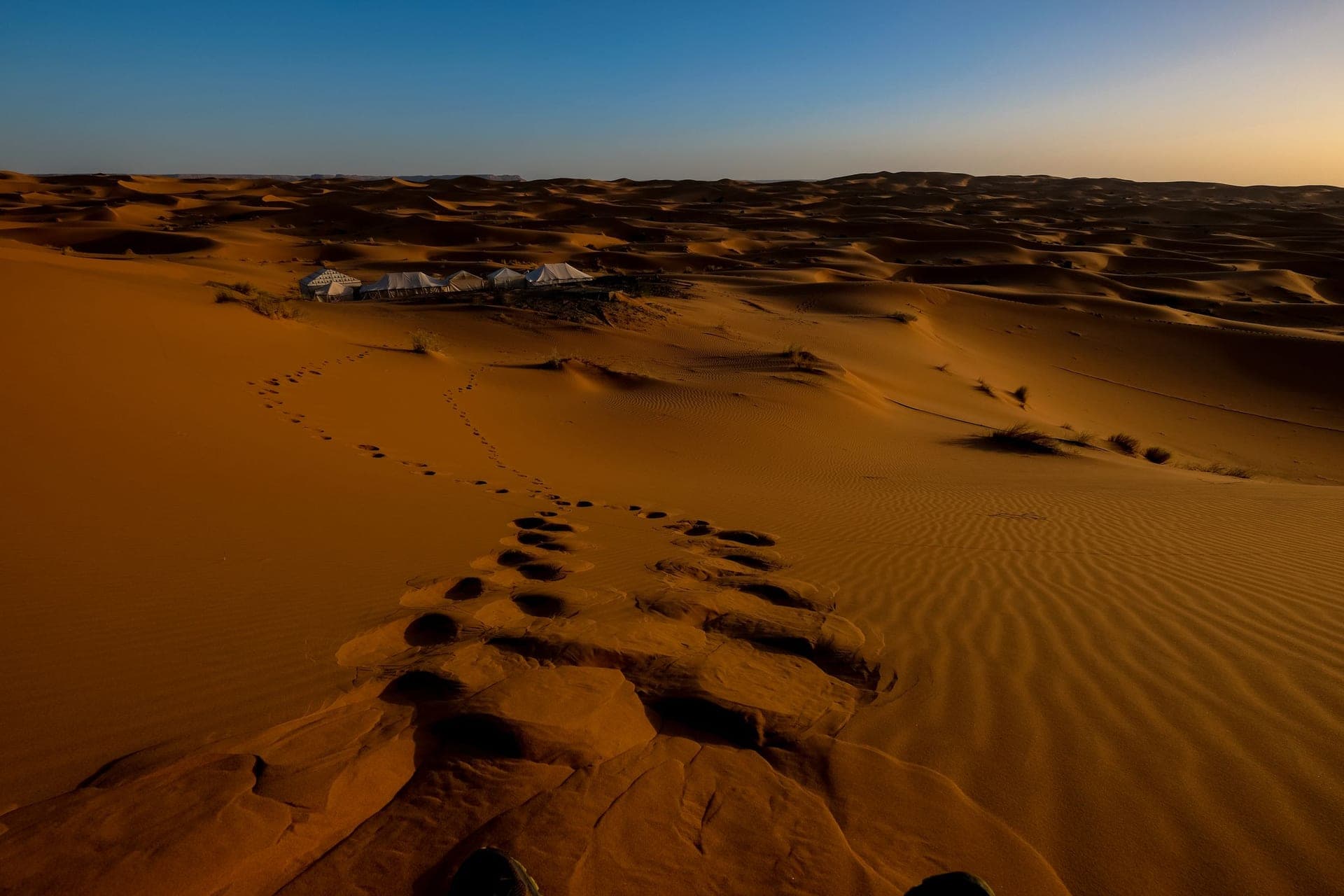
Marrakech to Merzouga — 3-Day Desert Tour
- Camel trek into Erg Chebbi dunes at sunset
- Overnight in a luxury Berber desert camp
- Stargazing with no light pollution at all
€230 / person for 6+
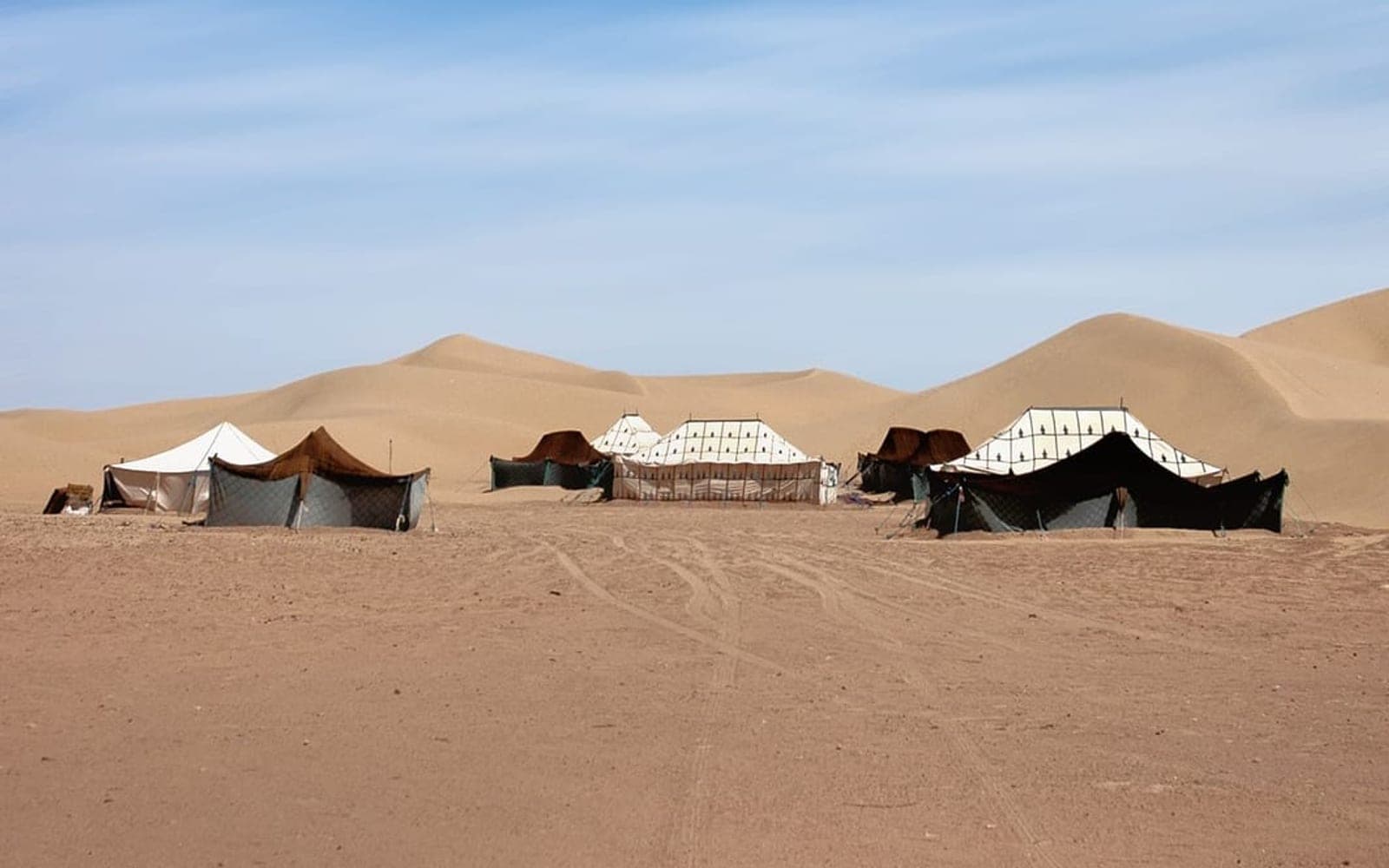
Erg Chegaga from Marrakech — 3-Day Remote Desert Expedition
- Erg Chegaga — fewer tourists, 120 m dunes, profound silence
- 4x4 off-road desert crossing from M'Hamid into the dune field
- A night in a desert camp with no other camps in sight
€281 / person for 5+
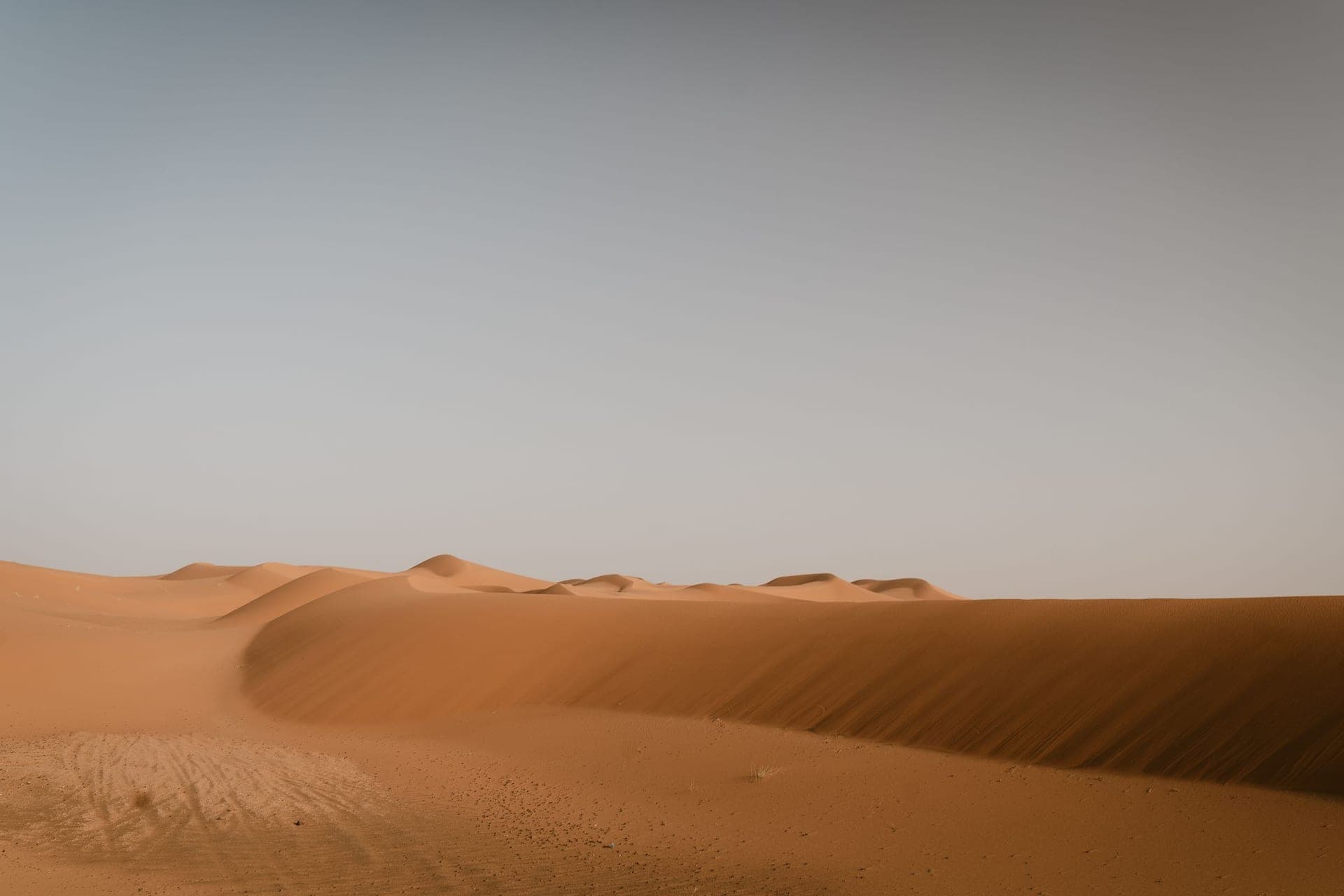
Marrakech Desert Grand Tour — 4 Days
- Full night at an Erg Chebbi desert camp — sunset and sunrise camel treks
- Todra Gorge — Morocco's most dramatic canyon (400 m walls, 4 km walk)
- UNESCO Ksar of Aït Ben Haddou — Gladiator and Game of Thrones location
€236 / person for 6+