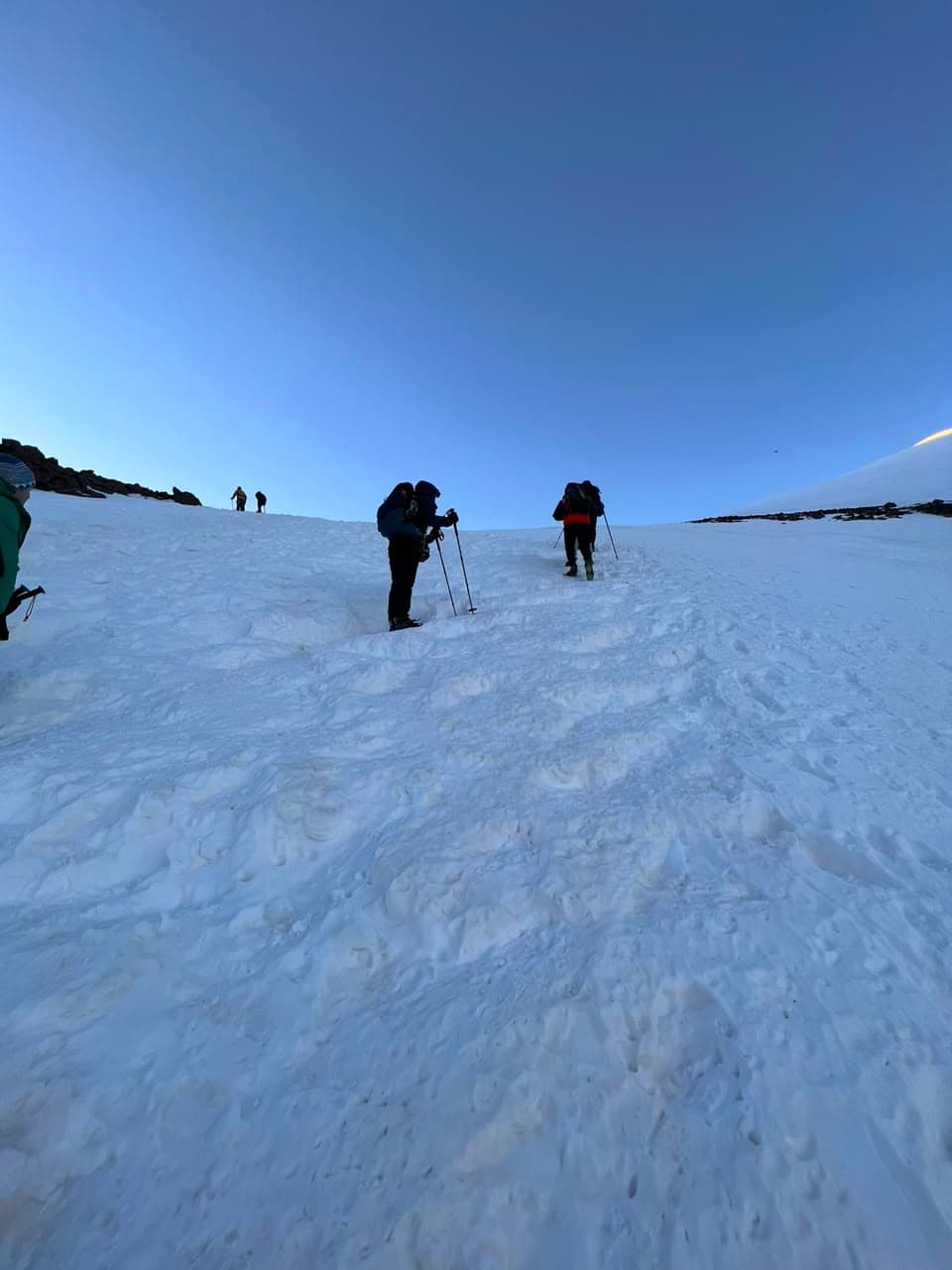
March is the month people book expecting spring and arrive to find winter. Here is what the mountain is really like, what kit it demands, and when April is the better answer.
March is the month that catches people out. The flights are cheap, Marrakech is warm,
and the mountain looks close enough on the map to feel like a spring walk. Above 3,000 m
it is still winter.
What March is actually like
Imlil at 1,740 m can be pleasant in March -- sun, shirtsleeves in the afternoon, almond
blossom in the valleys. The summit is 2,427 m higher, and that difference is the whole
story.
Above roughly 3,000 m the mountain carries snow, and in a normal year the summit cone
holds it into April. On summit morning you leave the refuge in the dark, at
sub-zero temperatures, on ground that froze overnight.
The kit that stops being optional
- Crampons and an ice axe -- and the knowledge to use them. Frozen snow is when the
final slopes stop being a walk, which is also when they are hardest. Hire in Imlil runs
100-150 MAD a day; on our guided departures they are supplied when conditions require.
- Stiff boots that will actually take a crampon. A soft trail shoe will not, which
is the single most common gear mistake we see in March.
- Insulation and a spare pair of gloves. You start in the dark and the wind on the
summit ridge does the rest.
The risk nobody advertises
Heavy snowfall between January and March loads the slopes, and that brings real
avalanche risk on certain aspects in certain conditions. Weather also turns considerably
faster than in summer.
This is why a guide is worth more in March than in July. The value is not route-finding
on a path you could follow yourself -- it is the judgement about whether today is the day
to go up, and the willingness to turn around. Since 2018 a licensed guide has been a
legal requirement in Toubkal National Park in any case.
March or April?
Choose April if you want the most straightforward version: the snowline has usually
retreated, walking is easier, the days are longer, and the summer crowds have not
arrived. For a first big mountain, April onwards is the kinder introduction and the
success rate is meaningfully higher.
Choose March if you actively want the mountain in winter condition and are
comfortable on snow. It is quieter, and the summit views in cold clear air are the best
of the year.
Our 8-day Toubkal and Sahara departures
run on both sides of that line -- three dates in March, two in April -- which is
deliberate. If you are choosing between them, the paragraph above is the decision.
Give yourself the extra day
Whatever the month, altitude decides more summits than fitness does. The
4-day itinerary walks in gradually with a night to
acclimatise; the 2-day version goes from 1,740 m to 4,167 m in about thirty hours. In
March, when the summit push is harder and slower anyway, that extra day is worth more
than it is in July.
Frequently asked questions
Is Toubkal still snowy in March?
Do I need crampons and an ice axe in March?
Is March more dangerous than summer?
Is March or April better for climbing Toubkal?
How cold does it get on summit morning?
Can a beginner climb Toubkal in March?
Trips that go here
Guided by the team who wrote this guide.
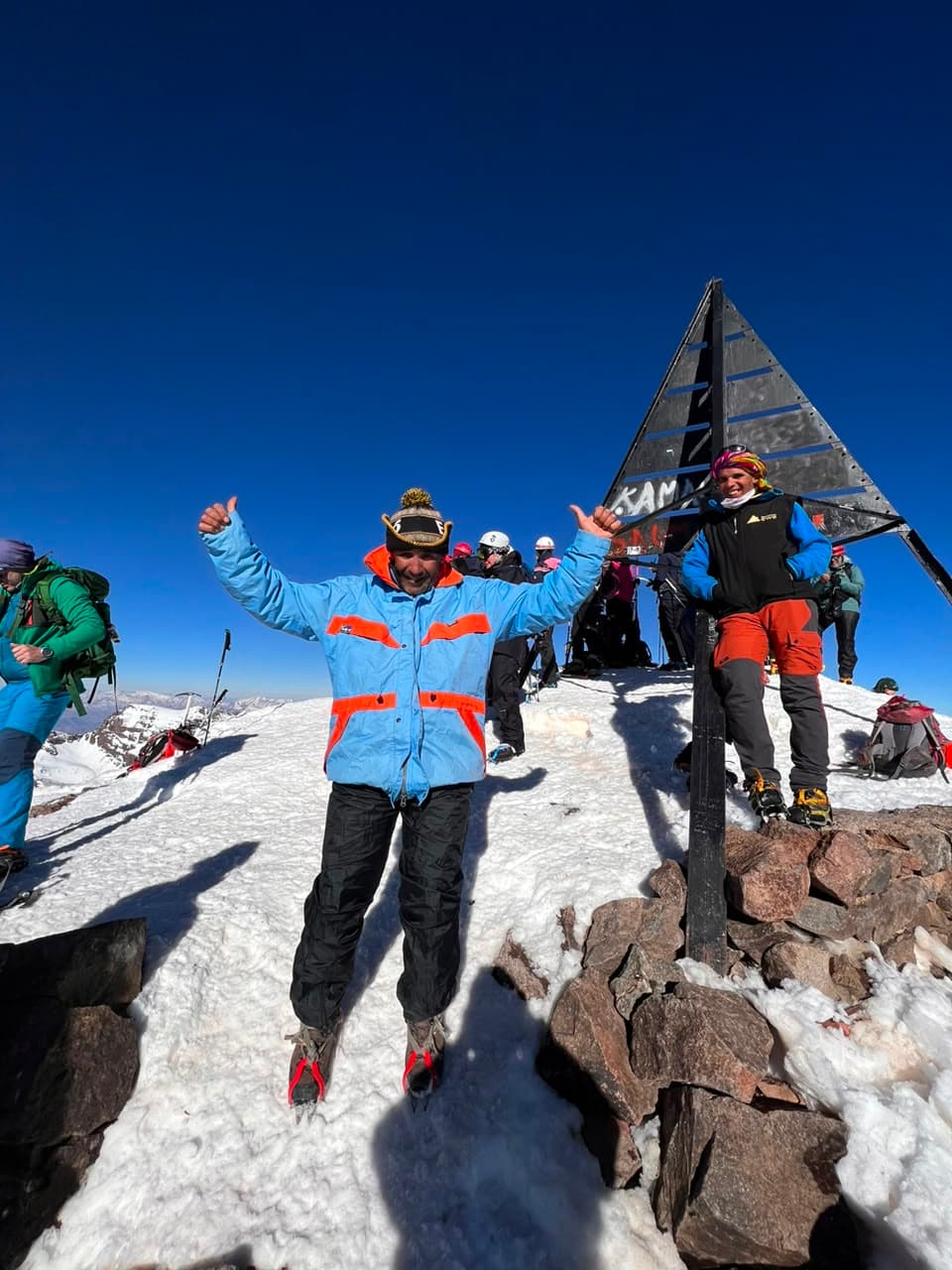
4-Day Toubkal Summit Trek from Marrakech
- Summit Jbel Toubkal at 4,167 m — highest peak in North Africa
- Sleep in traditional Berber mountain refuges at 3,207 m
- Start in the trailhead village of Imlil, deep in the Atlas
€260 / person for 6+
8-Day Morocco Highlights: Toubkal Summit and Sahara Desert
- Summit Jbel Toubkal at 4,167 m -- the highest peak in North Africa
- Sleep at the Toubkal refuge (3,207 m) and at Gite Panorama in Imlil
- Ait Ben Haddou, the UNESCO-listed earthen kasbah on the old caravan road
€889 / person
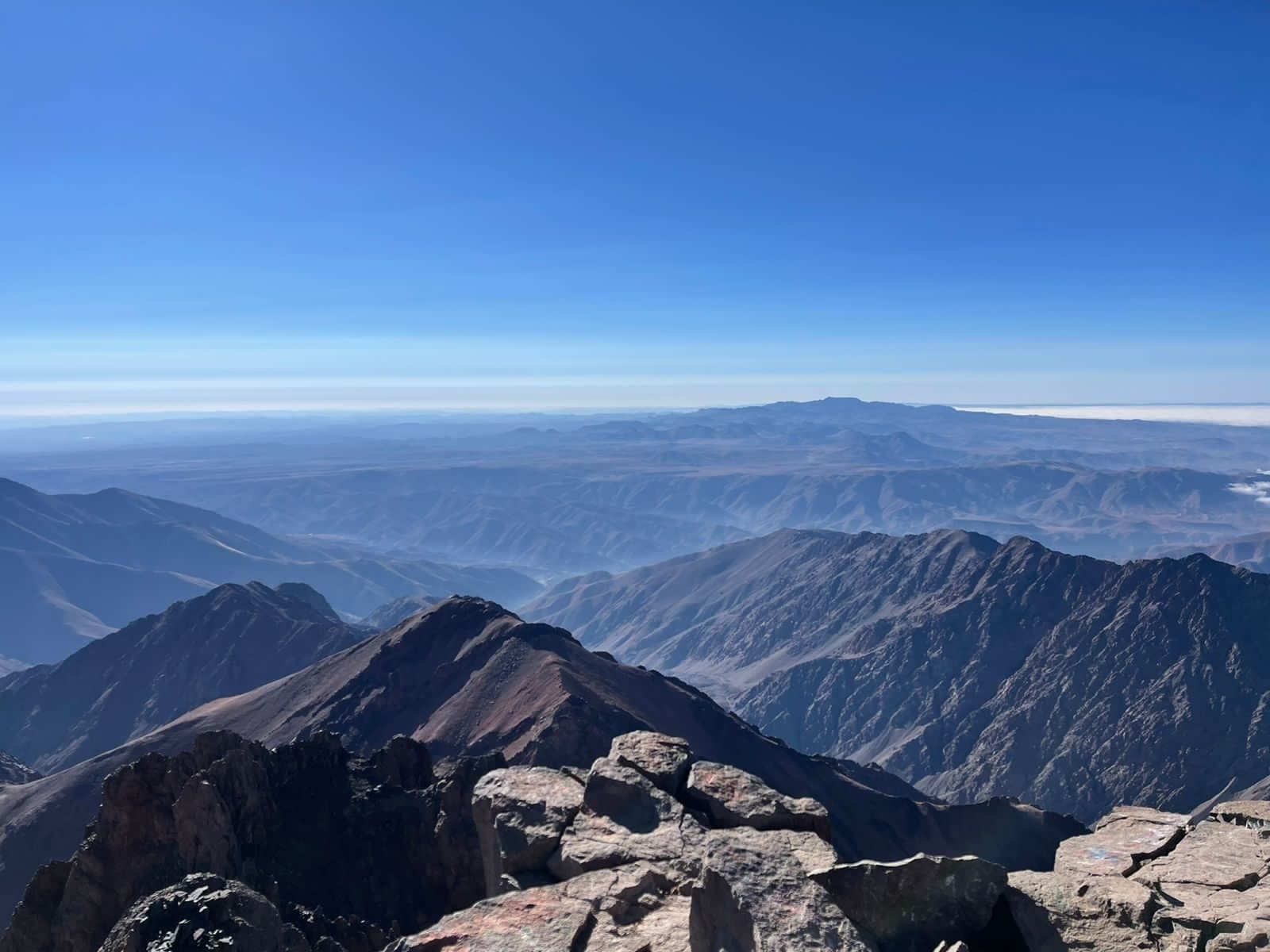
Mount Toubkal Express — 2-Day Summit from Marrakech
- Summit Jbel Toubkal (4,167 m) in just two days from Marrakech
- Overnight in the Toubkal Refuge at 3,207 m
- Pass the Sidi Chamharouch shrine and its waterfall
€153 / person for 6+