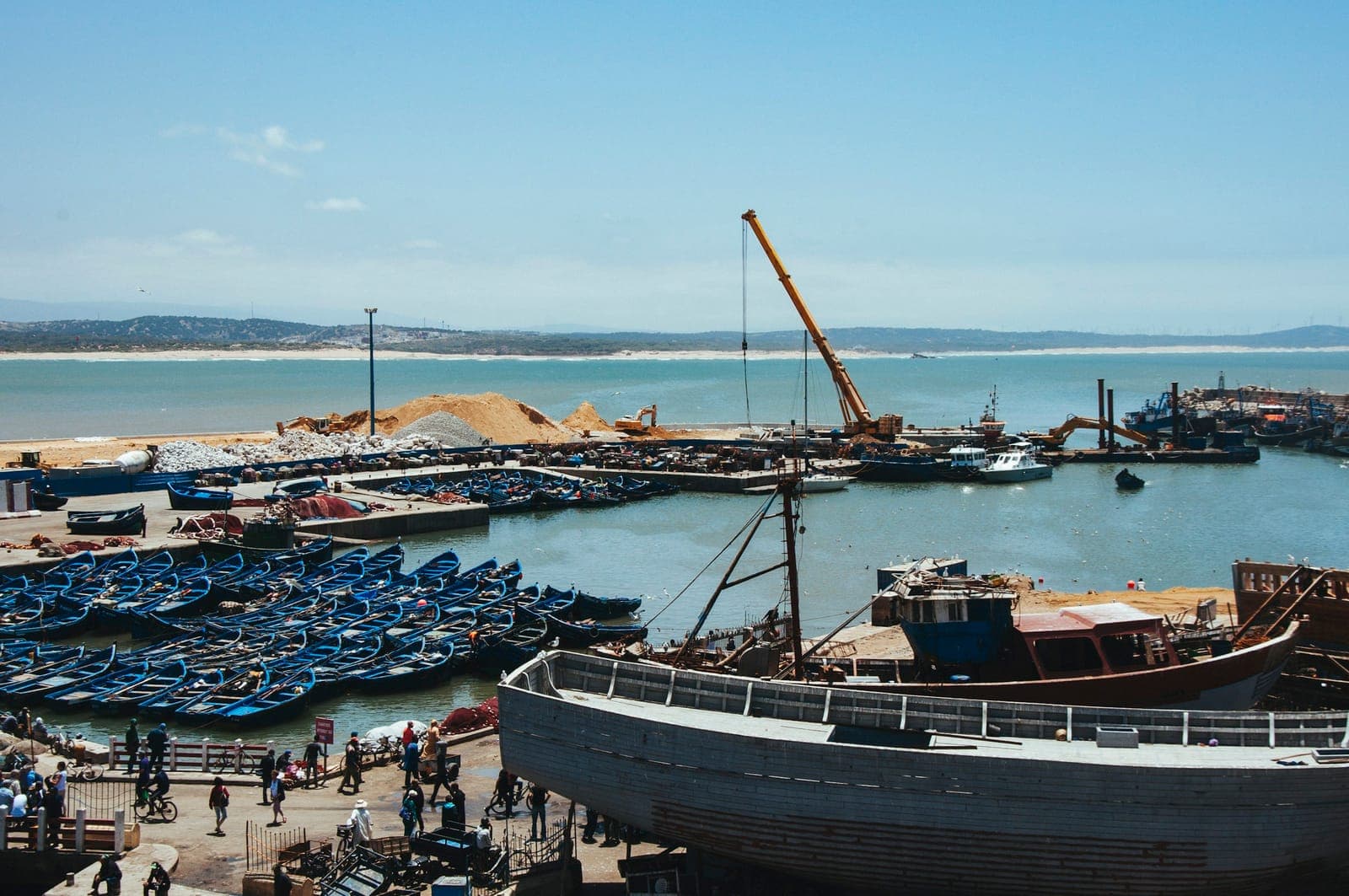
A UNESCO-listed fortress town on the Atlantic, with Portuguese cannons on the ramparts, the best seafood in Morocco, and a wind that never stops. Here is what to know before you go.
The Town That Feels Like a Different Country
Essaouira is three hours from Marrakech and belongs to another world entirely.
Where Marrakech is hot, red and relentless, Essaouira is white and blue, cool
enough to need a jacket in August, and almost aggressively relaxed. The medina
is walled, flat and laid out on a grid — you genuinely cannot get lost in it,
which after Fes or Marrakech is its own kind of holiday. Nobody hassles you
much. Cats outnumber touts.
It is the one Moroccan town that people arrive at for a day and start
rearranging their trip to stay in.
A Fortress Built to a French Plan
The history explains the grid.
The Portuguese held the site briefly in the 16th century and called it
Mogador — a name still used, and the reason you will see it on old maps and
some wine labels. It kept that name right up to Moroccan independence in 1956.
The town you walk through today, though, is younger: built in the 1760s by
Sultan Sidi Mohammed Ben Abdallah, who wanted a port that could trade directly
with Europe, and laid out by the French military engineer Théodore Cornut
to the bastion principles of his own century — straight streets, angled walls, a
fortified harbour. That is a European fortress plan executed in Moroccan
materials for a Moroccan king, and it is precisely why **UNESCO listed the town
in 2001**: it is the clearest surviving example of the idea in North Africa. Our
Agadir day-trip guide goes further
into how that fortification tradition reached the Atlantic coast.
The Skala de la Ville
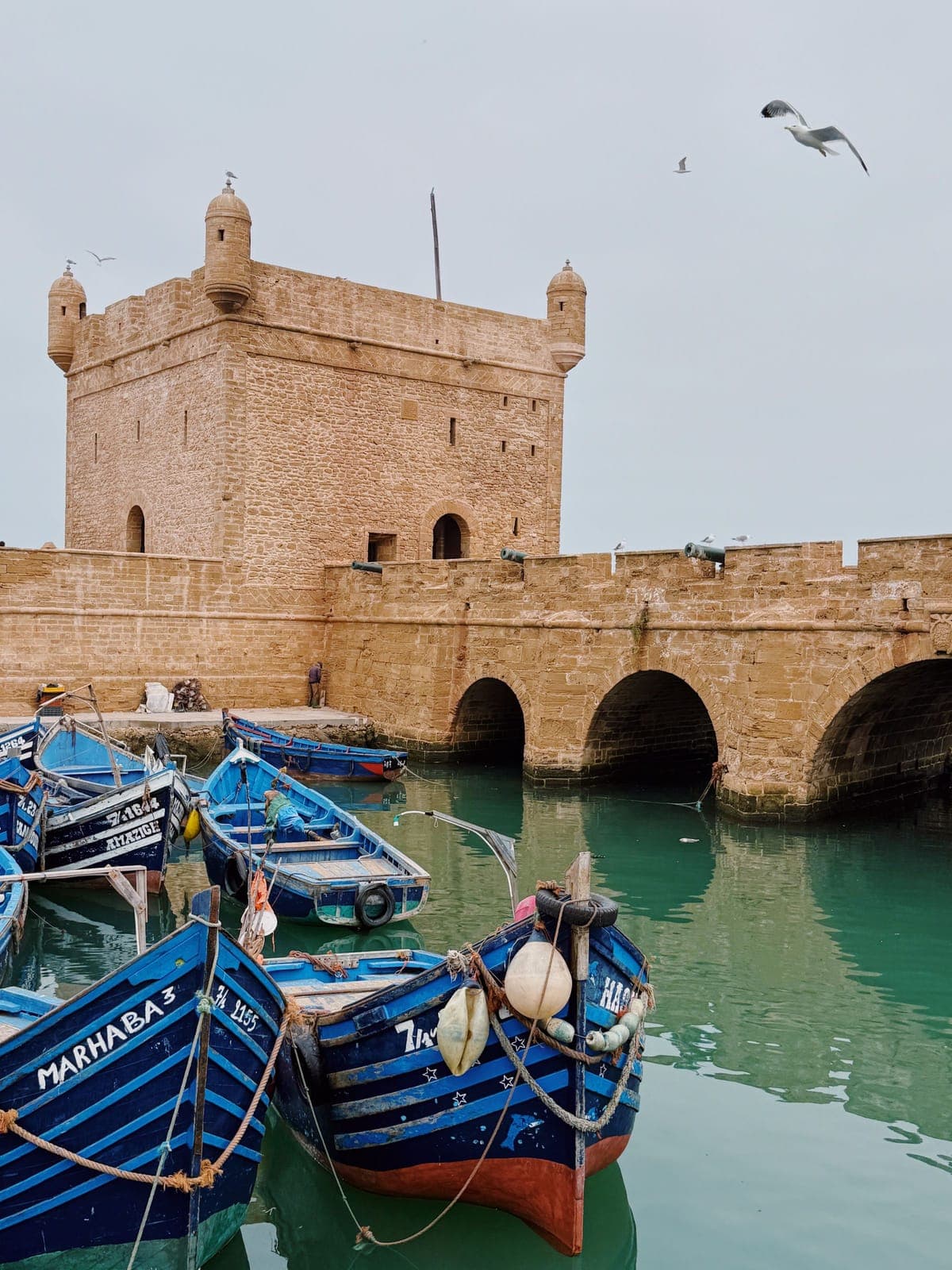
The sea wall along the northern edge of the medina, lined with bronze cannons
still pointing out at the Atlantic.
This is the postcard, and it earns it: waves hitting the ramparts below,
gun barrels going green with salt, and the Îles Purpuraires offshore. Entry is
around 10 MAD and it is open roughly 9:00 to 17:30. Go in the late
afternoon — the light comes off the water and the whole wall turns gold.
Underneath the ramparts are the woodworking workshops, where thuya wood from
the hinterland is turned into boxes and bowls. It is genuine craft rather than
souvenir assembly, and the smell of the wood alone is worth the detour.
The Port
Working, loud, and not staged for anyone.
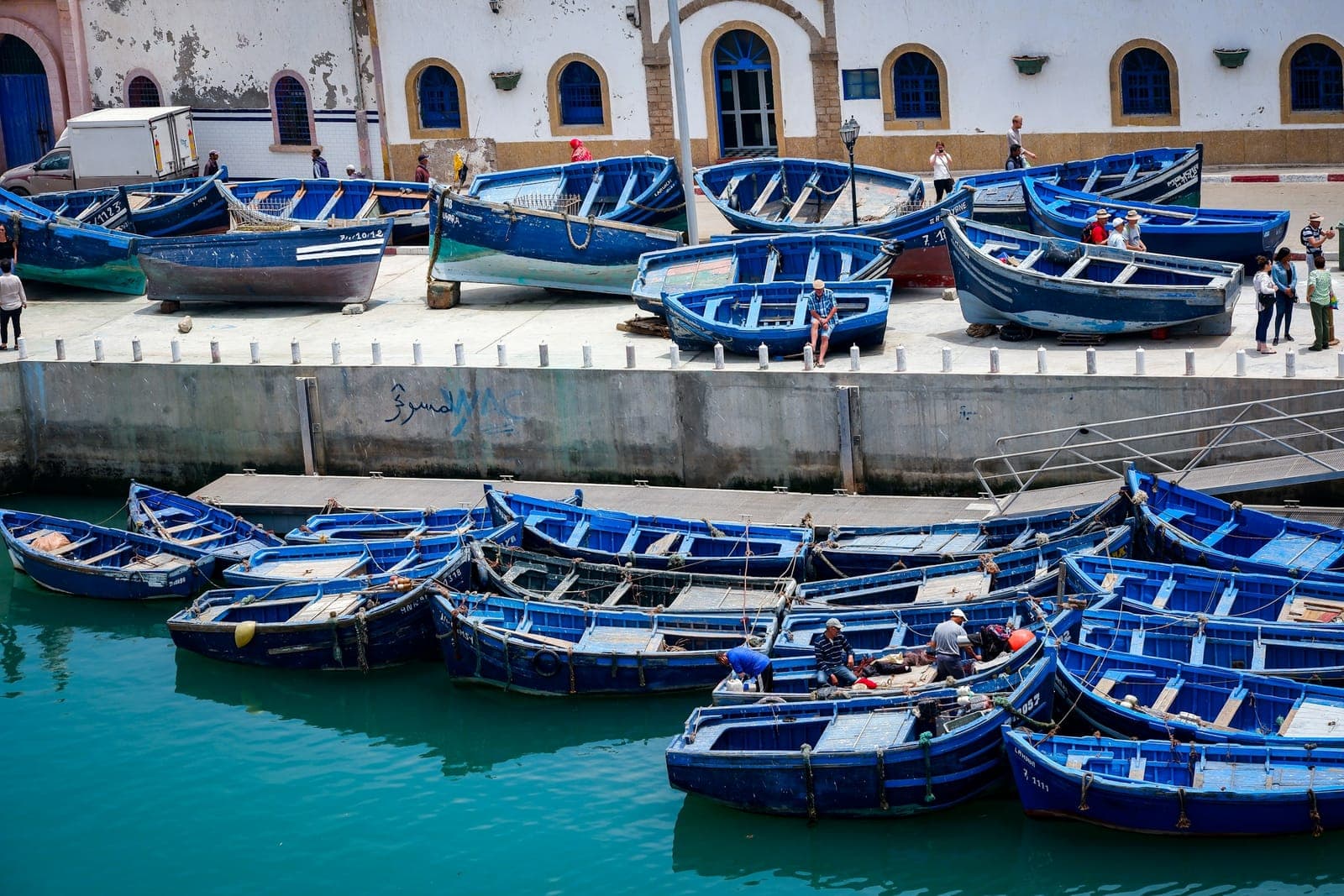
Blue wooden boats, gulls, ice, men mending nets. The fish auction happens in
the morning and the grills beside the port will cook whatever you point at,
by weight, at a table on the quay. Agree the price before they start — that is
normal practice, not a warning about Essaouira specifically.
This is the best seafood in Morocco. Not the most refined; the freshest.
The Wind
Nobody warns people about this, and it changes what you should pack.
Essaouira sits in the path of the north-east trade winds, and they blow almost
constantly. In July the average is about 35 km/h with gusts over 55. That
is a genuine wind, not a sea breeze. It is why the town stays cool when
Marrakech is at 45 °C, and it is also why the beach is often not a lying-down
beach.
If you came to kitesurf or windsurf, this is one of the best spots in
Africa and the season runs roughly April to October, peaking June to August.
If you came to sunbathe, come in May, September or October, when the
wind eases and the town is at its most pleasant.
Either way, bring a windproof layer whatever the forecast says. People arrive
in August dressed for the Sahara and spend the first evening buying a jumper.
The Gnaoua Festival
Essaouira's other identity is musical. The Gnaoua World Music Festival
fills the town for four days every June — 25 to 27 June in 2026, its 27th
edition — with Gnaoua maâlems playing alongside jazz, funk and world musicians
on open stages.
It is free, it is very good, and the town is completely full. If you want to be
there, book months ahead. If you do not, avoid that week entirely.
Day Trip or Stay?
A day trip works. Three hours each way from Marrakech leaves five or six
hours in town, which covers the ramparts, the medina, lunch at the port and the
beach. Our
shared day trip from Marrakech does
exactly that, and from the coast the
Agadir day trip is a shorter drive —
our guide to the Agadir route covers
that side in detail.
But two nights is the better trip, if the itinerary can carry it. The town
changes completely after the day buses leave: the ramparts empty, the light
goes long, and the restaurants stop being lunch places. Essaouira is one of the
few Moroccan towns where the evening is the point.
When to Come
May, September, October Best overall. Warm, calmer wind, fewer people.
June to August Windiest and busiest. Perfect for kitesurfing,
cool compared with inland, but bring layers.
November to March Quiet and often lovely, though Atlantic storms
blow through and some days are grey and wet.
Essaouira never gets properly hot and never gets properly cold. It is the
reliable escape valve when the interior is unbearable.
Getting There
Three hours from Marrakech on a good road, two and a half from Agadir. Both are
straightforward drives, and Supratours and CTM run comfortable buses on the
Marrakech route several times a day.
If you are building a wider trip, Essaouira pairs naturally with Marrakech
rather than competing with it — a couple of nights on the coast between the
medina and the desert resets the
whole holiday.
Trips that go here
Guided by the team who wrote this guide.
Essaouira — Shared Day Trip from Marrakech
- UNESCO-listed medina and 18th-century ramparts
- The blue fishing fleet in the working harbour
- Argan oil cooperative on the Marrakech road
€30 / person
Agadir to Essaouira — Day Trip
- 18th-century Portuguese seafront ramparts
- UNESCO-listed medina and blue fishing harbour
- Fresh seafood lunch on the harbour wall
€30 / person for 6+