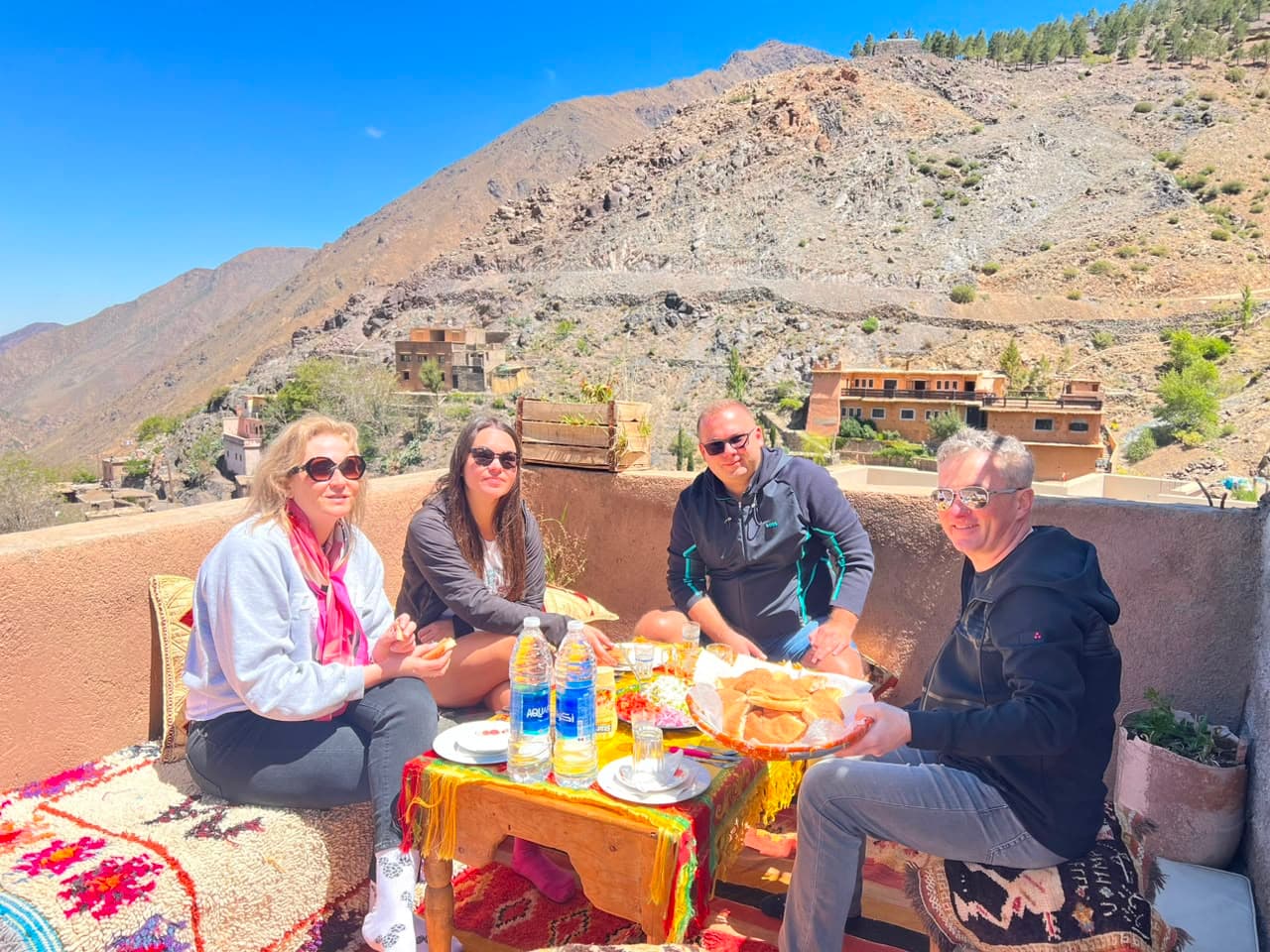
A spice souk walk, a tagine cooked from scratch with a local family, and the mint tea ceremony done properly. What a Marrakech cooking class involves, what it costs, and how to spot a bad one.
A cooking class is the most reliably good half-day in Marrakech. It is also the one experience visitors most often book badly — there is a real gap between a class where you shop, cook and eat with a family, and a hotel demonstration where someone cooks at you.
Here is what the good version involves.
It starts at the spice square, not the kitchen
The market walk is the part that makes the difference, and any class that skips it is a demonstration wearing a class's name.
Ours begins at Rahba Kedima, the spice square in the medina. The first thing you learn there is how to tell real saffron from dyed safflower — a distinction worth knowing before anyone sells you a bag of it. Real saffron is threads with a trumpet-shaped end, deep red, and costs what it costs because it takes 150 flowers to make a gram. Safflower is flat yellow-orange petals sold by the handful.
From there the walk runs through the working food souks with tastings: olives cured four different ways, preserved lemons, msemen off the griddle, dates, almonds, fresh cheese. These are the stalls that supply the medina's own kitchens rather than tourist counters.
By the time you reach the kitchen you know what the ingredients are, what they cost, and what a fair price looks like. That last part pays off for the rest of the trip — see haggling in the souks.
What you cook
The core of the class is a tagine from scratch — the conical earthenware pot and the dish cooked in it share a name. What you learn is not a recipe so much as a method:
Layering. A tagine is built, not stirred. Onions and oil at the base, then meat or vegetables, then the aromatics on top, so steam circulates down the cone and returns to the food rather than escaping.
The spice base. Most Moroccan savoury cooking runs on a small set: cumin, sweet paprika, ginger, turmeric, black pepper, and often a pinch of saffron or a preserved lemon. Ras el hanout is a blend, and every spice merchant's is different.
Time and heat. Low and slow, barely a simmer, an hour or more. The dish cooks in its own moisture with very little added liquid — which is why it works so well in a country where water was historically scarce.
Bread as the utensil. Khobz is not a side dish, it is the fork. Eating with the right hand and a piece of bread is the normal way to eat a tagine, and doing it properly is part of the lesson.
Most classes also cover Moroccan salads — the cooked vegetable dishes served before the main — and finish with mint tea.
The mint tea ceremony
Mint tea has more rules than most visitors realise. Gunpowder green tea, a generous quantity of fresh spearmint, and a great deal of sugar. The first infusion is rinsed off and discarded. It is poured from height, which aerates it and builds the foam that a well-poured glass is judged on.
Three glasses are traditional, and the often-quoted Maghrebi saying holds that the first is gentle as life, the second strong as love, the third bitter as death — the flavour genuinely changes as the leaves keep steeping. Refusing tea is close to refusing hospitality itself, so accept at least one glass. The mint tea guide goes further.
What it costs
Our Marrakech food and market tour is a half day, four hours, and includes the guide, all tastings on the walk, the cooking instruction and ingredients, the full tagine lunch you helped prepare, and the tea ceremony.
| Travellers | Price per person |
|---|---|
| 1 | €109 |
| 2 | €55 |
| 4 | €39 |
| 6+ | €33 |
That is the steepest group discount of anything we run, for a simple reason: the guide, the kitchen and the family cooking with you cost the same whether two people show up or eight. Almost the entire solo price is the fixed cost of the day.
Around Marrakech generally, expect €25–€60 per person for a half-day class. Below that, something is missing — usually the market walk, sometimes the eating.
How to spot a bad class
No market visit. The single clearest signal. If the ingredients are pre-portioned in bowls when you arrive, you are attending a demonstration.
Groups over about ten. Everyone needs a station and a pot. Large groups mean watching one person cook.
A hotel conference room. The good classes happen in a family kitchen or a riad courtyard, because the person teaching cooks there daily.
Tasting portions. You should eat a full meal. If lunch is three forkfuls, the class was built for photographs.
Fitting it into a trip
A cooking class works best early in a Marrakech stay. Everything you learn about ingredients, prices and the layout of the souks makes the following days easier — you will read menus differently and pay less for spices.
It pairs naturally with a guided medina tour, which covers the palaces, the tanneries and the navigation problem the souks pose to first-timers. Both are half days, so one of each fills a Marrakech day comfortably.
For what to order once you are eating out on your own, the Morocco food guide runs through fifteen dishes and where to find them. And if you are still deciding what else to build the trip around, the best things to do in Morocco puts the cooking class in context against the desert, the mountains and the coast.
Frequently asked questions
How much does a cooking class in Marrakech cost?
How long does a Moroccan cooking class take?
Do you eat what you cook?
Are cooking classes suitable for vegetarians?
Is it worth doing a class with the market walk included?
Trips that go here
Guided by the team who wrote this guide.
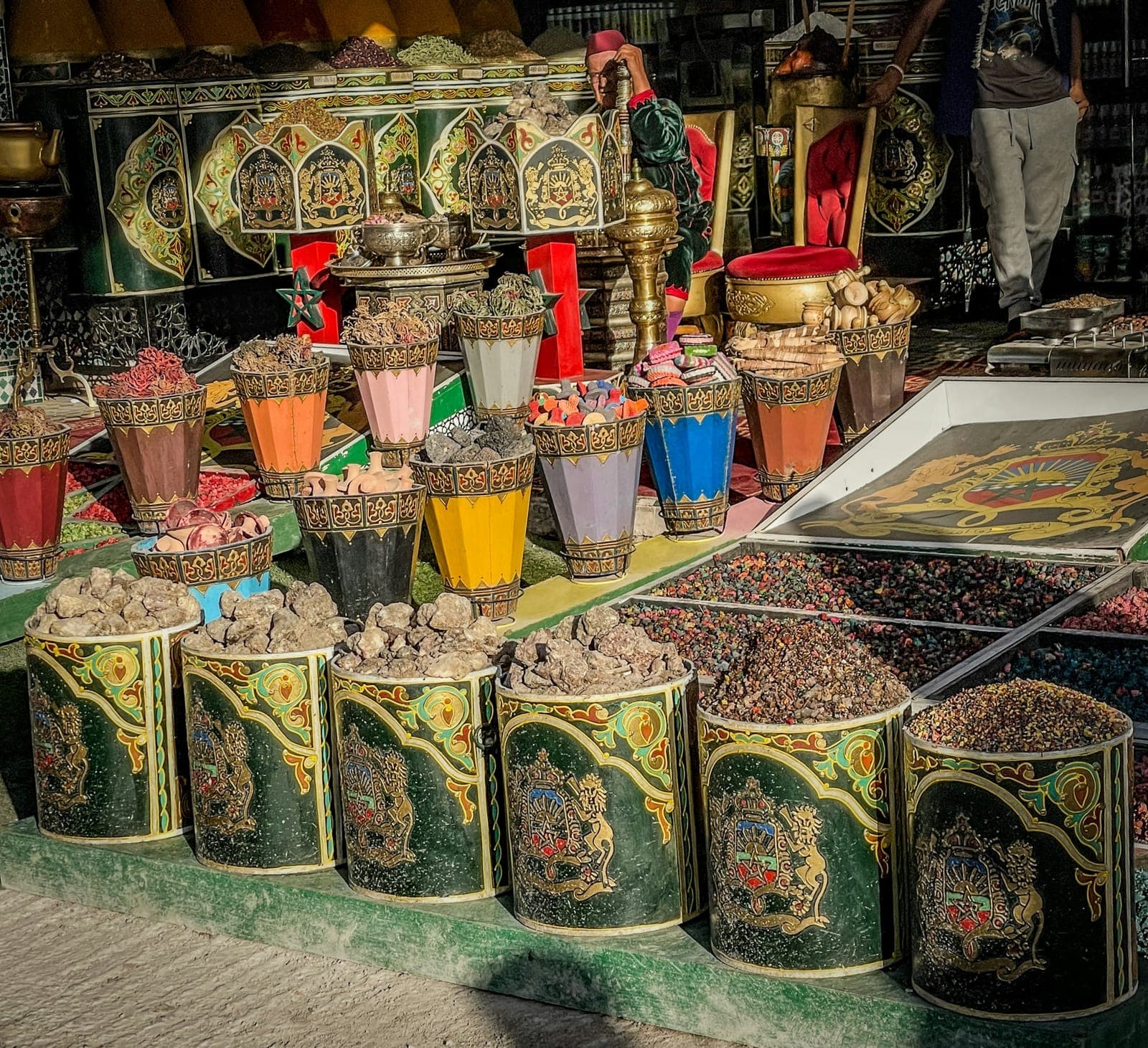
Marrakech Food & Market Tour — Half-Day Culinary Walk
- Rahba Kedima spice square — real saffron vs. dyed imitations
- Guided tastings through the medina's working food souks
- Hands-on tagine cooking class with a local family
€33 / person for 6+
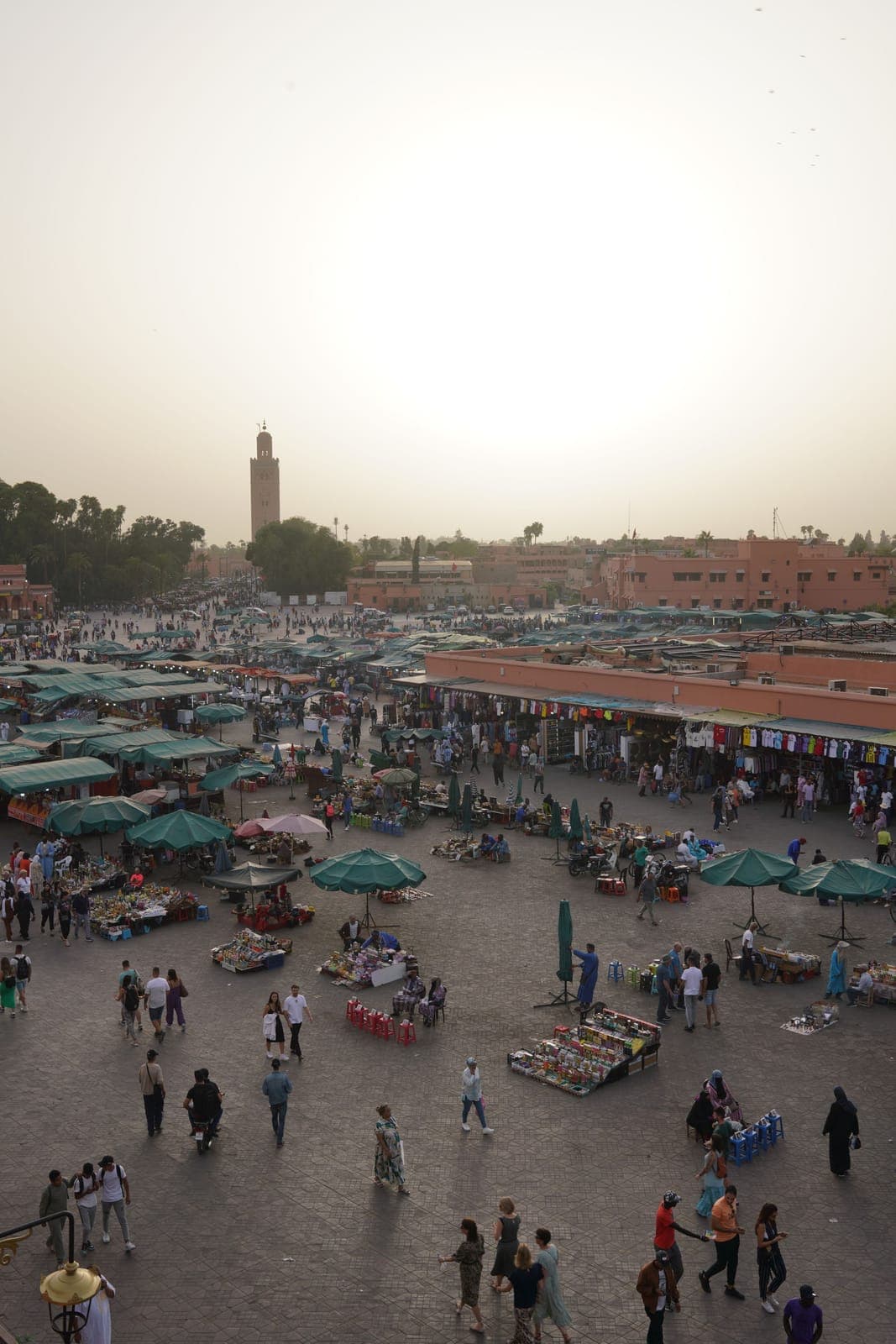
Marrakech Medina — Cultural Tour
- Djemaa El-Fna square at its most vibrant
- Leather tanneries viewed from a private rooftop
- Ben Youssef Madrasa — 16th-century Islamic college
€31 / person for 6+