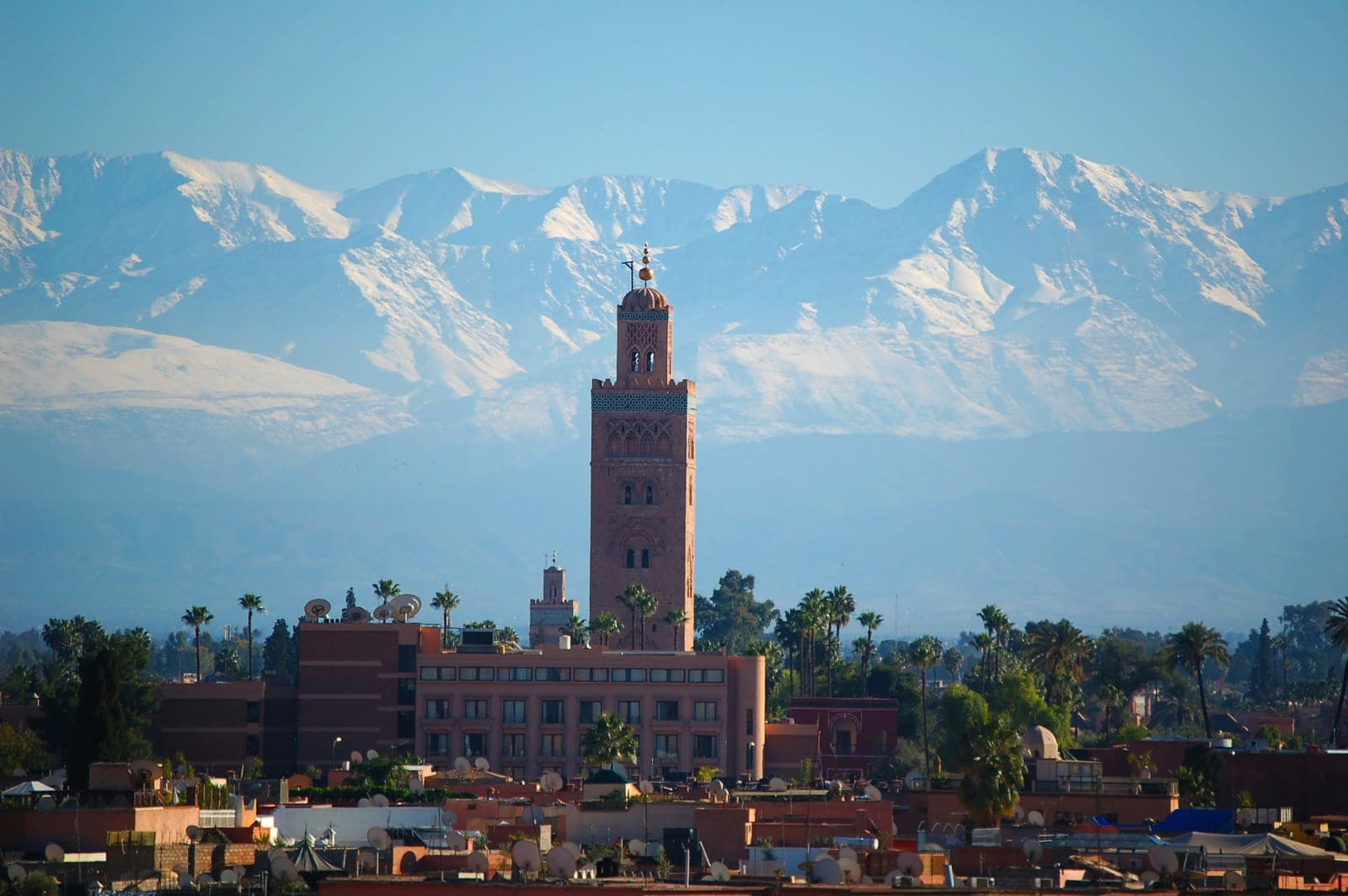
The deep indigo of the 'blue men' of the desert comes from nila. Here's what it is, why Tuareg robes rub off on your skin, and how to wear it without turning your fingers blue for a week.
The Blue That Comes Off on You
Spend a night in the Moroccan Sahara and you'll meet it sooner or later: the deep, almost violet blue of a Tuareg tagelmust — the long headscarf-turban of the desert. Wrap one on, and within an hour your neck and fingertips have quietly turned blue too. That's nila, and the staining isn't a mistake. It's the whole point.
Here's what nila actually is, why the "blue men of the desert" got their name, and — the practical bit — how to enjoy wearing it without spending the rest of your trip looking like you lost a fight with a fountain pen.
What Is Nila?
Nila is natural indigo dye. For centuries it was one of the most valuable goods crossing the Sahara — traded in hard, dark blocks alongside salt and gold, and prized for the extraordinary depth of blue it gave to cloth. The Tuareg and other Saharan peoples used it to dye the robes and headscarves that protect against sun, wind and blowing sand.
Because the pigment is burnished into the fabric rather than chemically bonded, it has a signature habit: it migrates. Onto skin, onto other cloth, onto anything it rubs against. In the desert that was considered a benefit — the indigo was thought to shield and soften the skin, which is how the wearers earned the nickname "the blue men of the desert." Their skin literally took on a bluish sheen from a lifetime in indigo robes.
Why It Stains (and Why That's Good)
Modern dyes are fixed so they never rub off. Traditional nila is the opposite — the transfer is part of its identity. So a simple test in the souk: if a "nila" scarf stays perfectly clean against your damp palm, it's probably a synthetic blue. If it leaves a faint indigo ghost on your skin, that's the real thing doing exactly what it has always done.
Which means the classic tourist moment — wrapping a turban at a desert camp, then noticing your hands have gone smurf-blue — is a rite of passage, not a disaster.
How to Wear Nila Without Turning Blue
You don't have to choose between the authentic scarf and clean hands. A few tricks the desert guides use:
- Let a new scarf "cure." Air it out and give it a gentle cold rinse before wearing — the loosest surface pigment comes off first.
- Dry skin transfers less. Most of the blue moves when you're sweating, so a scarf worn on a cool evening stains far less than one wrapped at midday.
- Wrap over a thin cotton layer at the neck if you really want to stay clean — a buff or a light collar takes the contact instead of your skin.
- Don't panic about your hands. Whatever transfers washes off your skin in a day or two; a good soapy scrub speeds it up. It is dye, not a tattoo.
- Protect your pale clothes, not your skin. The one thing genuinely worth guarding is a white shirt or a light bag. Treat the scarf like new dark denim.
Buying the Real Thing
The genuine article lives in the south. The Rissani market near Merzouga is famous for it; you'll also find nila blocks and ready-dyed tagelmust in Zagora and Ouarzazate. In Marrakech's dye souk it's sold too, though there the odds of getting a synthetic blue go up.
If you're heading to the dunes with us, just ask your guide — they know which stalls sell true indigo and will happily show you how to wind a tagelmust properly (and how to keep most of the blue on the cloth). It's one of those small, genuine bits of desert culture that a good guide turns from a souvenir into a story.
See the Blue Where It Belongs
Nila makes the most sense out in the sand, wrapped against a desert wind at sunset — not folded in a suitcase back home.
👉 Spend a night in the Sahara on our Merzouga desert tour — camel trek, a camp under the stars, and guides who'll teach you to wear the blue like a local. Prefer the wilder dunes? The 3-day Sahara tour from Marrakech takes you deep into Erg Chebbi.
Frequently asked questions
What is nila in Morocco?
Why does the blue dye rub off on your skin?
Does nila blue dye wash off?
Where can I buy real nila in Morocco?
Trips that go here
Guided by the team who wrote this guide.
Merzouga Stargazing from Marrakech — 2-Day Dark Sky Desert Tour
- Guided naked-eye and telescope stargazing session with an astronomy guide
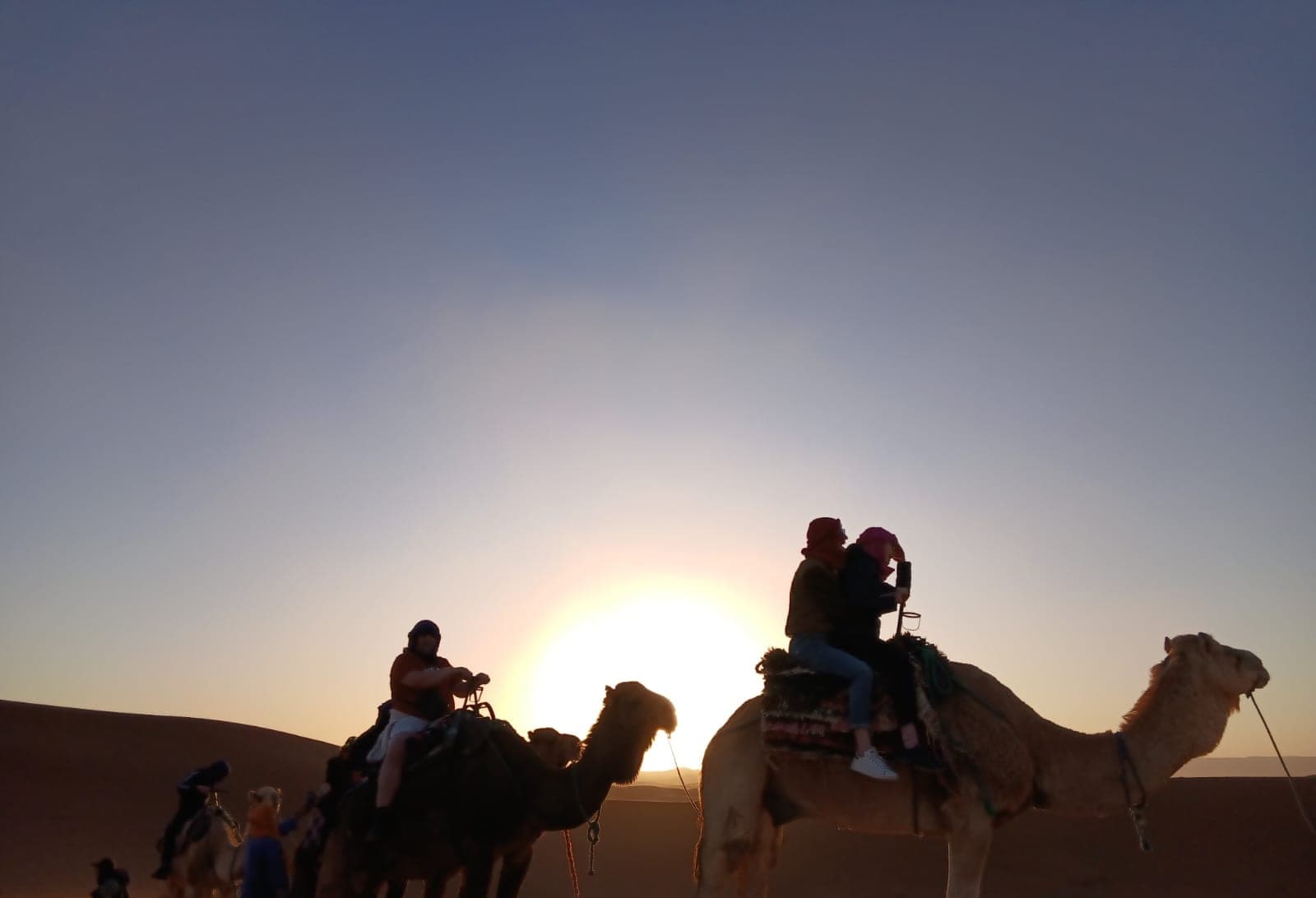
- Sunset camel trek into the Erg Chebbi dunes
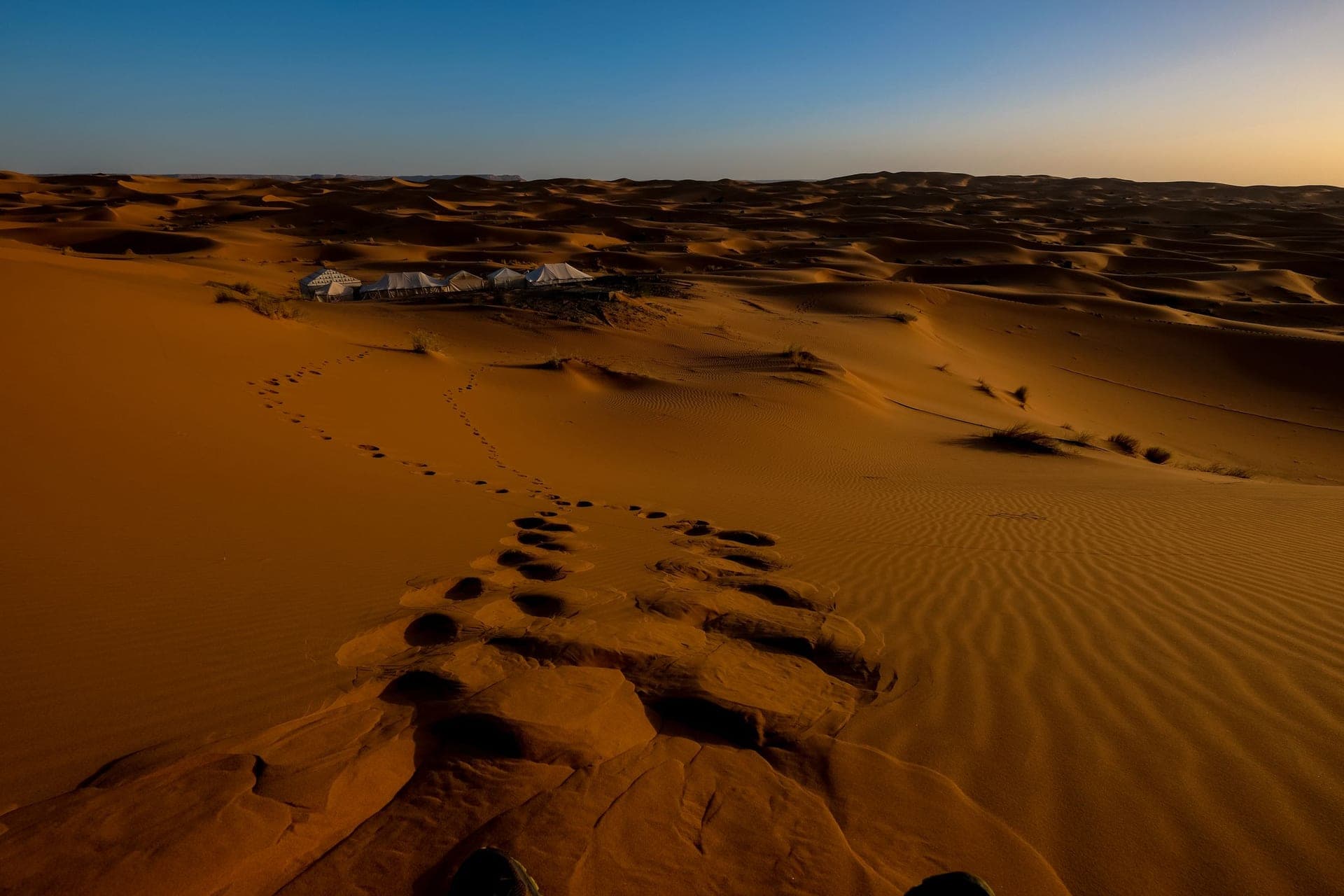
- One night in a traditional Berber desert camp, far from any light pollution
€121 / person for 6+
Marrakech to Merzouga — 3-Day Desert Tour
- Camel trek into Erg Chebbi dunes at sunset
- Overnight in a luxury Berber desert camp
- Stargazing with no light pollution at all
€230 / person for 6+
Erg Chegaga from Marrakech — 3-Day Remote Desert Expedition
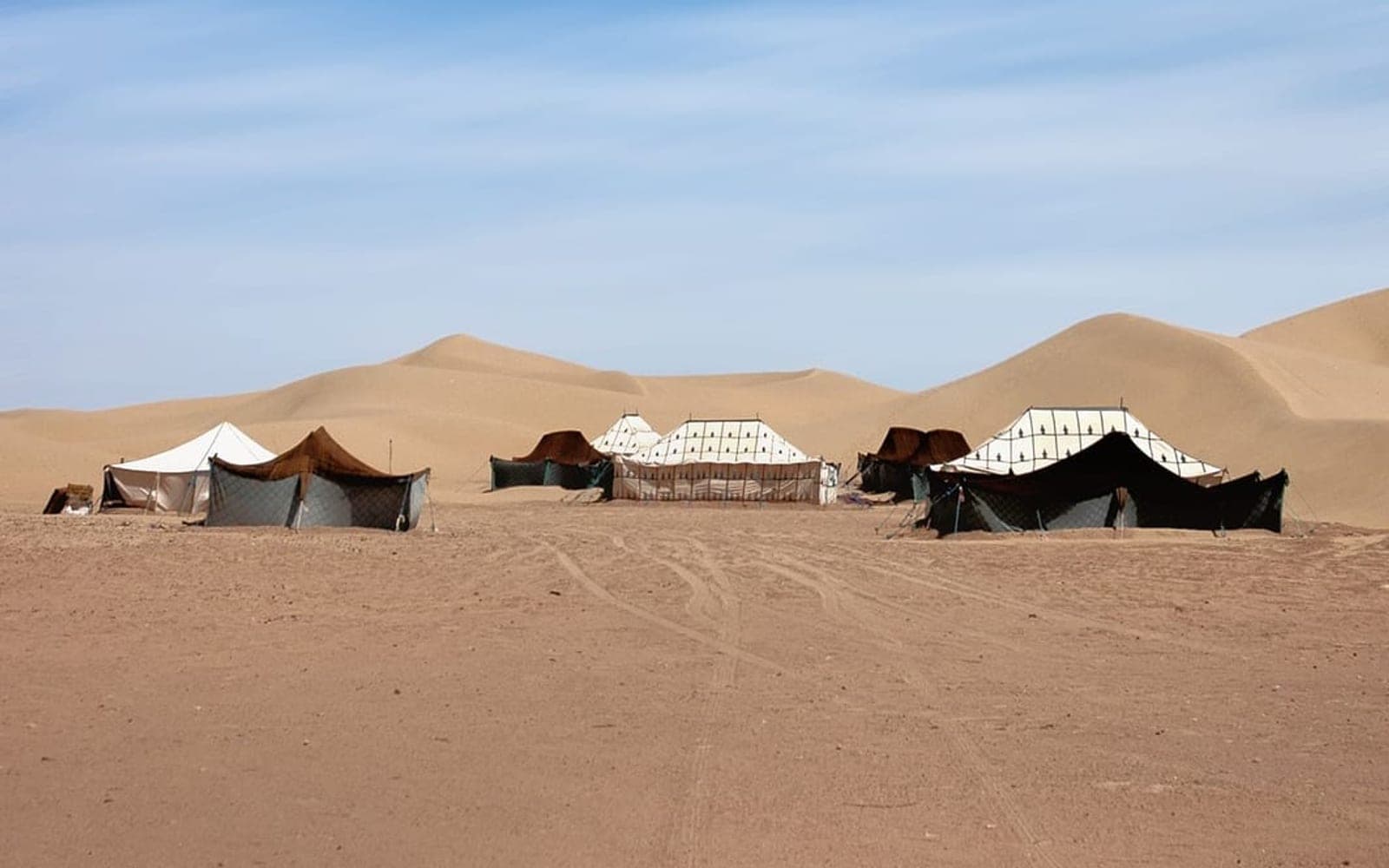
- Erg Chegaga — fewer tourists, 120 m dunes, profound silence
- 4x4 off-road desert crossing from M'Hamid into the dune field
- A night in a desert camp with no other camps in sight
€281 / person for 5+