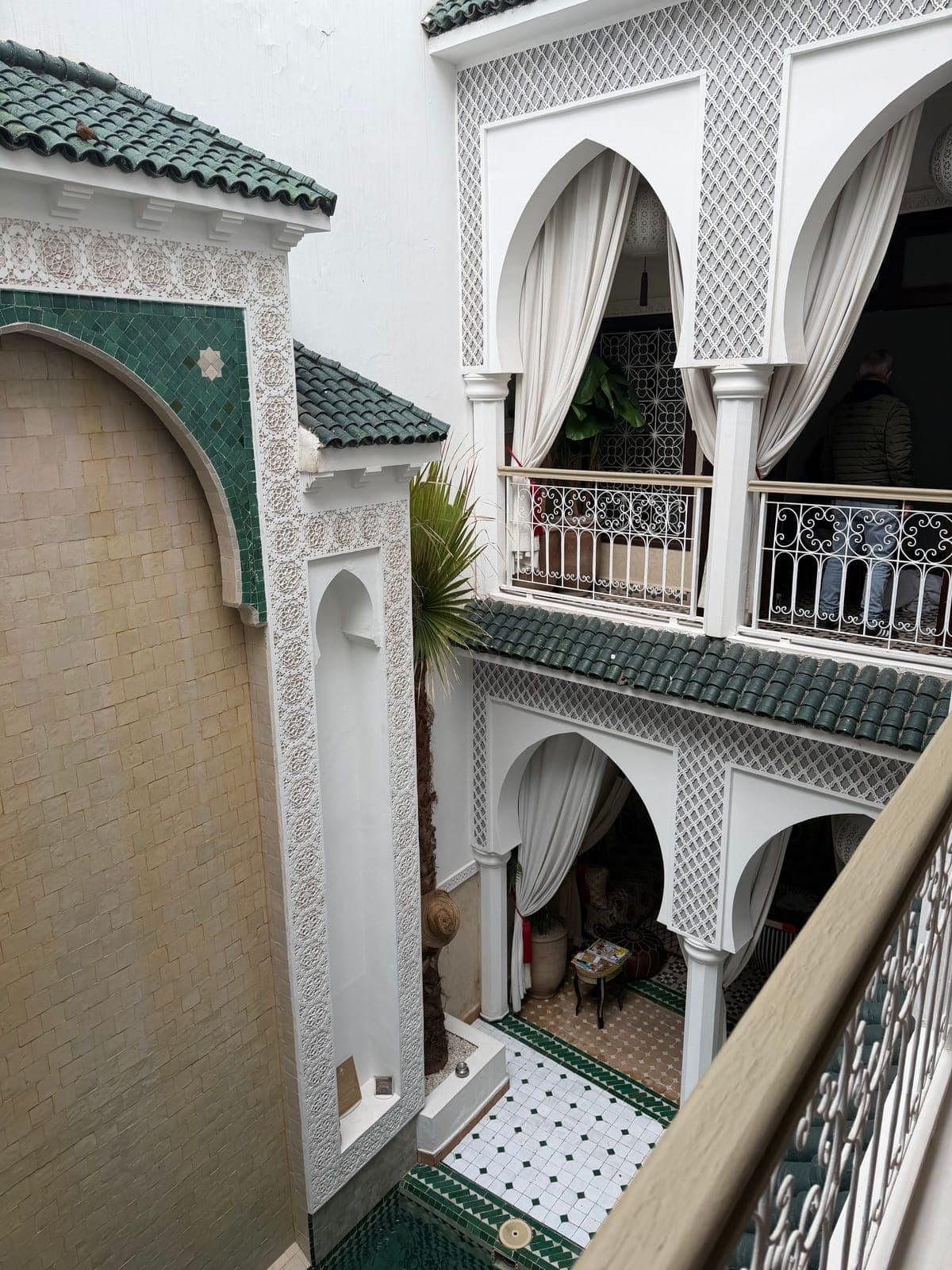
Every hotel in Marrakech seems to call itself a riad. Here's what the word actually means, why the design exists, and how to tell a real one from a marketing label.
The Word Means "Garden"
Riad comes from the Arabic word for garden. A traditional riad is a house built around an internal courtyard — historically planted with a garden, often with a fountain or reflecting pool — with every room opening inward onto that space rather than outward onto the street. Walk past one in the Marrakech medina and you'd likely never guess what's inside: the street-facing wall is usually plain, sometimes just a single unmarked door. That's intentional, not neglect.
The classic riad garden follows a specific, ancient geometry: a rectangular space divided into four quadrants by two intersecting paths, with a fountain or pool at the centre where they cross. That layout isn't a Moroccan invention — it traces back through Andalusian courtyard architecture in medieval Spain (the famous patios of Córdoba, Seville, and Granada) to Persian garden design, which spread through the Islamic world centuries earlier and reached Morocco from the 11th century onward, carried in by the Almoravid and Almohad dynasties that controlled both sides of the Strait of Gibraltar at the time. A Marrakech riad and a Córdoba patio share a genuine architectural ancestor, not just a passing resemblance.
Why the Design Exists
Two reasons, and both are practical rather than purely decorative. First, privacy: traditional Moroccan domestic life was kept away from public view, so the house turns its back on the street and puts everything — the tilework, the carved plaster, the planting — inward, visible only to the household and invited guests. Second, climate: the enclosed courtyard, often open to the sky but shaded by surrounding walls and sometimes a citrus or palm tree, moderates temperature far better than a building with street-facing windows in a hot, dry climate.
The Craft Behind the Walls
Three traditional materials do almost all the decorative work inside a genuine riad, and each is a real, still-practised craft rather than a generic "Moroccan style."
Zellige is the geometric mosaic tilework covering fountains, floors, and lower walls — made by hand-chiselling individual pieces from larger glazed ceramic tiles, then assembling hundreds or thousands of them into interlocking geometric patterns with no adhesive, relying purely on precise cutting and mortar to hold the pattern together. It's slow, skilled work, and a genuinely good zellige installation represents real specialist labour, not a printed tile pattern imitating one.
Tadelakt is the smooth, slightly lustrous plaster finish on many riad walls — polished lime plaster applied by hand, finished by rubbing with a smooth river stone and traditionally treated with black soap until it develops a soft, waterproof sheen. It was originally developed for hammams and bathrooms specifically because it resists water and mildew, which is why you'll often see it used in riad bathrooms today even where the rest of the house uses other finishes.
Cedar wood, sourced from the Atlas Mountains where it grows natively, is used for ceilings, doors, and carved window screens — its warm colour and grain are part of why a well-restored riad interior feels warm rather than austere despite the plaster and tile surrounding it.
Riad vs Kasbah vs Ksar
These get confused because they're all traditional Moroccan buildings, but they solve different problems. A kasbah is fortified — built for defence, historically in the south. A riad is domestic — built for private family life inside a city, with no defensive function at all. A ksar is a whole fortified village. You'll find riads inside city medinas (Marrakech, Fes, Essaouira) and kasbahs in the pre-Saharan south; they come from different regions and different needs.
What to Expect Staying in One
Most riads operating as guesthouses today keep the traditional layout — rooms around a central courtyard, often with a rooftop terrace added for views over the medina — while adding modern plumbing and, usually, a small plunge pool in the courtyard itself. Because everything opens onto one shared space, a riad often feels more like staying in someone's home than in a hotel, for better and occasionally for worse: sound can travel across the courtyard more than it would down a hotel corridor.
Finding them is the harder part. Riads are deliberately invisible from the street, so the doors worth knowing are the ones with nothing on them — which is why our Marrakech medina tour walks the derbs where they cluster rather than the main souk routes.
A Marketing Word, Sometimes
Because "riad" now signals boutique and traditional to international travellers, the word gets attached loosely to properties that don't actually have a central courtyard. If the layout matters to you, ask directly, or look for a courtyard photo before booking — the defining feature is the architecture, not the name on the sign.
Frequently asked questions
Is every 'riad' in Marrakech a real riad?
Why do riads face inward with no windows on the street?
Are riads good for families or groups?
Trips that go here
Guided by the team who wrote this guide.
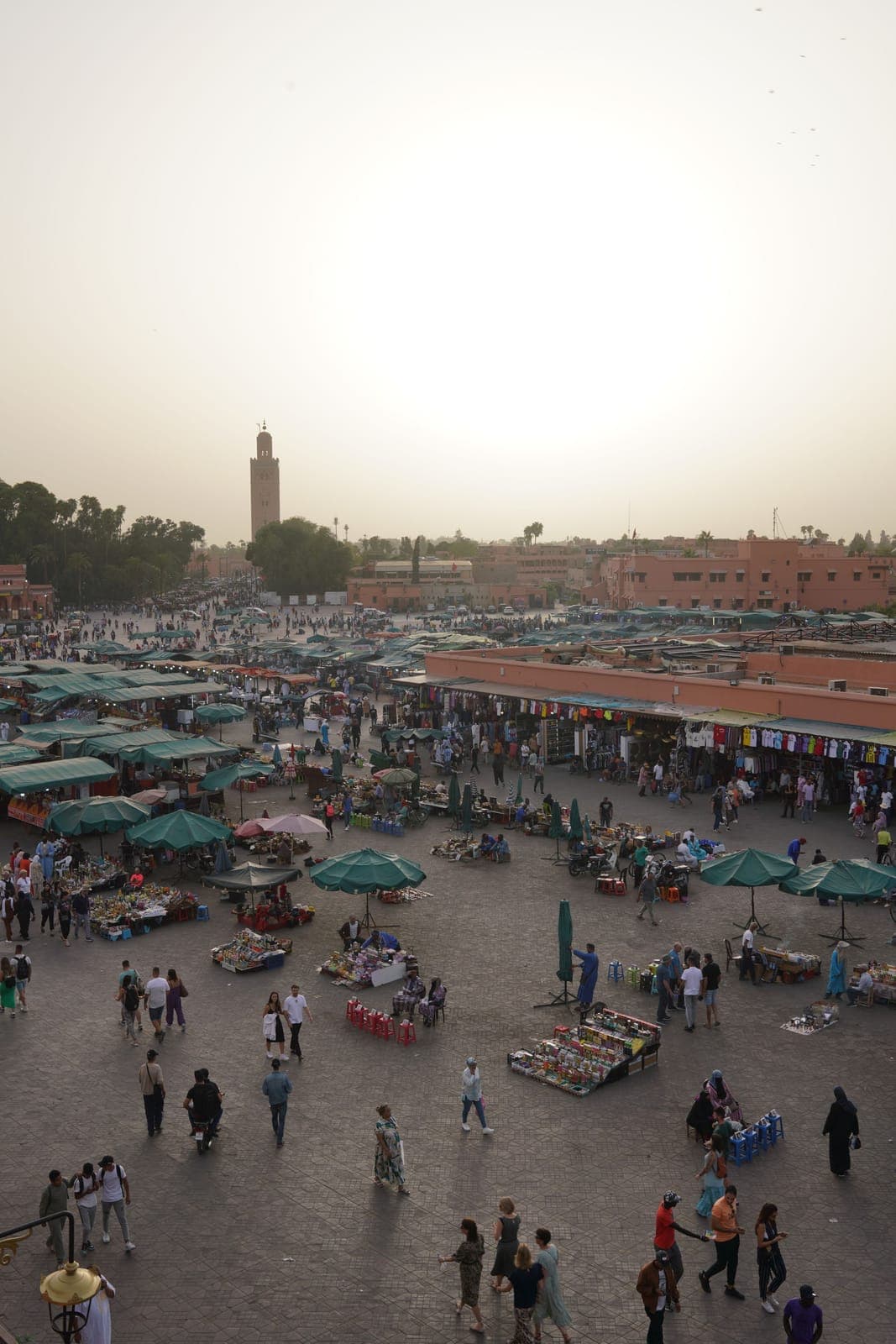
Marrakech Medina — Cultural Tour
- Djemaa El-Fna square at its most vibrant
- Leather tanneries viewed from a private rooftop
- Ben Youssef Madrasa — 16th-century Islamic college
€31 / person for 6+
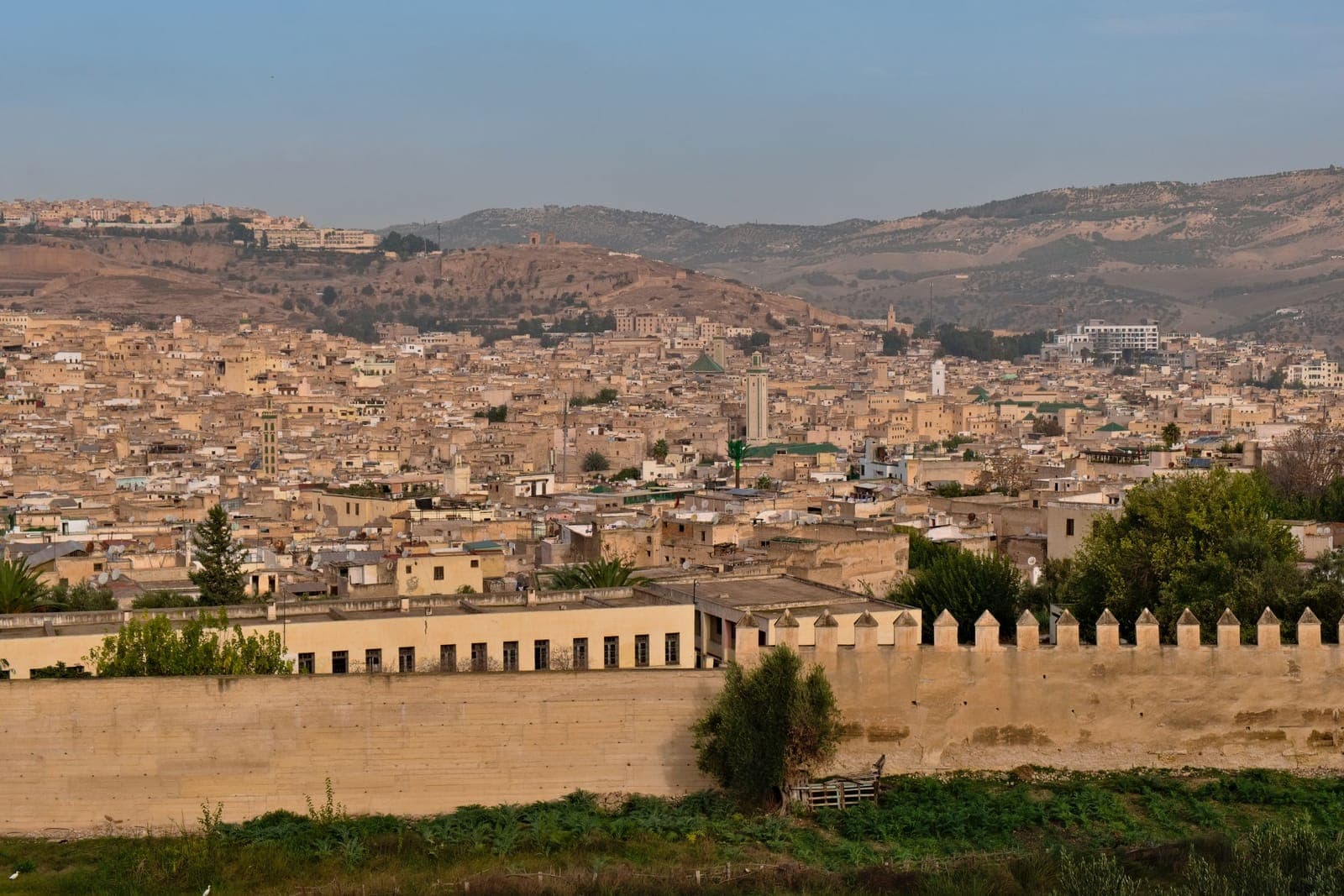
Marrakech — All 4 Imperial Cities — 5-Day Grand Tour
- All 4 Imperial Cities: Marrakech, Meknes, Fes, Rabat
- Volubilis Roman ruins (UNESCO World Heritage)
- Hassan II Mosque in Rabat
€261 / person for 6+