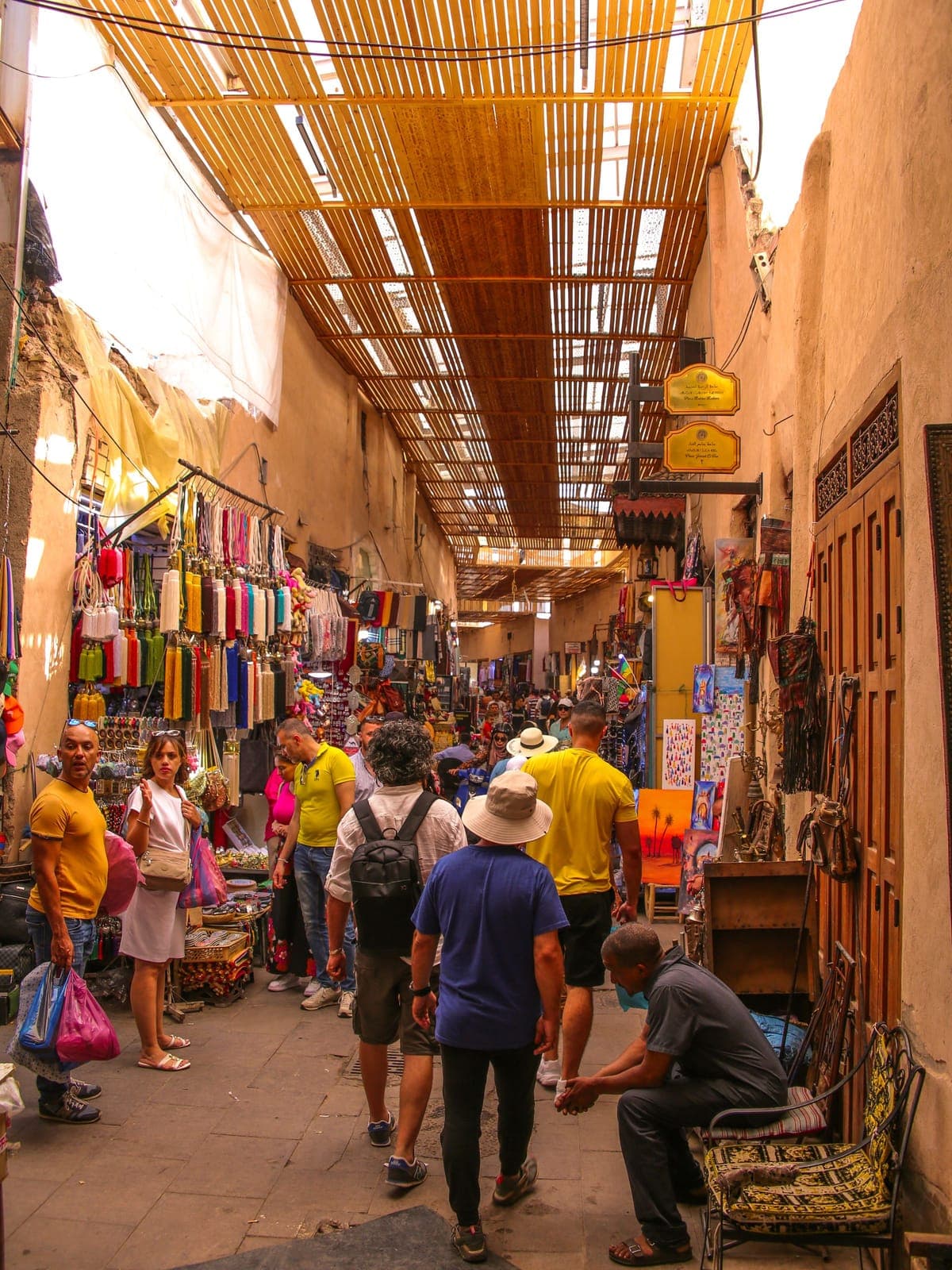
You need working data more in the Atlas and the Sahara than in Marrakech, which changes which network actually matters. Here's what to buy and where.
Why the Right Network Isn't the Obvious One
Most SIM card advice online is written for city travellers and ranks networks by speed in Marrakech or Casablanca. If your trip includes the High Atlas or the Sahara — which most of ours do — that's the wrong comparison. The network that matters is the one with the best coverage once you're an hour outside a city, and that changes the answer.
The Three Networks
Morocco has three mobile operators: Maroc Telecom (branded IAM), Orange, and Inwi. All three sell tourist SIMs at airport kiosks and phone shops in every city, and all require passport registration — this is a legal requirement, not paperwork you can skip.
Maroc Telecom generally has the strongest coverage outside major cities, including in the High Atlas villages and along the desert routes toward Merzouga and Zagora. It inherited the former state telecom network, which was built out furthest into rural areas, and independent network testing consistently shows it holding a real edge specifically in mountain and desert terrain — not just marginally, but the difference between having a signal at a remote trailhead or desert camp and not having one at all.
Orange and Inwi are competitive on price and city-centre speed, and either is a perfectly good choice if your trip stays mostly in Marrakech, Fes, Casablanca and other urban stops. Inwi in particular tends to bundle more data for the same price and is currently the only network offering a genuinely unlimited prepaid data plan — worth considering if your trip is city-based and data-heavy, less relevant if it isn't.
What to Actually Buy, and What It Costs
Tourist SIM pricing in Morocco is genuinely cheap by most travellers' home-country standards. A basic package with several gigabytes of data typically runs 30–50 MAD (roughly €3–5); a larger tourist bundle — commonly 20–30 GB valid for a month, with some calling minutes included — runs closer to 150–200 MAD (roughly €14–19). That larger package comfortably covers a typical two-week trip including navigation, messaging, and photo uploads. City phone shops are consistently 20–40% cheaper than the same SIM bought at an airport kiosk, so if convenience isn't essential, waiting until you're in town saves real money.
Buy at an airport kiosk on arrival for convenience (available at Marrakech, Casablanca, Agadir, Fes and Tangier airports) or at a phone shop in any city centre. Either way, bring your passport — registration is mandatory and takes a couple of minutes at the counter.
eSIM vs Physical SIM
An eSIM lets you activate data before you land, which is genuinely useful if you want connectivity the moment you step off the plane. It's usually a little more expensive than a local physical SIM for the same data — figure €5–15 for an eSIM bundle roughly comparable to a 150–200 MAD local SIM — and it won't give you a Moroccan phone number, which some taxi apps and hotels want. Many travellers use an eSIM for the first day and switch to a local physical SIM once they've settled in, getting the arrival convenience without paying the eSIM premium for the whole trip.
Coverage on Trek and in the Desert
Be realistic about signal once you leave paved roads. On multi-day treks in the High Atlas — see What to Pack for a High Atlas Trek — coverage exists in villages like Imlil but thins out or disappears at altitude and in the more remote valleys. In the desert, towns have signal; the dunes and desert camps generally do not. Tell people at home when to expect to hear from you, rather than assuming you'll have a signal the whole trip.
For what it is worth on our own trips: there is usable signal at Imlil and patchy signal at the Toubkal refuge, and none on the 3-day Sahara route once you leave Merzouga for the camp. Our guides carry phones and know where the reception spots are, so a message home is always possible — just not on demand.
A Simple Way to Decide
If your trip includes any multi-day trekking or a desert tour beyond a single day, buy a Maroc Telecom SIM — the coverage advantage in exactly those situations is real and well-documented, and the price difference versus Orange or Inwi is small enough not to matter. If your trip is genuinely city-only — Marrakech, Fes, Casablanca, Essaouira, with no mountain or desert nights — any of the three networks will serve you well, and it's worth comparing current bundle prices at the airport kiosk or your first phone shop rather than assuming one is always cheapest.
Frequently asked questions
Which network has the best coverage outside the cities?
Can I buy a SIM at the airport?
Is eSIM worth it instead of a physical SIM?
Will I have signal on the Toubkal trek or in the Sahara?
Trips that go here
Guided by the team who wrote this guide.
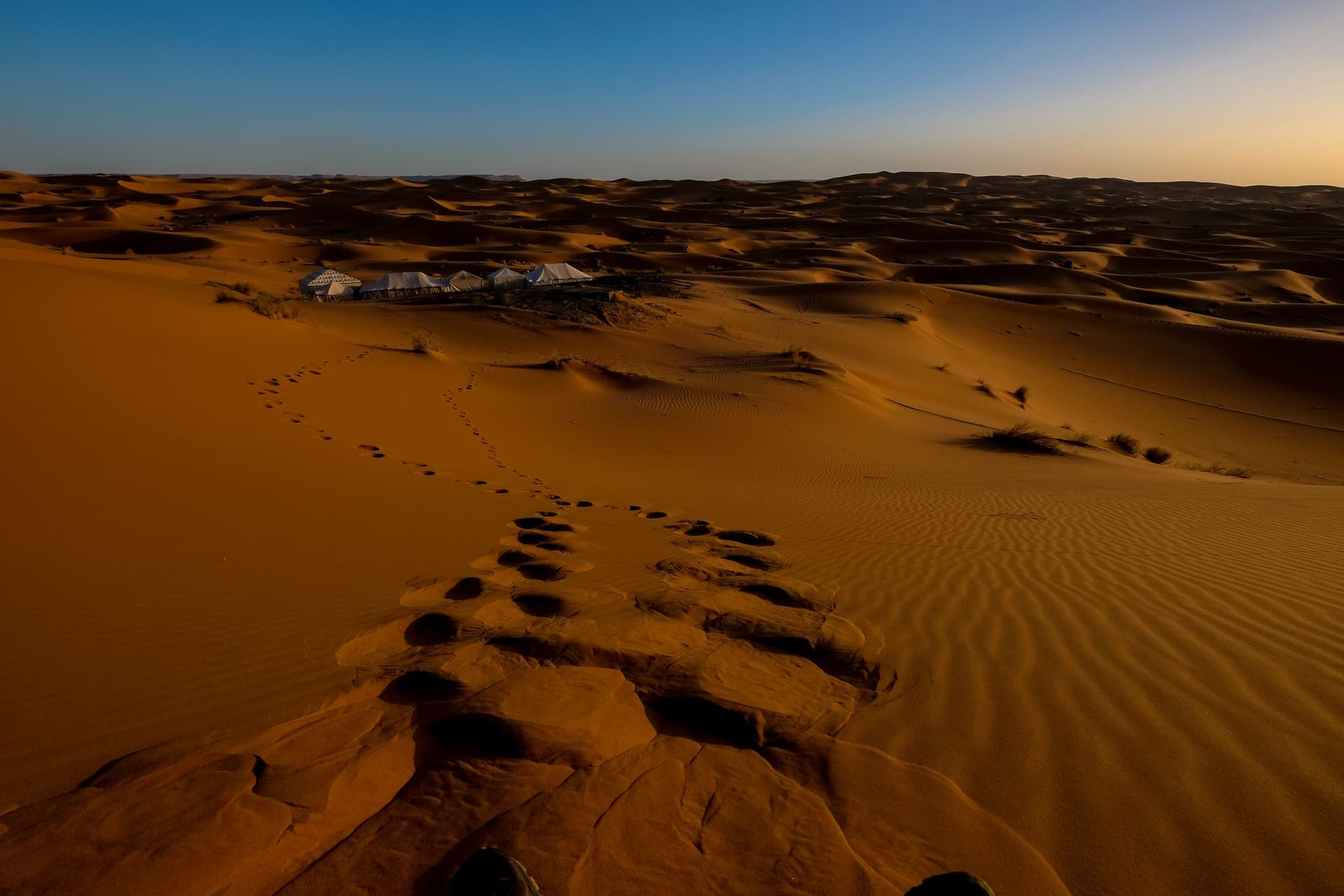
Marrakech to Merzouga — 3-Day Desert Tour
- Camel trek into Erg Chebbi dunes at sunset
- Overnight in a luxury Berber desert camp
- Stargazing with no light pollution at all
€230 / person for 6+
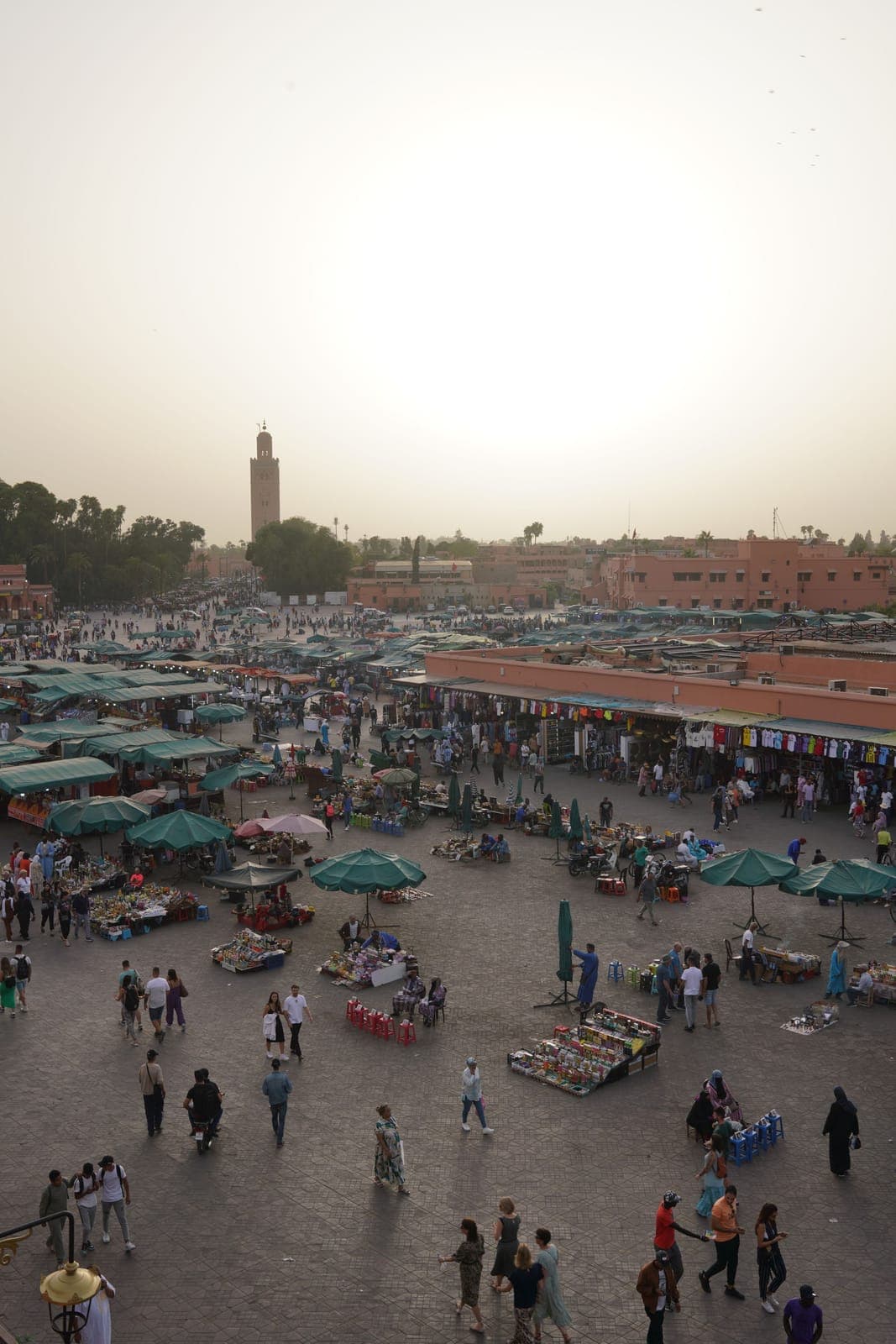
Marrakech Medina — Cultural Tour
- Djemaa El-Fna square at its most vibrant
- Leather tanneries viewed from a private rooftop
- Ben Youssef Madrasa — 16th-century Islamic college
€31 / person for 6+