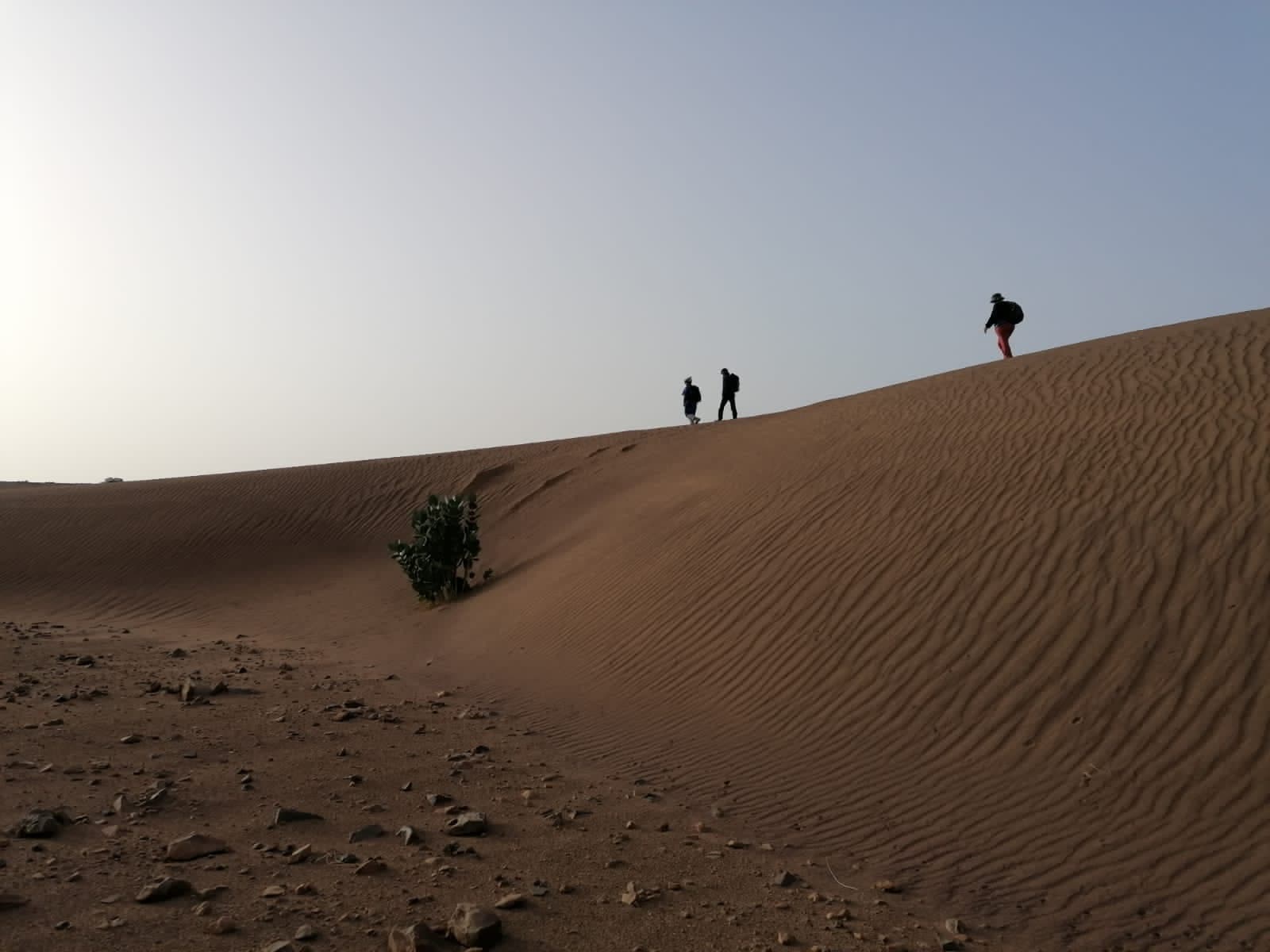
Desert days are hot and desert nights are genuinely cold — the packing mistake almost everyone makes is preparing for one and not the other. Here's the list our guides actually use.
The One Thing Everyone Gets Wrong
The single most common packing mistake on a desert tour: dressing for the daytime heat and forgetting that desert nights are cold, often surprisingly so. Clear skies that let the sun bake the sand by day also let all that heat radiate straight back out after sunset — temperatures can drop from the mid-30s°C at midday to single digits after dark, even in summer. Pack for both, not just the one you're standing in when you leave home.
Clothing
- Layers, not one heavy jacket. A t-shirt or light long-sleeve for the day, a fleece or warm mid-layer for evening, and a proper insulated jacket for the coldest hours around a desert camp at night.
- Long, loose, breathable clothing for daytime — this protects against sun and blowing sand better than shorts and a t-shirt, and it's the more culturally appropriate choice in the small towns you'll pass through.
- A scarf or shesh (the cotton head-wrap worn locally) — genuinely useful against sun and windblown sand, not just a souvenir. Most tours provide one, but bringing or buying your own means you'll actually use it.
- Closed shoes, not sandals, for walking on dunes and around camp — sand gets everywhere in open footwear, and it holds onto heat.
- A warm hat and gloves for winter departures — desert nights in December and January can approach freezing.
Practical Extras
- A headlamp or torch. Desert camps have minimal lighting after dark, and finding your tent or the toilet block at 2am without one is a bad time.
- A refillable water bottle. Tours provide water, but having your own bottle to refill cuts down on plastic and is easier to sip from during a long drive.
- Sunglasses and sunscreen — desert sun reflecting off pale sand is stronger than it looks, even in cooler months.
- A dry bag or large ziplock for electronics. Fine sand finds its way into camera bags and phone pockets; a sealed bag is cheap insurance.
- Cash in small denominations for tips and small purchases in towns along the route — card machines are unreliable outside cities.
What You Don't Need
- Hiking boots, unless your itinerary also includes trekking — desert walking doesn't need technical footwear.
- A full camping setup — overnight desert camps provide tents, mattresses and bedding; you're not carrying your own shelter.
- Valuables you'd be upset to lose in fine sand. It gets into everything; leave the good watch at the riad.
The Camel Trek Itself
Most Erg Chebbi and Erg Chegaga tours include a camel trek into camp, typically 45 minutes to an hour and a half depending on the specific route. A few things make that stretch more comfortable: loose trousers rather than shorts (the saddle and stirrup straps can chafe bare skin), a scarf wrapped properly against the wind, which picks up noticeably once you're moving and exposed on a ridge, and accepting that a certain amount of swaying, ungainly rhythm is just what riding a camel is — it's not a sign you're doing it wrong. If you have back or hip problems that make an hour on an unfamiliar animal a genuine concern, ask in advance about a 4x4 transfer alternative into camp instead; most operators, including us, can arrange it.
Photography Gear
Desert light is genuinely spectacular at both ends of the day, and a lot of guests want to capture it properly. If you're bringing a camera beyond a phone: a lens cloth or blower for clearing sand off the lens (never wipe dry sand across glass — it scratches), spare batteries kept in an inside pocket rather than a bag left in a hot vehicle, and a plan for backing up photos, since a lost phone or corrupted card is a much worse outcome in the middle of a desert trip than at home. Sunrise from the top of a dune is the classic shot for a reason, and it requires being awake and climbing in the dark before first light — worth deciding the night before whether you're actually going to do it, rather than deciding at 5am when the tent is warm and the dune is not.
Seasonal Adjustments
Summer (June–September): Daytime heat is the dominant concern, not the cold — temperatures at Merzouga regularly exceed 40°C by early afternoon. Prioritise sun protection and hydration over the warm layers; nights are still cooler than the day but rarely approach the near-freezing conditions of deep winter.
Winter (December–February): The cold-night warning in this guide is most literal here. Desert nights in these months can approach or dip below freezing, and the insulated jacket, hat and gloves stop being optional extras and become the difference between an actually comfortable night and a miserable one.
Spring and autumn (March–May, October–November): The most forgiving seasons and the reason most tours run heaviest then — warm, comfortable days and cool but not extreme nights, so the standard layered packing list covers you without much adjustment either direction.
If Your Trip Combines Desert and Mountains
Some of our itineraries — the 4-day Desert Grand Tour, for instance — cover a lot of ground and a lot of temperature range in a short time. If your trip also includes High Atlas trekking, cross-reference this list against What to Pack for a High Atlas Trek — the mountain list needs more technical layers than the desert one.
What you need depends enormously on the month. Sahara weather month by month has the temperatures — 19°C days in January against 43°C in July, and nights that fall close to freezing in winter.
Trips that go here
Guided by the team who wrote this guide.
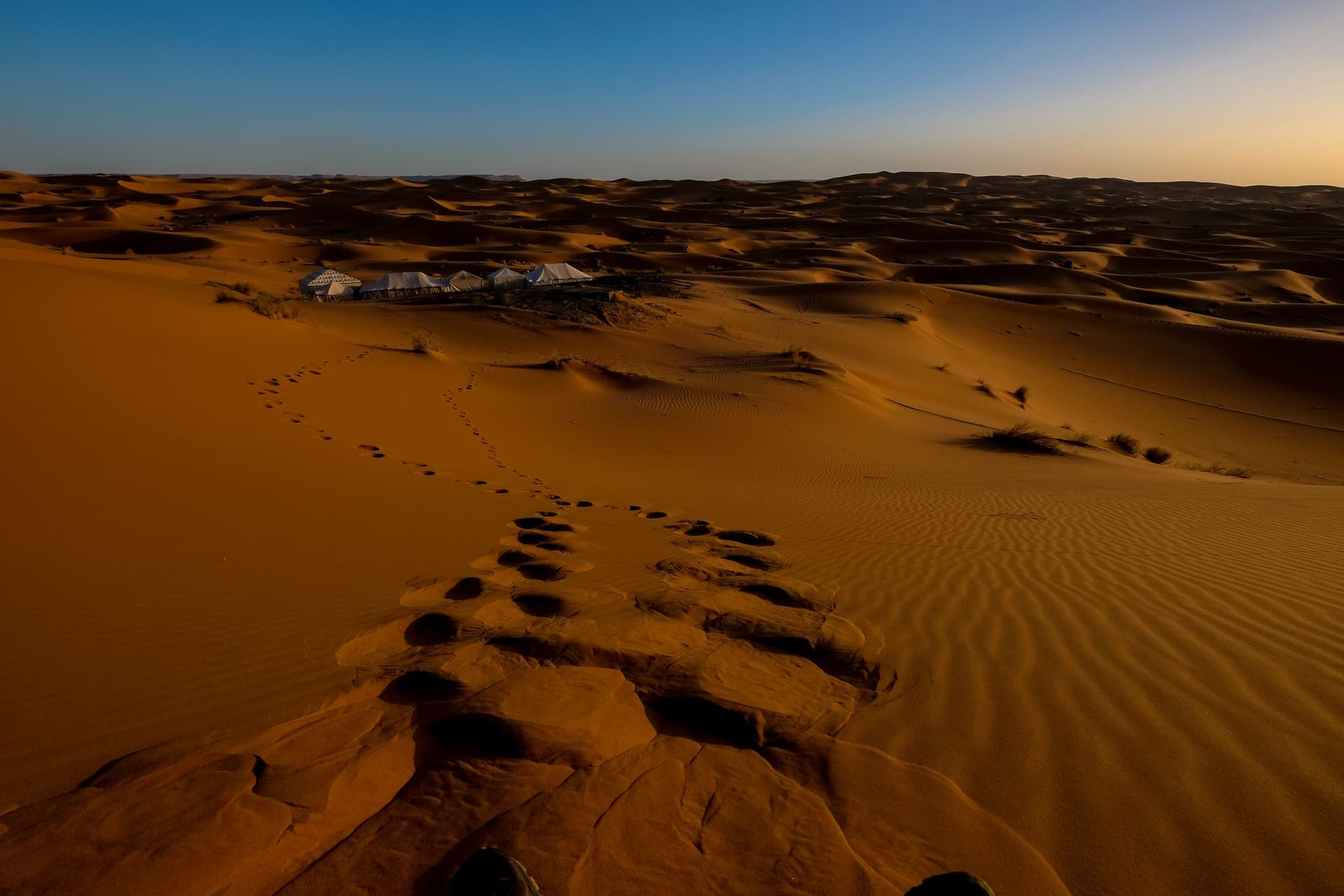
Marrakech to Merzouga — 3-Day Desert Tour
- Camel trek into Erg Chebbi dunes at sunset
- Overnight in a luxury Berber desert camp
- Stargazing with no light pollution at all
€230 / person for 6+
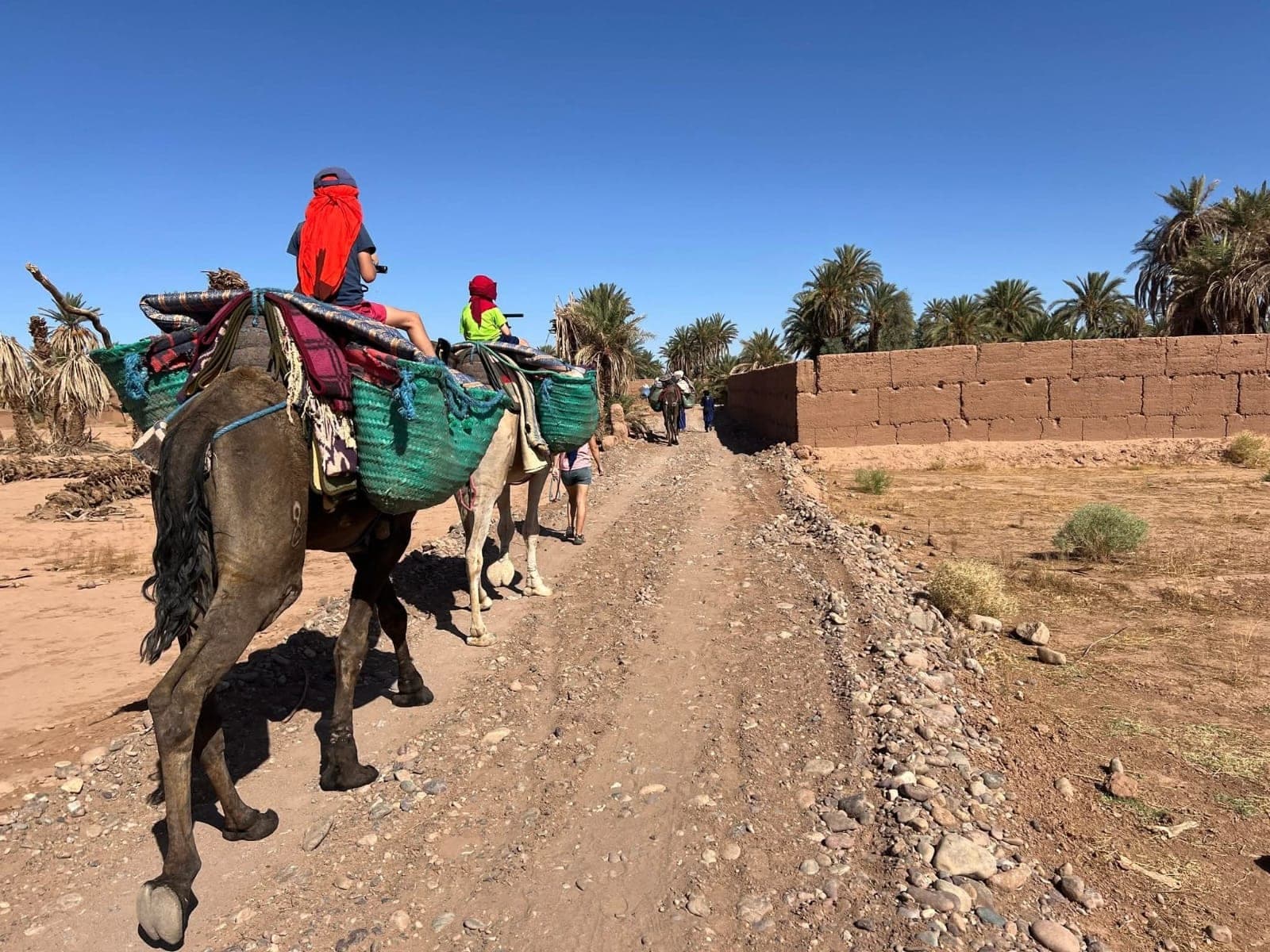
Marrakech to Zagora — 2-Day Desert Tour
- Draa Valley — Morocco's longest oasis, 200 km of date palms and kasbahs
- Camel trek on the Erg Lehoudi dunes at sunset
- Overnight in a Berber desert camp with traditional music
€98 / person for 14+
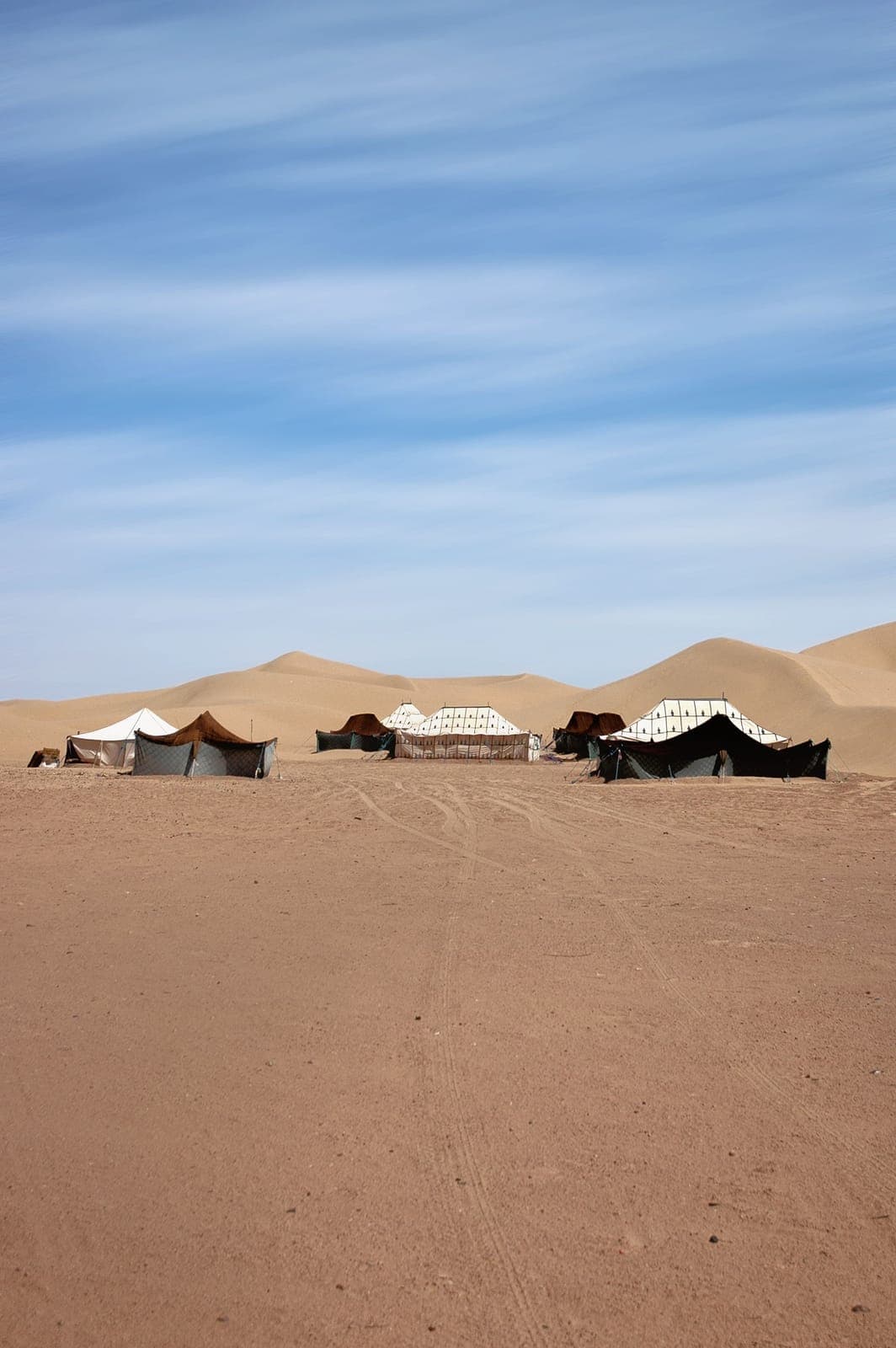
Erg Chegaga from Marrakech — 3-Day Remote Desert Expedition
- Erg Chegaga — fewer tourists, 120 m dunes, profound silence
- 4x4 off-road desert crossing from M'Hamid into the dune field
- A night in a desert camp with no other camps in sight
€281 / person for 5+