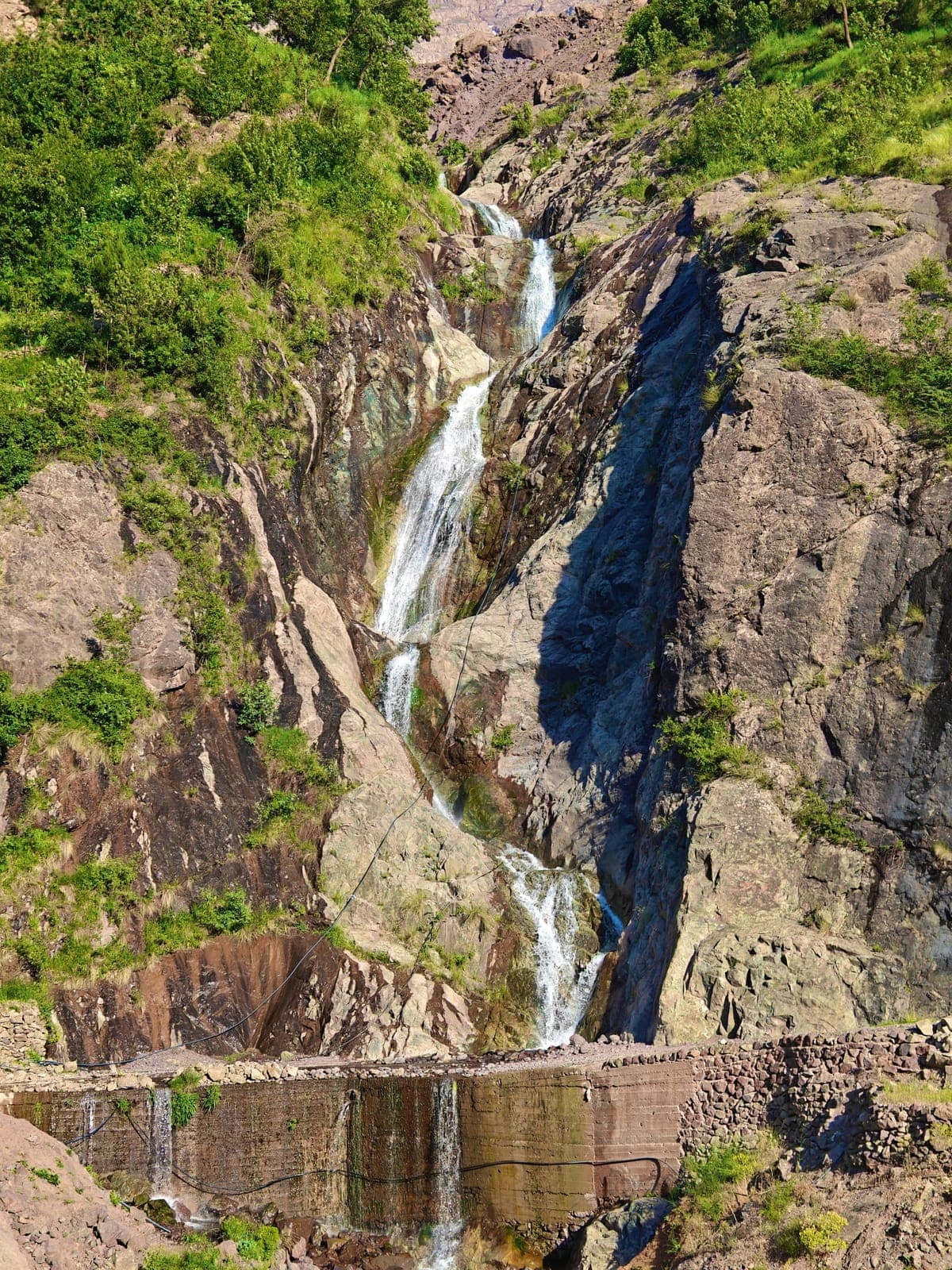
From Casablanca to Toubkal. From Rabat to the Sahara. Millions of Moroccans have never climbed their own highest mountain or slept under their own desert sky. Here's why domestic adventure travel is having a moment — and where to start.
The Country You Already Own
There is a particular feeling that comes from standing at 4,167 m on Jbel Toubkal and looking south toward the Sahara, then north toward Marrakech. For most international visitors, it is wonder. For a Moroccan making the summit for the first time, it is something stranger and more personal: the realisation that you have been living next to something extraordinary and somehow never looked directly at it.
We hear this from Moroccan guests regularly. "I grew up an hour from Imlil and never came." "I've been to Portugal three times but never to the Draa Valley." "My grandmother's village is in the Ourika Valley and I've never walked up past it."
This is not unique to Morocco — people in every country are last to discover their own landscapes. But the gap here feels particularly worth closing, because what Morocco has to offer is genuinely extraordinary.
What's Changed
Domestic adventure tourism has grown significantly in Morocco over the last five years. The reasons are layered:
If you are mapping out what the country actually offers region by region, our adventure travel guide to Morocco covers the Atlas, the Sahara, the coast and the south in one place.
Cost: A weekend in the High Atlas costs a fraction of a flight to Europe. A three-day Sahara circuit from Marrakech is achievable on a teacher's or engineer's budget, especially when booked directly with an operator.
Pride: There is an active cultural shift among younger Moroccans toward engaging with Amazigh heritage, Berber language, and the pre-urban Morocco that most city families left a generation or two ago. A guided trek through the High Atlas is increasingly understood as reconnection, not just recreation.
Quality of operators: The standards of licensed mountain guiding in Morocco have improved substantially. A guided Toubkal summit attempt with a certified Berber guide is now a genuinely world-class experience — not because it has been packaged for foreigners, but because the people who know the mountain best are the ones leading it.
Where to Start
The High Atlas and Toubkal
Toubkal (4,167 m) is the obvious starting point for any Moroccan who hasn't done it. The summit is achievable in two days for a reasonably fit person with no technical climbing experience. You do not need ropes, crampons (outside winter), or a background in mountaineering. You need good shoes, appropriate clothing, and a licensed guide who knows the route in every weather.
The experience of ascending through Berber villages, spending a night at the Refuge du Toubkal, and standing above North Africa at dawn is not something most people — Moroccan or otherwise — forget. It is a reference point.
For those who want more time in the mountains without the summit, the valleys of Ourika, Aït Bou Guemez, and the Mgoun massif offer multi-day treks through landscapes that most Moroccans have never visited despite being within a day's drive.
The Sahara
The Sahara near Merzouga (Erg Chebbi) and M'hamid (Erg Chegaga) draws visitors from around the world. The route south — through Ouarzazate, the Draa Valley, the Todra and Dades gorges — is one of the great road journeys in Africa. Most Moroccans living in the north have never made it.
A three-day circuit from Marrakech, with an overnight desert camp under the stars, is one of the most transformative short trips available in the country. The silence of the Sahara at night — genuine, total, without any traffic or electricity — is a thing most people have never encountered and do not expect to encounter within their own borders.
The Atlantic Coast
Morocco's Atlantic coast from Agadir south to Sidi Ifni and Mirleft offers a completely different country: surf beaches, argan-forested hillsides, whitewashed fishing villages, and cliff-backed coves that feel nothing like the medinas of the north. The Anti-Atlas behind the coast adds another layer — arid red rock, pre-Saharan light, Amazigh villages that have changed very little in a century.
This region is less visited by domestic tourists than the Atlas or Sahara and deserves more attention.
A Note on Guided vs Self-Guided
We are a guided-tour operator and have an obvious interest in recommending guides. We'll say it anyway: for the Atlas and the Sahara especially, a licensed local guide is not just a convenience — it is a fundamentally different experience.
The difference is not safety (though safety matters). It is knowledge. A Berber guide who grew up in these mountains knows which valley produces the best saffron — Taliouine, in the foothills between the High and Anti-Atlas, has been Morocco's real saffron heartland for generations, and it takes something like 150,000 hand-picked crocus flowers to yield a single kilogram of the dried spice, which is why it commands the price it does — which village is known for a particular weaving tradition, why a certain route takes a specific turn at a specific stone. This is context you cannot read in a guidebook because it was never written down — it was passed, orally, from one generation of mountain families to the next.
That knowledge is the product. The mountain is the setting.
Booking as a Moroccan Resident
We work with Moroccan nationals on the same terms as international visitors. Pricing is listed on each tour page; there is no surcharge for Moroccan passports, and we offer the same cancellation policy and direct communication to everyone.
If you have specific questions about a trip — best season for a particular route, what to bring, whether a route is suitable for your group's fitness level — contact us directly. We respond to every message personally.
The High Atlas is, geologically speaking, still young and still rising — it was pushed up as Africa drifted north into Europe, a collision that began tens of millions of years ago and, remarkably, is still happening today at a few centimetres a year. It has been here, in the form you would recognise, for a very long time by any human measure. It will wait. But it is also worth not waiting too much longer.
Trips that go here
Guided by the team who wrote this guide.
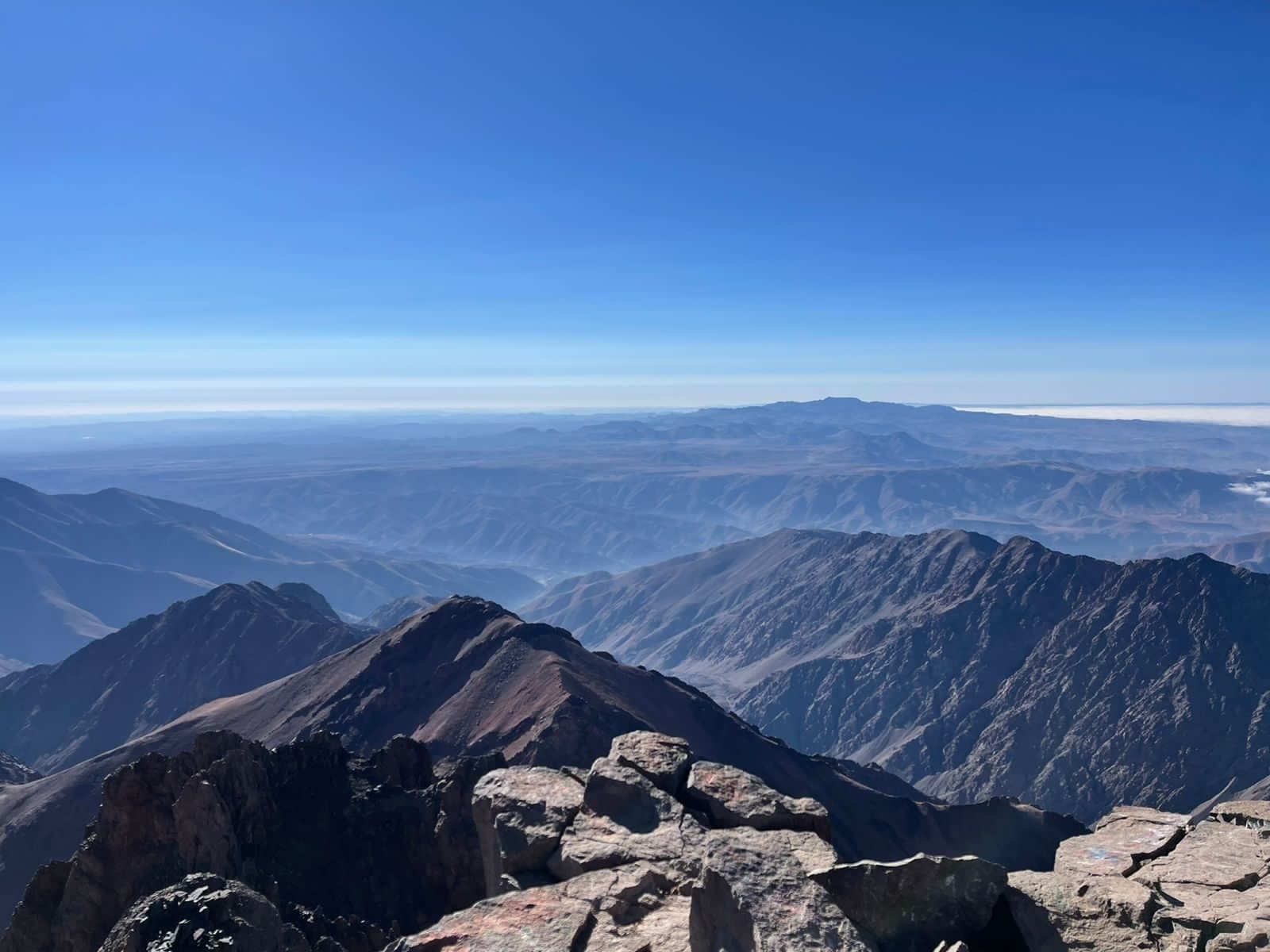
Mount Toubkal Express — 2-Day Summit from Marrakech
- Summit Jbel Toubkal (4,167 m) in just two days from Marrakech
- Overnight in the Toubkal Refuge at 3,207 m
- Pass the Sidi Chamharouch shrine and its waterfall
€153 / person for 6+
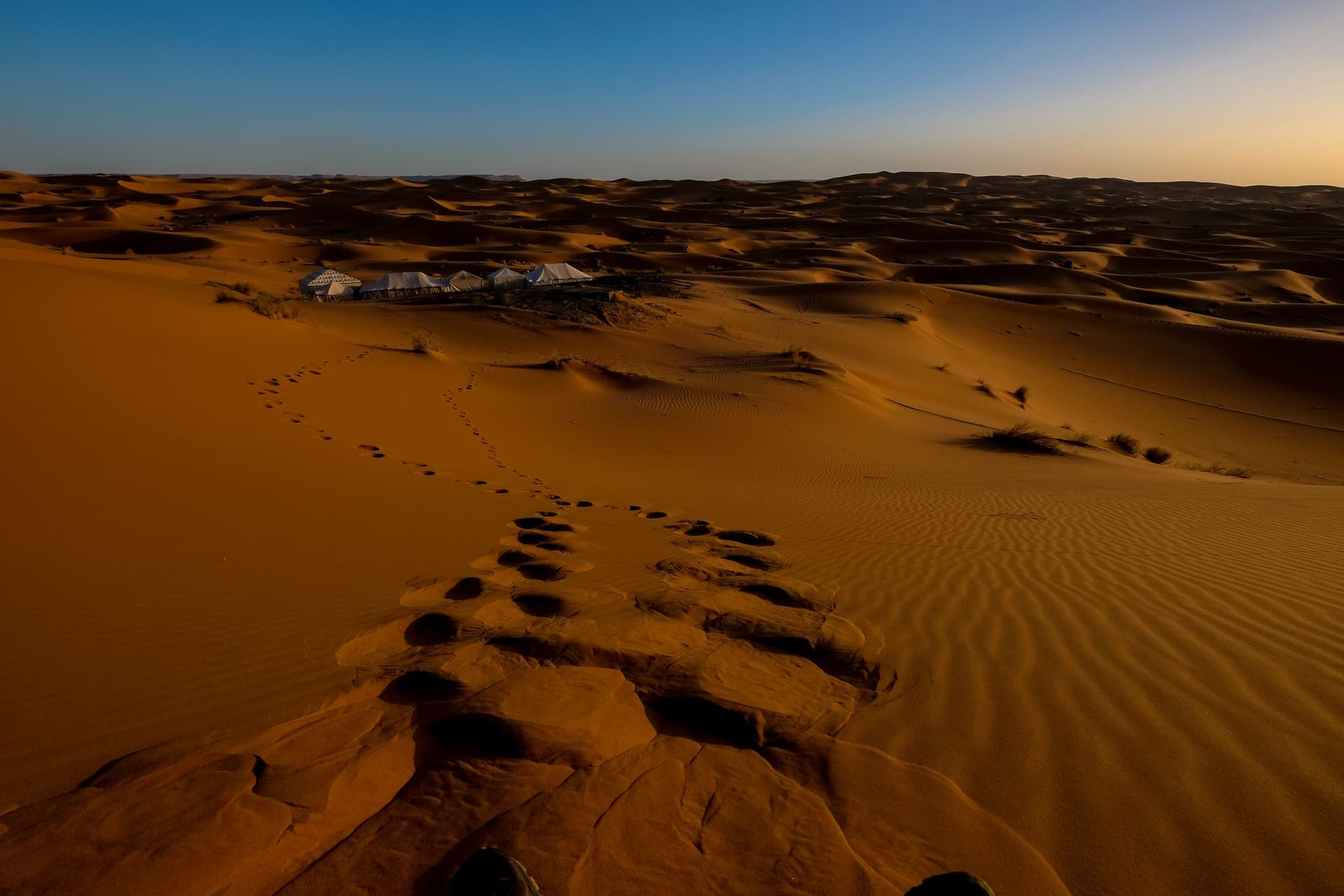
Marrakech to Merzouga — 3-Day Desert Tour
- Camel trek into Erg Chebbi dunes at sunset
- Overnight in a luxury Berber desert camp
- Stargazing with no light pollution at all
€230 / person for 6+