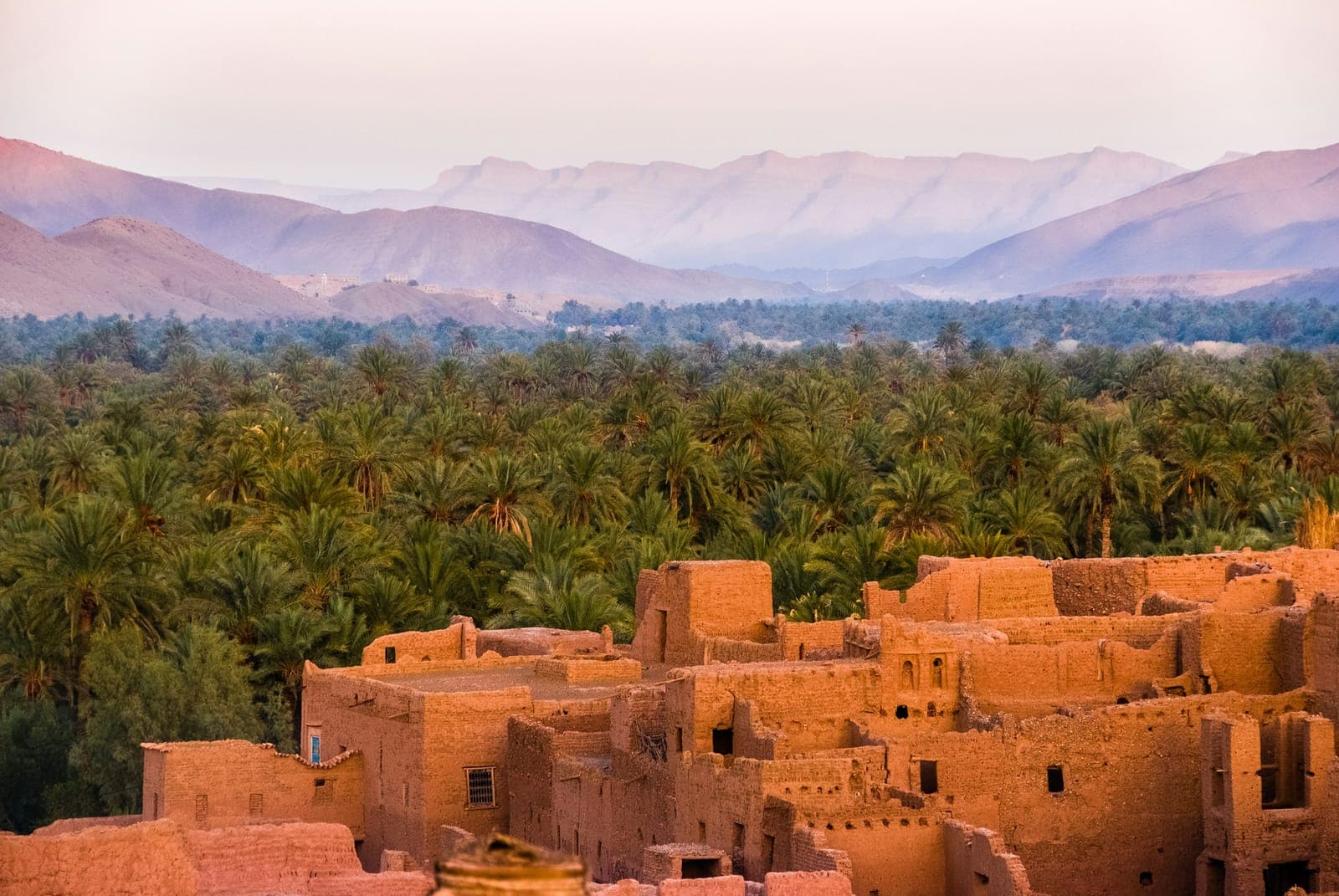
A working palm oasis dotted with historic kasbahs, just east of Ouarzazate. Quieter and less visited than the bigger stops on the desert road — which is most of its appeal.
A Working Oasis, Not a Postcard Palm Grove
Skoura is a genuine oasis — around 5,000 hectares of date palms, olive and fig trees, fed by irrigation channels that have been maintained for centuries. Unlike the more heavily visited stops on the desert road, it is still a working agricultural landscape, with local families farming inside the palm grove itself. That is most of its appeal: it feels lived-in rather than staged for visitors.
Much of the water reaching those fields still moves through *khettaras* — underground channels dug to carry water from higher water tables down to the palm grove with minimal evaporation loss, a technology that predates modern pumped irrigation by centuries and is still functioning in parts of the oasis today. It's an easy detail to miss driving through, but it's the actual reason the oasis exists where it does.
It sits about 40 minutes east of Ouarzazate, just before the road climbs toward Dades Valley.
The Kasbahs Inside the Palms
Skoura's oasis hides several historic kasbahs among the trees. The best known, Kasbah Amridil, was built at the end of the 17th century by Mohammed Nassiri Skouri and has remained in the same family, passed down through generations, ever since — it isn't a restored ruin being shown to visitors, it's a building whose upkeep has never actually stopped. Its silhouette appeared on an older series of the 50-dirham note, which is why Moroccan visitors sometimes recognise it before they know its name. Walking or driving into the palm grove to reach it is part of the experience; the kasbah is not visible from the main road.
Kasbah Aït Ben Moro, another 17th-century building nearby, took a different path — restored at the end of the 20th century and converted into a small hotel, which is one of the more atmospheric ways to actually sleep inside this kind of architecture rather than just look at it from outside. Smaller kasbahs, including Ben Abdelgoumi, Mohamed Ben Hamadi, and Aït Abou, sit scattered through the same palm grove in varying states of repair — some maintained, some quietly returning to the earth they were built from.
Several kasbahs in Skoura are in active restoration, which means some can be visited and others are working sites rather than open attractions. This varies year to year.
Three Communities, One Oasis
Skoura's history isn't a single thread. Amazigh (Berber), Arab, and Jewish communities all shaped the oasis over the centuries that built it — the terraced gardens, the earthen kasbahs, the underground water channels, and the craft traditions that still show up in the building techniques all carry that mixed inheritance. It's a detail easy to miss on a brief stop, but it's part of why the architecture here reads differently from the more purely Berber kasbah country further into the mountains.
Why It's Worth the Stop
Skoura rarely gets more than a brief stop on a standard itinerary — a walk into the palms, a look at one kasbah, back on the road. That brevity is honest: there isn't a full day of activity here for most travellers. But as a contrast to the open, dry country on either side of it, a shaded palm oasis with running irrigation water is a genuine change of scene, and a quieter one than the bigger stops nearby. Skoura doesn't have Aït Ben Haddou's fame or Todra's drama, and that's the point — it's the kind of place a rushed itinerary skips entirely and a slightly slower one is glad it didn't.
Practical Notes
Getting there: Skoura sits directly on the N10, the main road between Ouarzazate and the Dades/Todra region, so it's a natural stop rather than a detour for anyone already driving that route.
How long to allow: An hour is enough for the highlights — the palm grove walk and one kasbah. Travellers with a genuine interest in vernacular earthen architecture could easily spend half a day.
Staying overnight: A handful of kasbah guesthouses inside the oasis, Aït Ben Moro among them, let you experience the building rather than just view it. This isn't part of a standard tour itinerary, which typically passes through on the way to Dades or Merzouga the same day.
Which Tours Pass Through
Skoura is included on our 4-day Desert Grand Tour, which is built to cover more of the Ouarzazate–Merzouga road than the shorter 2- and 3-day options. For the kasbah and canyon country further along the same road, see our guides to Dades Valley and Todra Gorge. If you're deciding how many days you need for the full route, see Toubkal in 2 Days or 4 for how we think about that trade-off generally, or What a Morocco Desert Tour Really Costs for the desert-specific version.
Trips that go here
Guided by the team who wrote this guide.
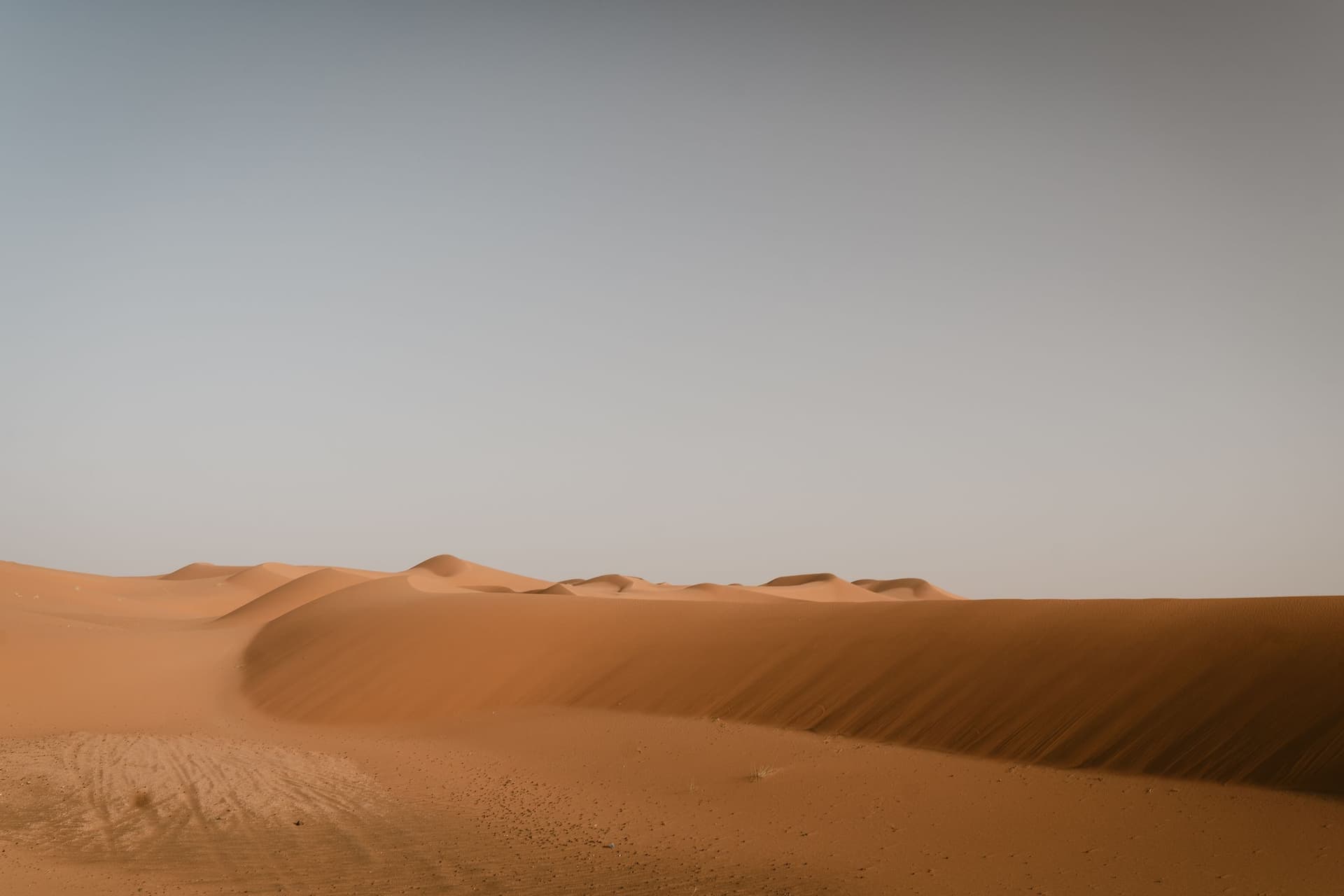
Marrakech Desert Grand Tour — 4 Days
- Full night at an Erg Chebbi desert camp — sunset and sunrise camel treks
- Todra Gorge — Morocco's most dramatic canyon (400 m walls, 4 km walk)
- UNESCO Ksar of Aït Ben Haddou — Gladiator and Game of Thrones location
€236 / person for 6+