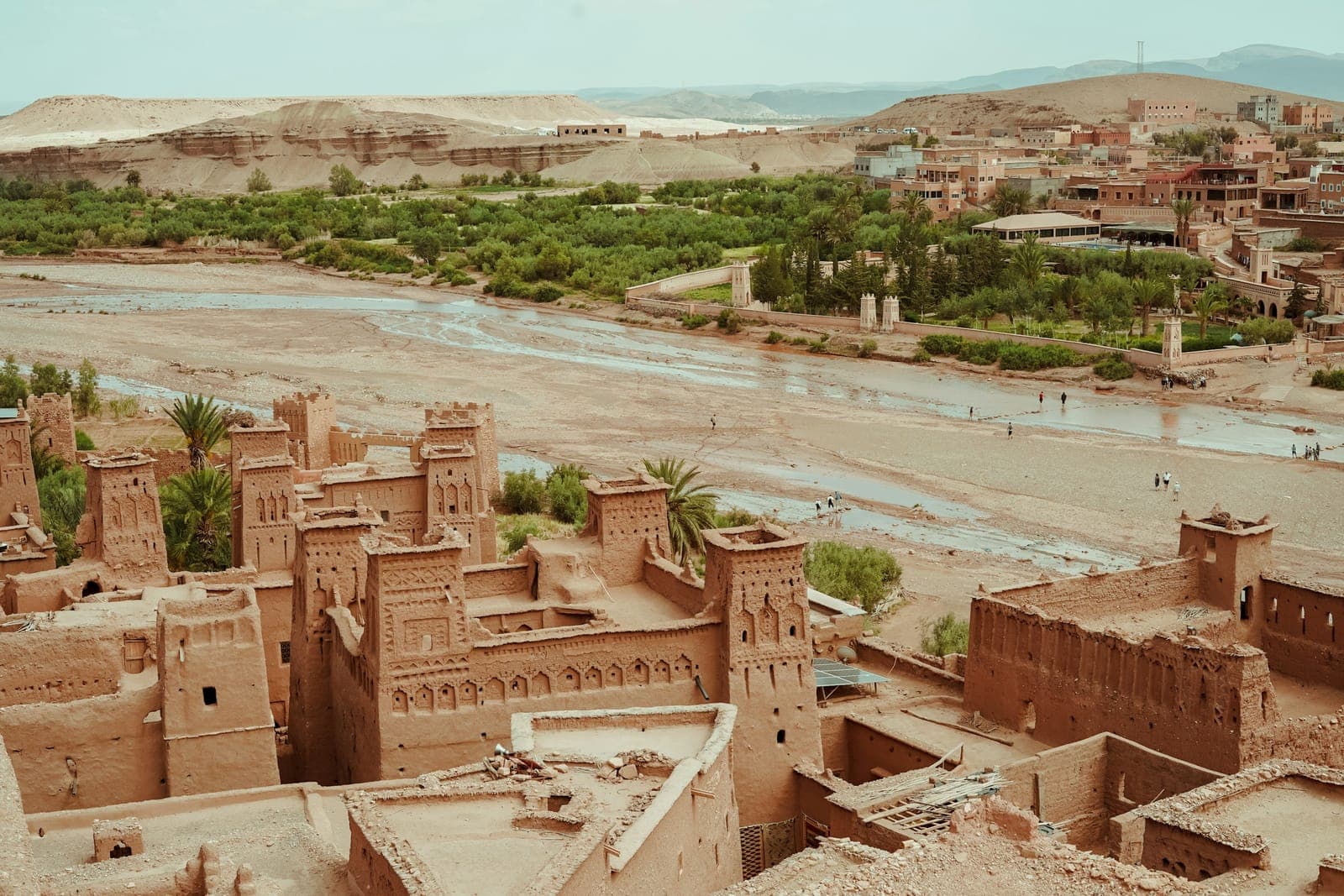
A UNESCO-listed fortified village near Ouarzazate that has stood in for ancient Rome, Yunkai, and more. Here's what it actually is beneath the film-set reputation.
What It Actually Is
Ait Benhaddou is a ksar — a fortified village of earthen buildings enclosed by defensive walls — on the former caravan route between the Sahara and Marrakech. It sits on a hillside above the Ounila River, about 30 minutes from Ouarzazate, and has been a fortified site since at least the 11th century, during the Almoravid period, though most of what actually stands today dates from the 17th century onward — earlier structures were rebuilt and replaced many times over, as mudbrick architecture requires. The village takes its name from Ben Haddou, a local saint traditionally credited with founding the settlement, though the specifics of that origin story vary by who's telling it.
For centuries the ksar sat on one of the routes linking ancient trans-Saharan trade to Marrakech, part of the network running through the Draa Valley and over the Tizi-n'Telouet pass. Caravans carrying gold, salt, and spices passed beneath its walls, and the fortification itself — corner towers, a single defensible approach, houses packed tightly inside the outer wall — reflects a settlement that needed to protect what moved through it as much as who lived in it.
UNESCO listed Ait Benhaddou as a World Heritage Site in 1987, specifically as an outstanding illustrative example of the earthen construction techniques found across the whole pre-Saharan valley region — Draa, Todgha, Dadès, and Souss — rather than as a unique one-off. Its fame partly rests on being unusually well-preserved and accessible relative to comparable ksour elsewhere in the same valleys.
A handful of families still live in the older part of the ksar, though most residents have moved to a newer village across the river, where modern services are easier to access.
The Film Reputation
Ait Benhaddou's other identity is as one of the most-used film locations in North Africa, thanks to Ouarzazate's proximity and its film studios. It has appeared as ancient locations in Gladiator, Kingdom of Heaven, Prince of Persia, Game of Thrones, and a long list of other productions. That reputation draws visitors on its own, but it can also overshadow the site's actual history — it's a genuine medieval trading-route settlement first, and a filming backdrop second. Ouarzazate's studios exist because of the same qualities that made this valley worth fortifying: dramatic, dry, sun-drenched terrain a short drive from an international airport.
What to Expect on a Visit
The main draw is climbing through the ksar to the fortified granary (agadir) at the top, which gives a view back over the walls, the river, and the newer village beyond. The climb is on uneven stone stairs and paths — manageable for most fitness levels, not stroller-friendly. Crossing the river requires either the footbridge or, when water is low, stepping stones; in wetter months a small fee for a donkey or raft crossing is common.
Inside the walls, small shops sell rugs, paintings (some made with local pigments including saffron and henna, a genuine local craft rather than pure tourist theatre), and souvenirs — normal commerce for a site with this much foot traffic, not something to be wary of, though the same negotiate-the-price norms apply here as anywhere else in Morocco.
Most desert-tour itineraries treat it as a stop of an hour to ninety minutes on the way toward or from Ouarzazate, not a full day. That's usually the right amount of time: the ksar rewards a focused visit rather than lingering, and there isn't a second layer of activity beyond walking it and taking in the view from the top.
Practical Notes
Best light: Early morning and late afternoon, both for photography and for avoiding the worst of the midday heat on the exposed stone paths.
Access: A paved road runs to the site; the walk from the car park to the river crossing is short and flat, but the climb inside the ksar is not accessible for anyone with significant mobility limitations.
Combine it with: Ouarzazate's film studios and the Taourirt Kasbah sit close by, and many itineraries pair a stop at Ait Benhaddou with a brief look at one or both on the same day.
Which Tours Pass Through
Ait Benhaddou sits on the Ouarzazate road used by our 4-day Desert Grand Tour and the 3-day Merzouga tour from Agadir. For the rest of the same trade-route valley, see our guides to Skoura Oasis and Dades Valley. For the cultural-cities side of a Morocco trip more broadly, see Marrakech Medina: The Insider's Complete Guide.
Trips that go here
Guided by the team who wrote this guide.
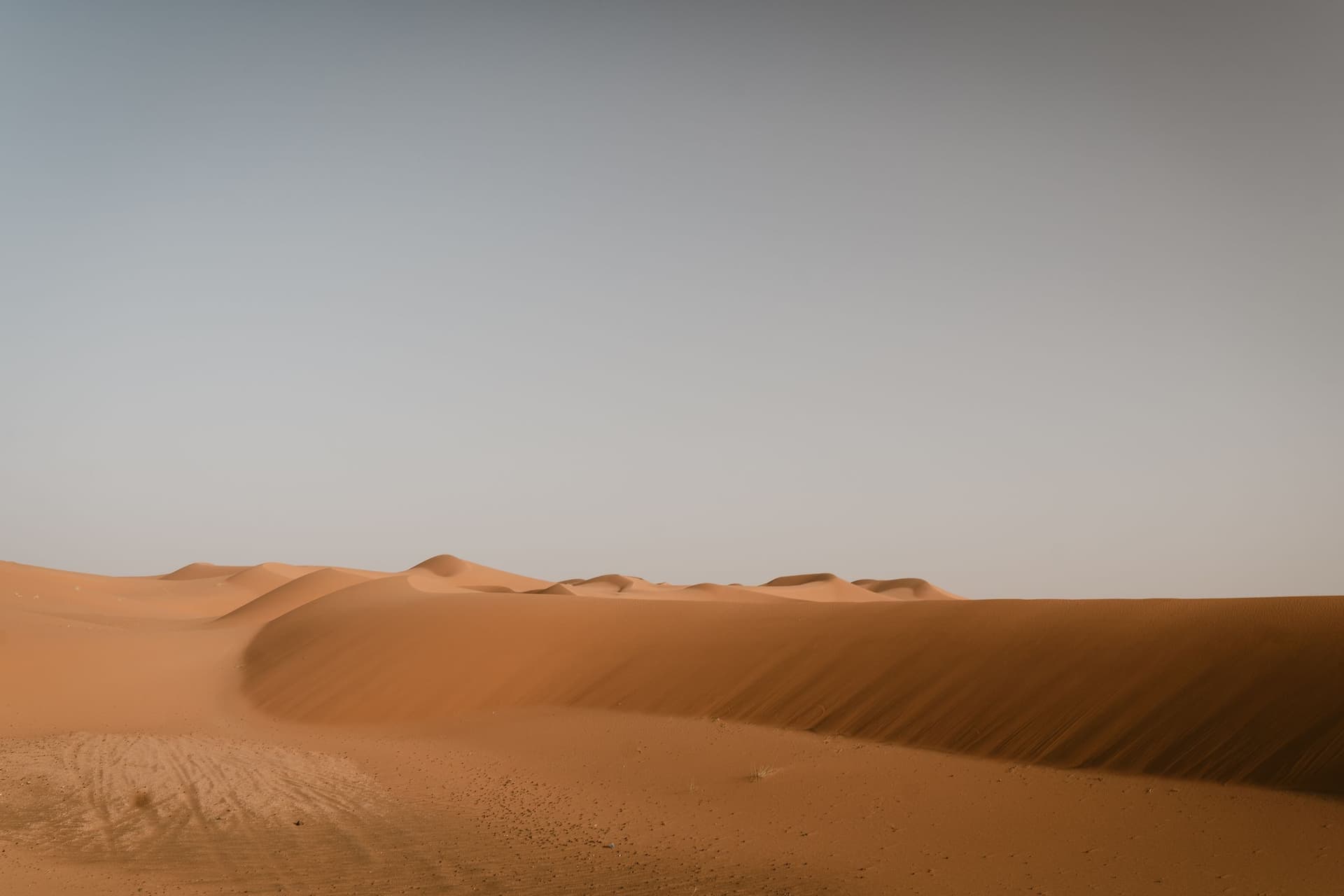
Marrakech Desert Grand Tour — 4 Days
- Full night at an Erg Chebbi desert camp — sunset and sunrise camel treks
- Todra Gorge — Morocco's most dramatic canyon (400 m walls, 4 km walk)
- UNESCO Ksar of Aït Ben Haddou — Gladiator and Game of Thrones location
€236 / person for 6+
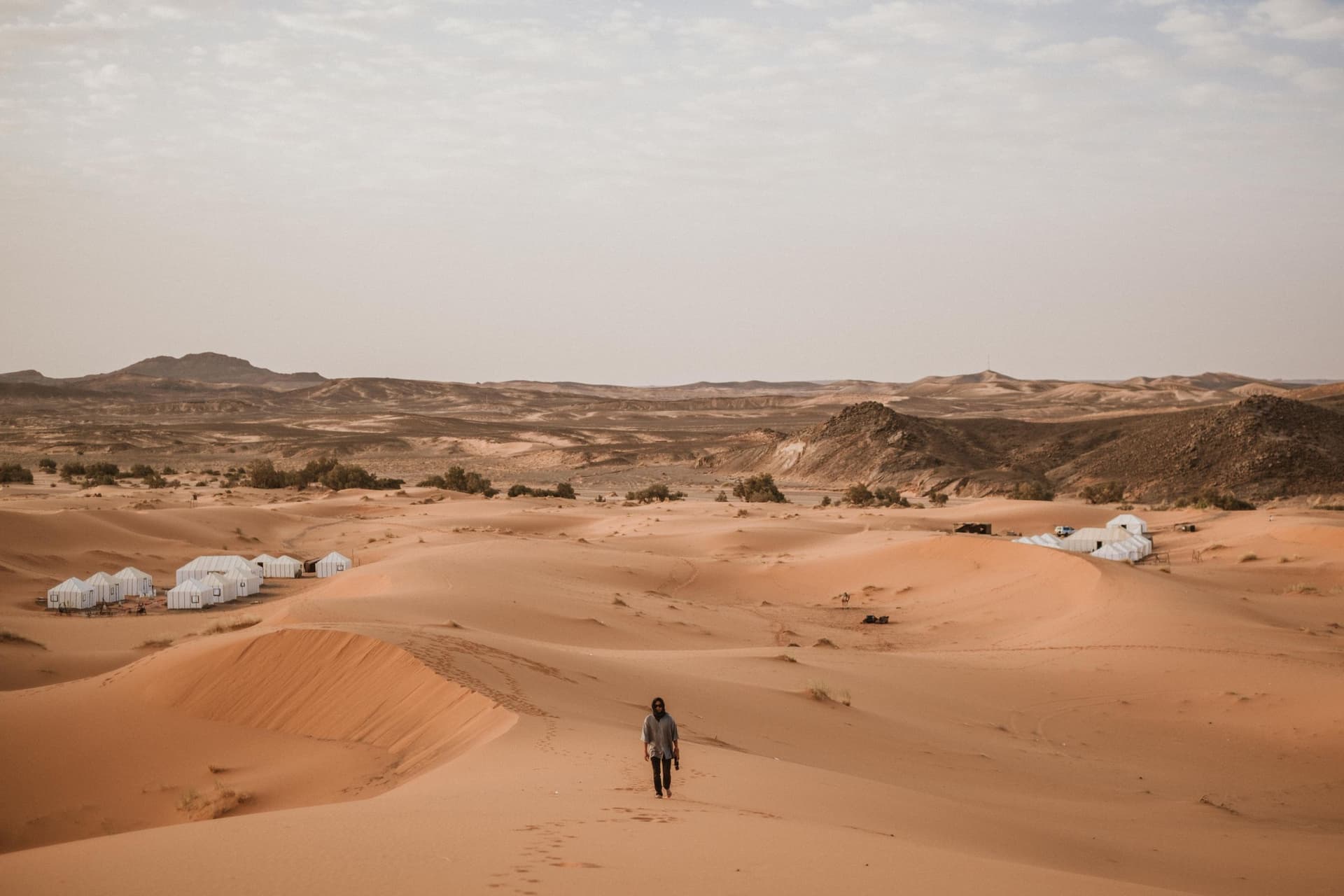
Agadir to Merzouga — 3-Day Sahara Desert Tour
- Erg Chebbi — camel trek at sunset into 160 m dunes
- Overnight in a Berber desert camp under the stars
- Taroudant — Morocco's finest medieval walled city
€170 / person for 6+