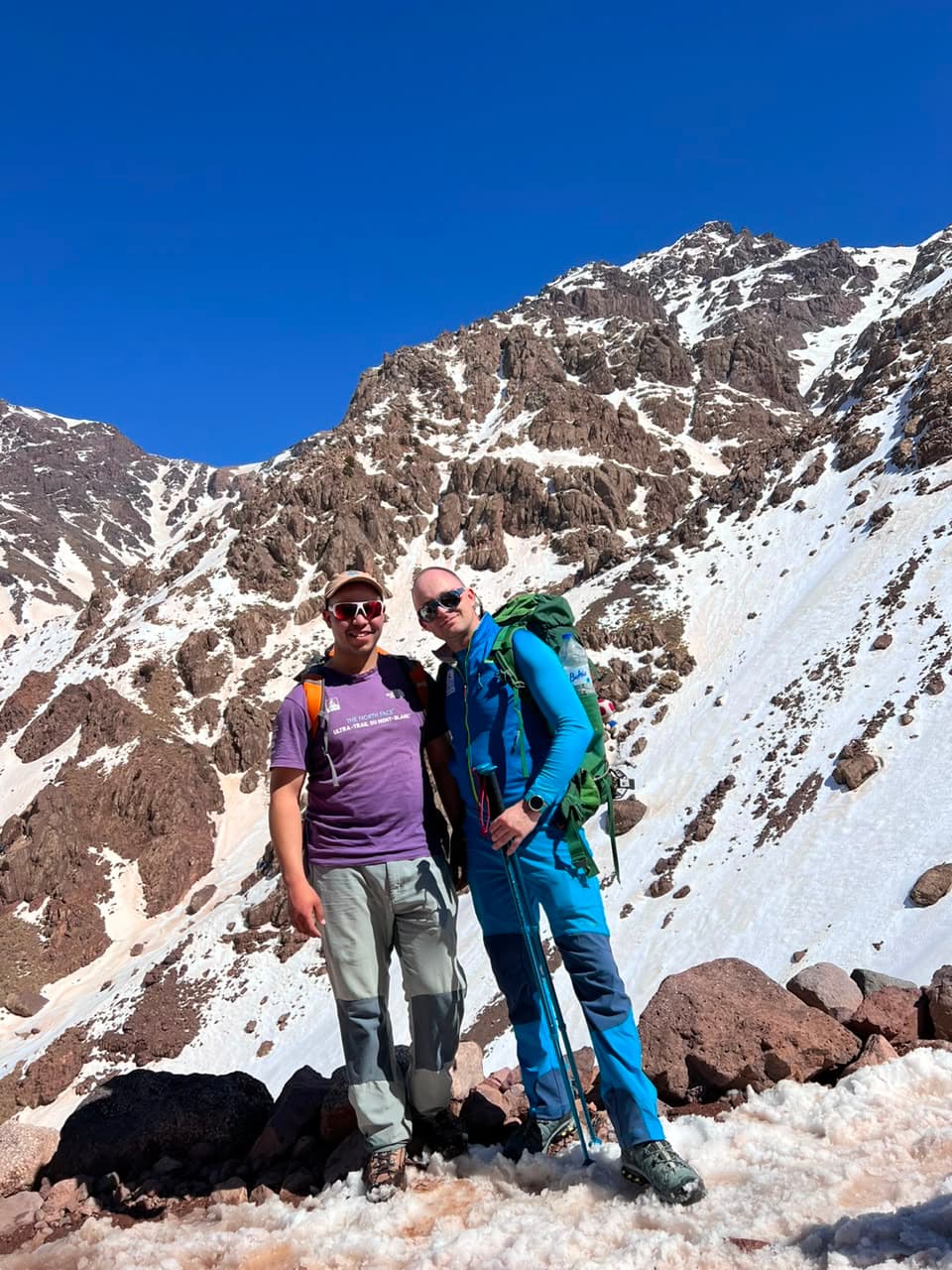
Both itineraries reach the same 4,167 m summit. The difference is how much time your body gets to adjust — and that changes your odds more than fitness does.
Both trips end on the same summit. Both use the same route through the Aït Mizane valley to the refuge, and the same South Cirque climb at dawn. The question is not which is better — it is which is better *for you*.
The two-day trip
Day one: transfer from Marrakech to Imlil, about an hour and a half. Trek up the valley past Sidi Chamharouch to the Toubkal Refuge at 3,207 metres. Four to five hours walking. Dinner, then an early night.
Day two: pre-dawn start for the summit via the South Cirque, roughly three hours up. Sunrise from the roof of North Africa, then back down to the refuge and onward to Imlil — four to five hours of descent — before the transfer to Marrakech.
It is efficient and it works. Fit walkers with mountain experience do this regularly and enjoy it.
The cost is acclimatisation. You go from roughly 450 metres in Marrakech to 4,167 metres in about thirty hours. Your body has essentially no time to adapt, and altitude does not care how strong your legs are.
The four-day trip
Same mountain, same summit, more room. The additional days are not spent walking further — they are spent walking in more gradually and giving you time at intermediate altitude before the summit push.
That distinction matters. People assume the longer trek means more effort. In practice it means the same summit with better preparation, and a summit day that feels like a good hard day out rather than a battle.
Why Time Matters More Than Fitness
This is not a vague travel-industry claim — it is basic altitude physiology, and it is worth understanding rather than just taking on faith. Above roughly 2,500 metres, your body has to make real adjustments to function properly: breathing rate increases, and over several days the kidneys begin excreting bicarbonate to rebalance blood chemistry that shifts when you breathe faster. That process starts working within hours of arriving at altitude, but according to research summarized in clinical altitude-medicine literature, it takes something like four to seven days at a stable elevation to reach anywhere close to its full effect. A two-day Toubkal trip does not give your body that window — you spend one night at the refuge, at just over 3,200 metres, before pushing to the summit.
None of this means the two-day trip is unsafe for a fit, experienced hillwalker — thousands complete it without serious trouble, and severe altitude illness is genuinely rare below about 4,000 metres. But acute mountain sickness itself, the milder headache-and-nausea version, is common enough at this kind of elevation and ascent rate that mountaineering guidelines specifically flag ascents faster than roughly 600 metres of net elevation gain per day as raising the odds substantially. That is close to the pattern of a compressed two-day itinerary. The four-day trip's extra time at Imlil and the lower slopes before the push to the refuge is doing real physiological work, not just padding the schedule.
What actually changes
| 2-day | 4-day | |
|---|---|---|
| Summit reached | Yes, 4,167 m | Yes, 4,167 m |
| Time to acclimatise | Essentially none | Built in |
| Daily walking load | Concentrated into two big days | Spread out |
| Best for | Experienced hillwalkers, tight schedules | First-timers at altitude, most people |
| Odds of feeling rough on summit day | Higher | Lower |
How to choose
Take the two-day if: you have walked at altitude before and know how your body responds, you are comfortable with two consecutive big days, and your time in Morocco is genuinely limited.
Take the four-day if: this is your first time near 4,000 metres, you would rather enjoy the summit than endure it, or you simply have the days available. For most people asking the question, this is the answer.
The honest framing: the two-day is a fine trip that asks more of you. The four-day is the same trip with the main risk factor reduced.
If you have longer still
More days do not have to mean more of the same mountain. The six-day Toubkal Circuit with Ifni Lake adds the turquoise lake on the far side of the massif and country most Toubkal trekkers never see. The three-peaks challenge is rated expert and takes in several 4,000-metre summits.
Those are different trips rather than longer versions of this one.
The one thing that decides it
Not fitness. Time at altitude.
If you can spare the days, spend them. It is the cheapest improvement you can make to your chances of standing on top feeling good — and to how much you remember of the view rather than the effort.
For more on what the trek demands physically, see How Hard Is Toubkal, Really?
Frequently asked questions
How many days do you need to climb Toubkal?
Is the 2-day Toubkal trek enough?
What do you actually do with the extra days on the 4-day trek?
Which Toubkal itinerary is best for beginners?
Trips that go here
Guided by the team who wrote this guide.
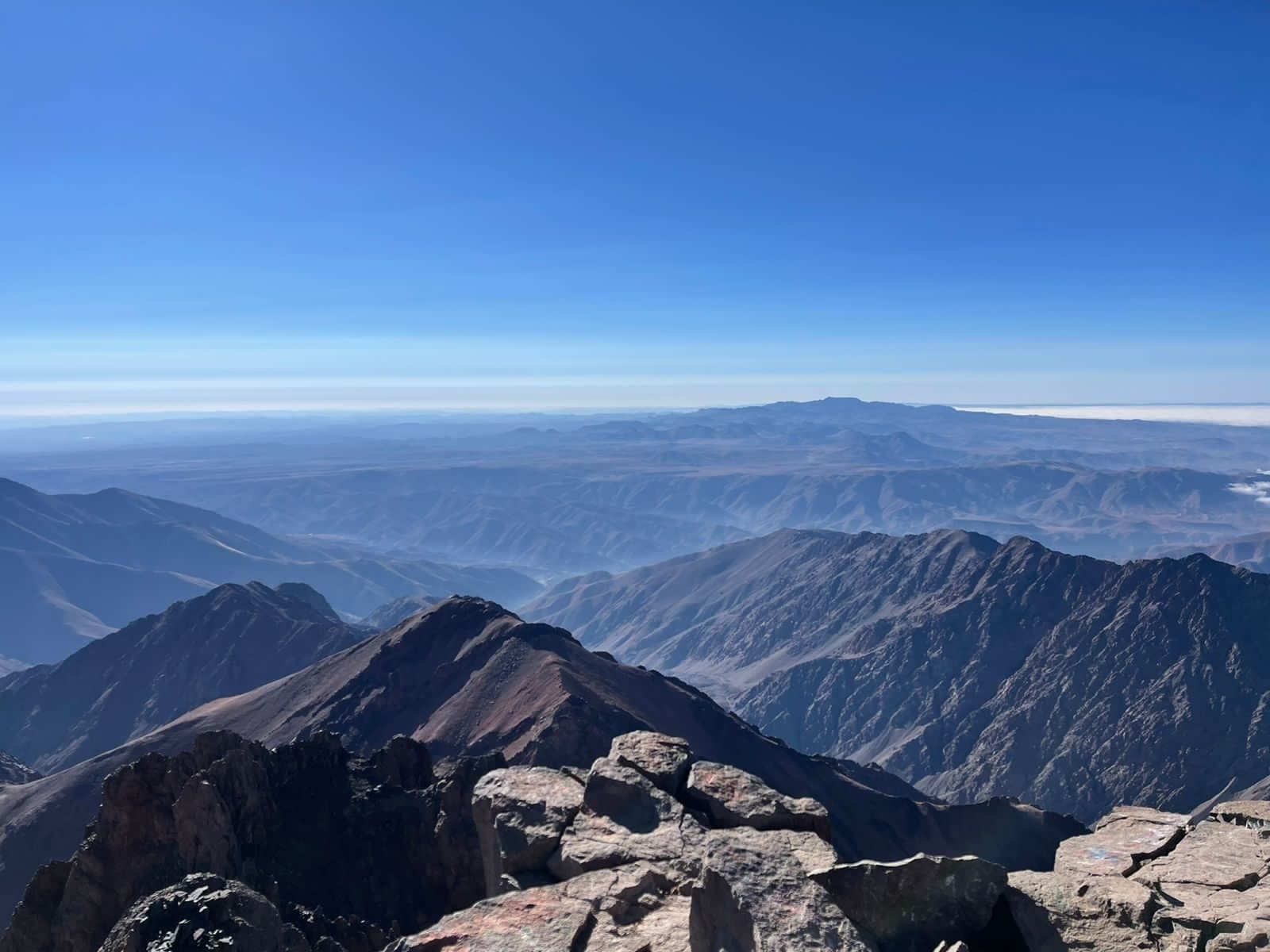
Mount Toubkal Express — 2-Day Summit from Marrakech
- Summit Jbel Toubkal (4,167 m) in just two days from Marrakech
- Overnight in the Toubkal Refuge at 3,207 m
- Pass the Sidi Chamharouch shrine and its waterfall
€153 / person for 6+
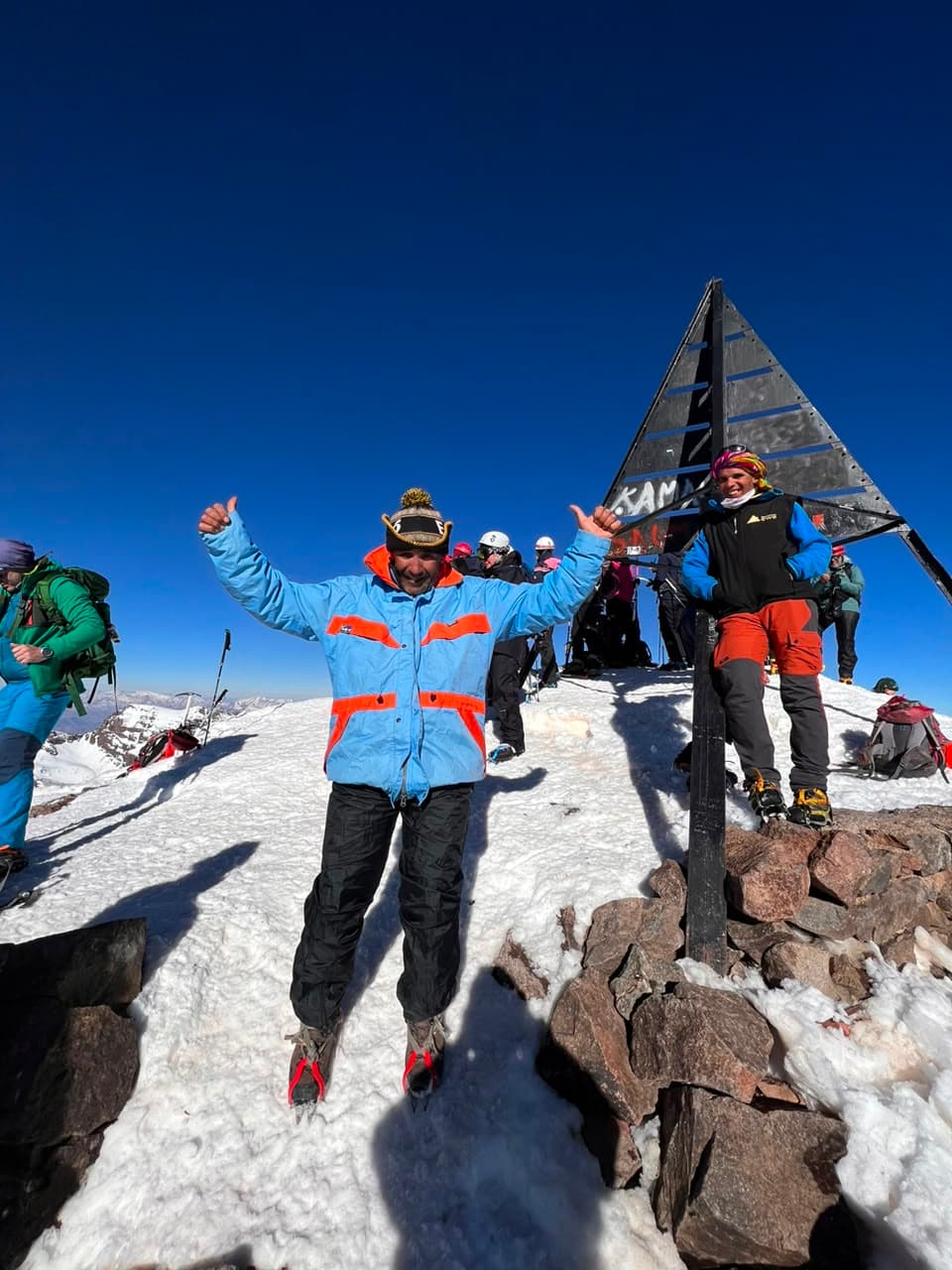
4-Day Toubkal Summit Trek from Marrakech
- Summit Jbel Toubkal at 4,167 m — highest peak in North Africa
- Sleep in traditional Berber mountain refuges at 3,207 m
- Start in the trailhead village of Imlil, deep in the Atlas
€260 / person for 6+
8-Day Morocco Highlights: Toubkal Summit and Sahara Desert
- Summit Jbel Toubkal at 4,167 m -- the highest peak in North Africa
- Sleep at the Toubkal refuge (3,207 m) and at Gite Panorama in Imlil
- Ait Ben Haddou, the UNESCO-listed earthen kasbah on the old caravan road
€889 / person