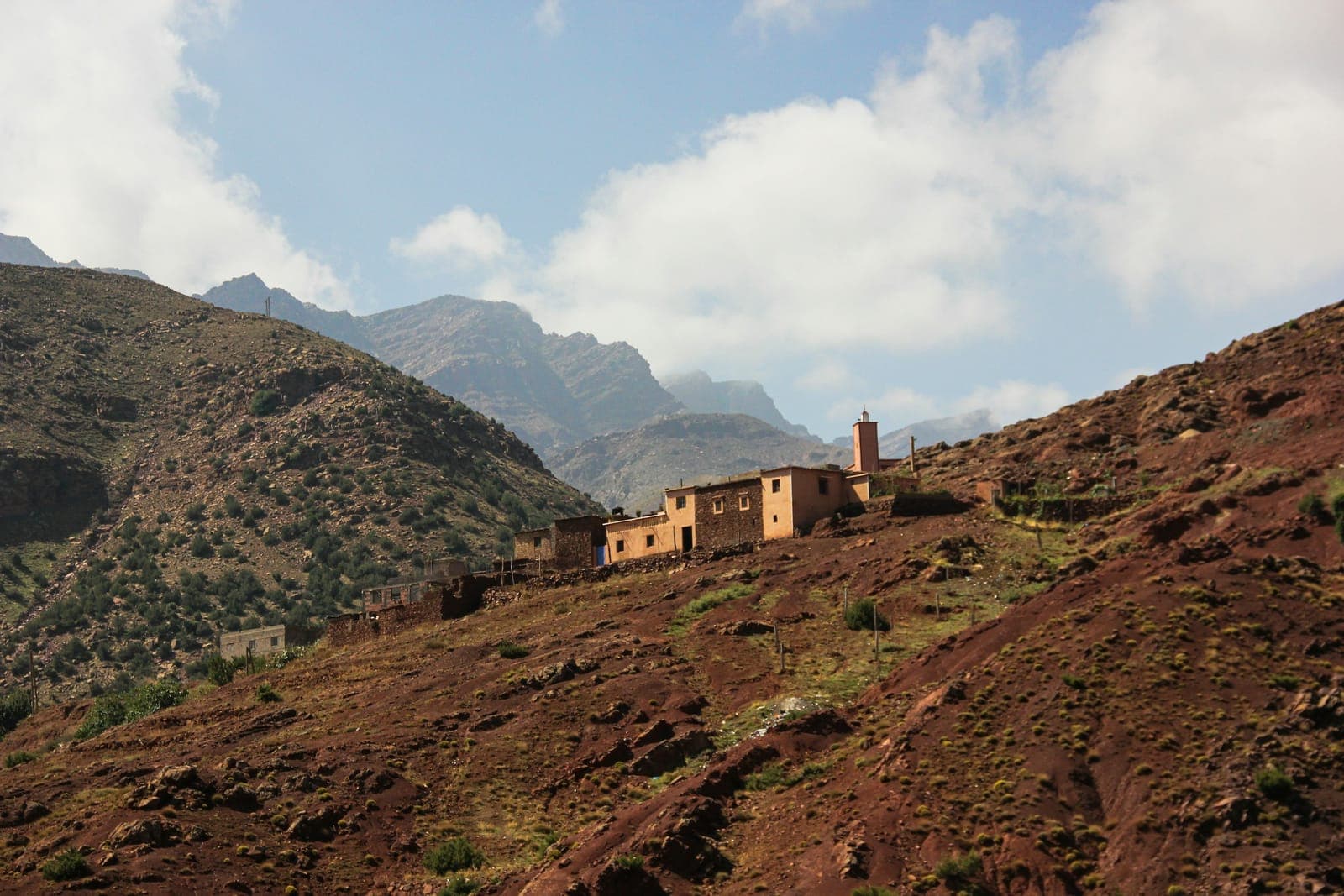
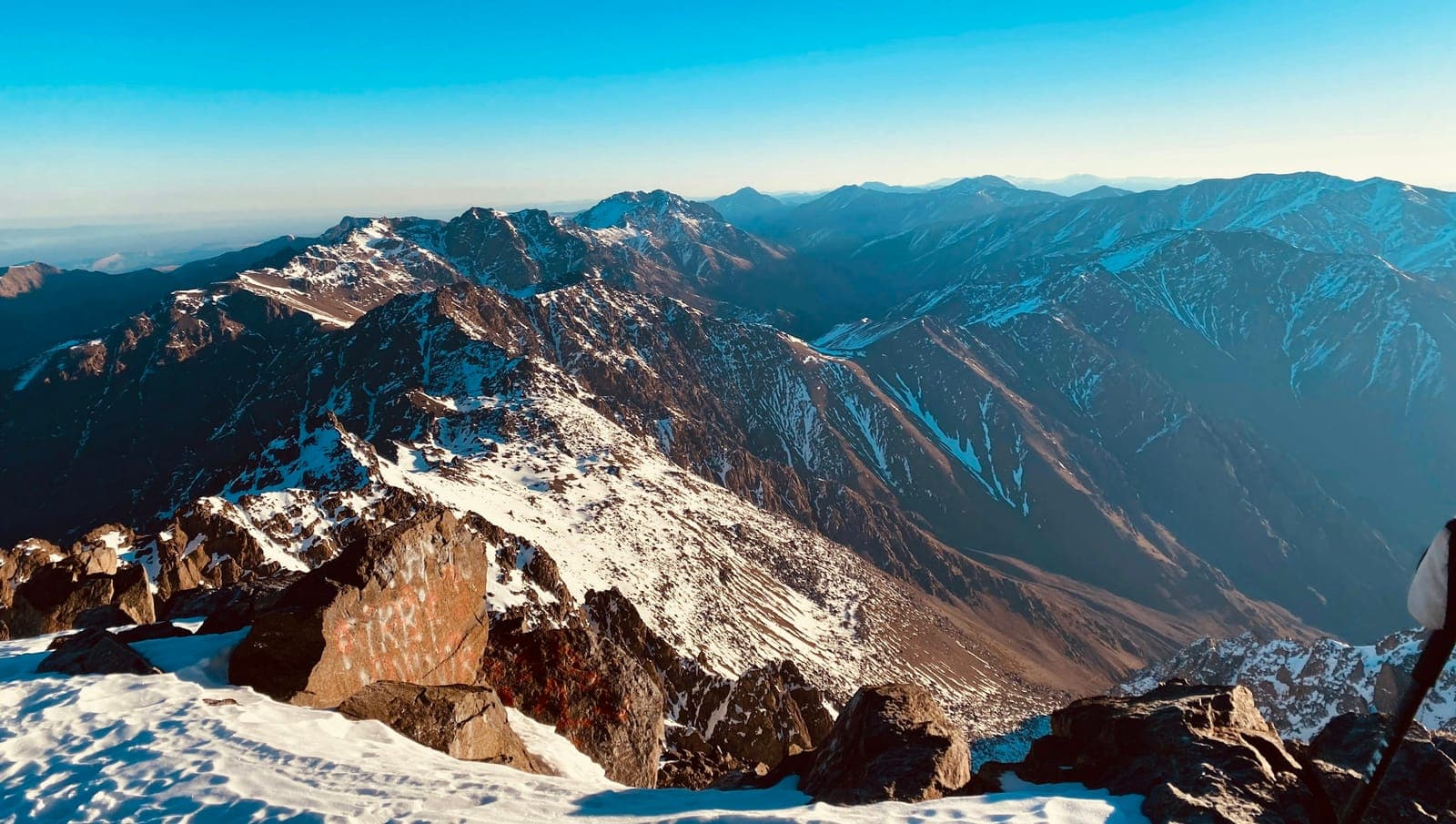
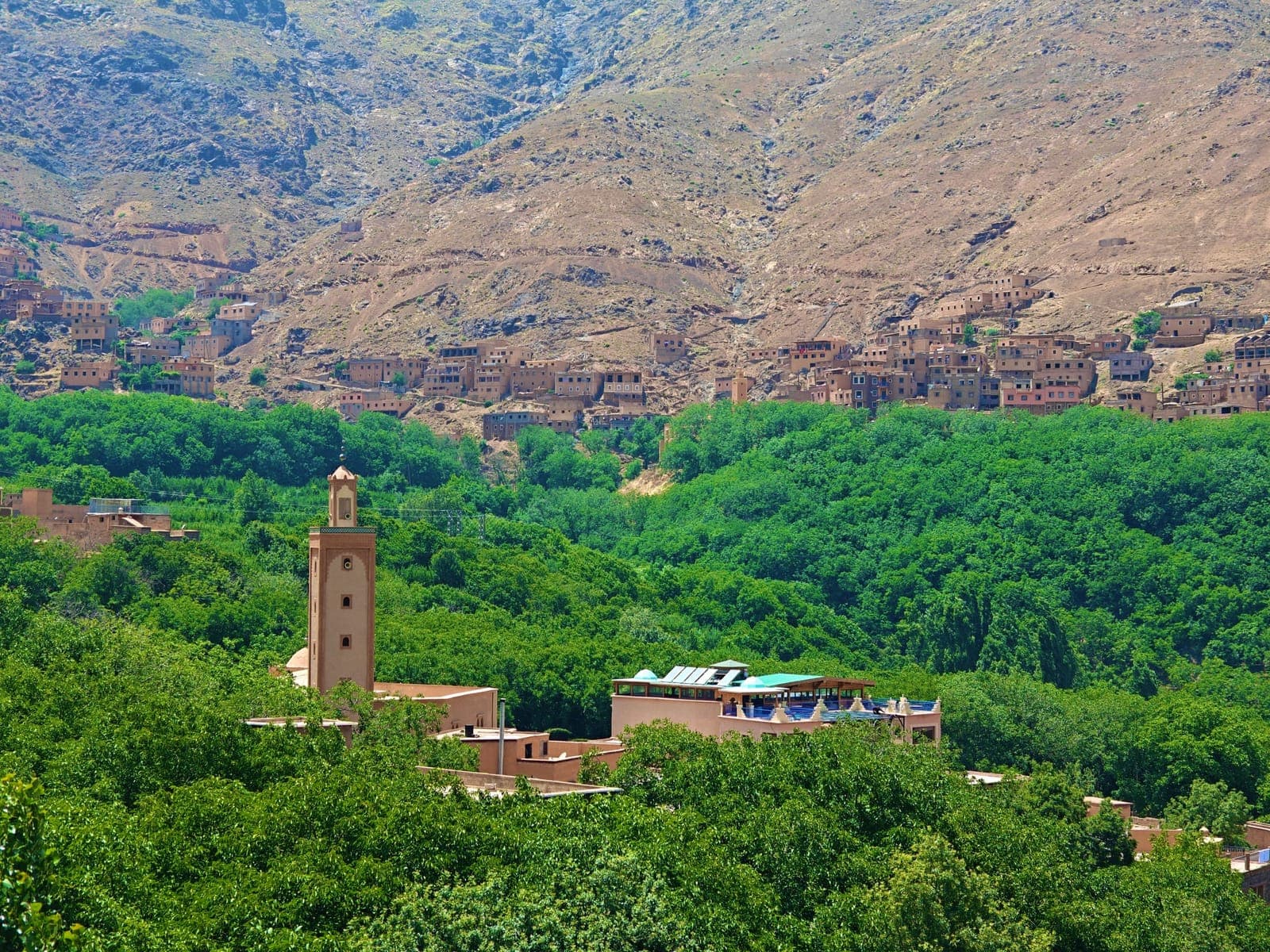
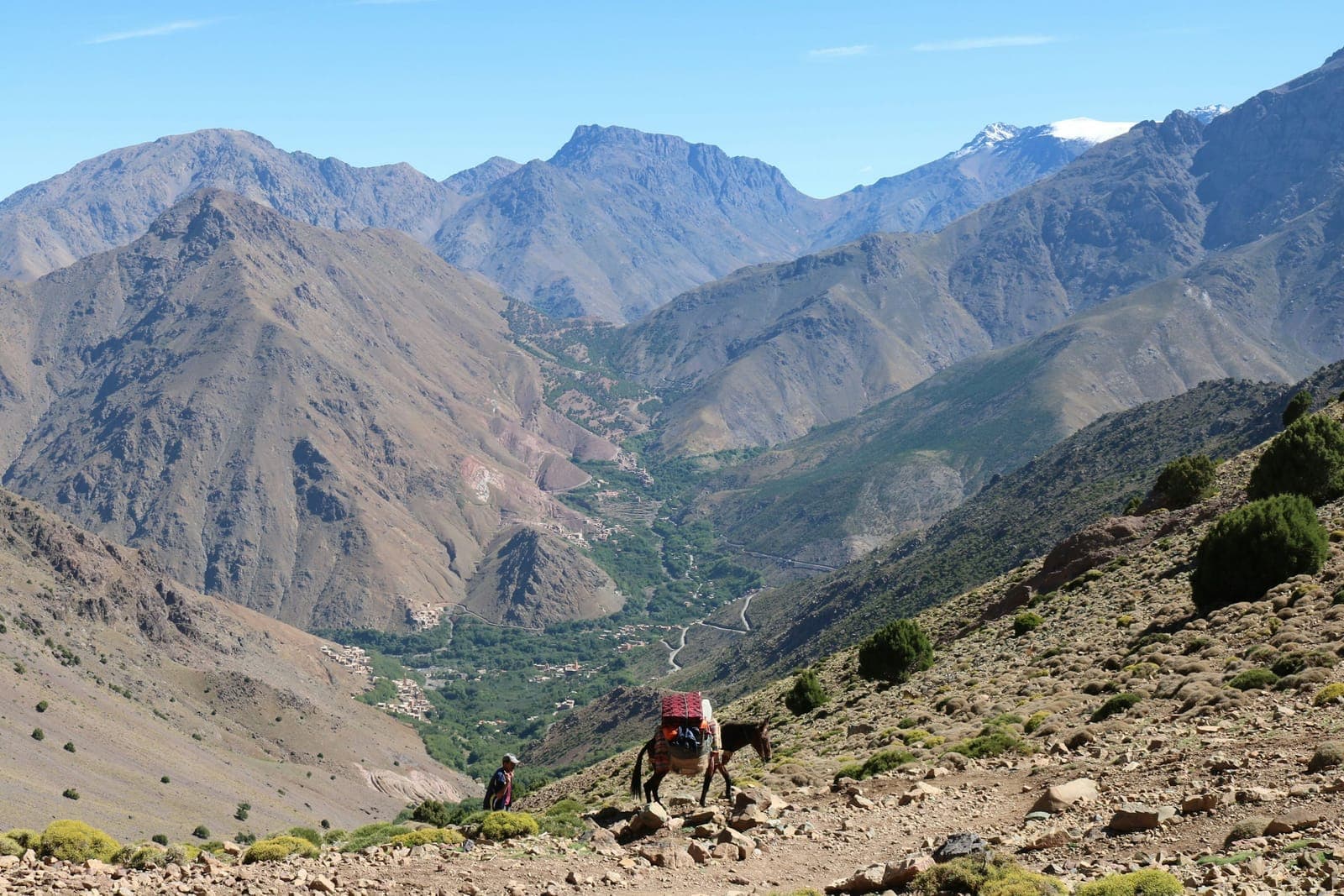
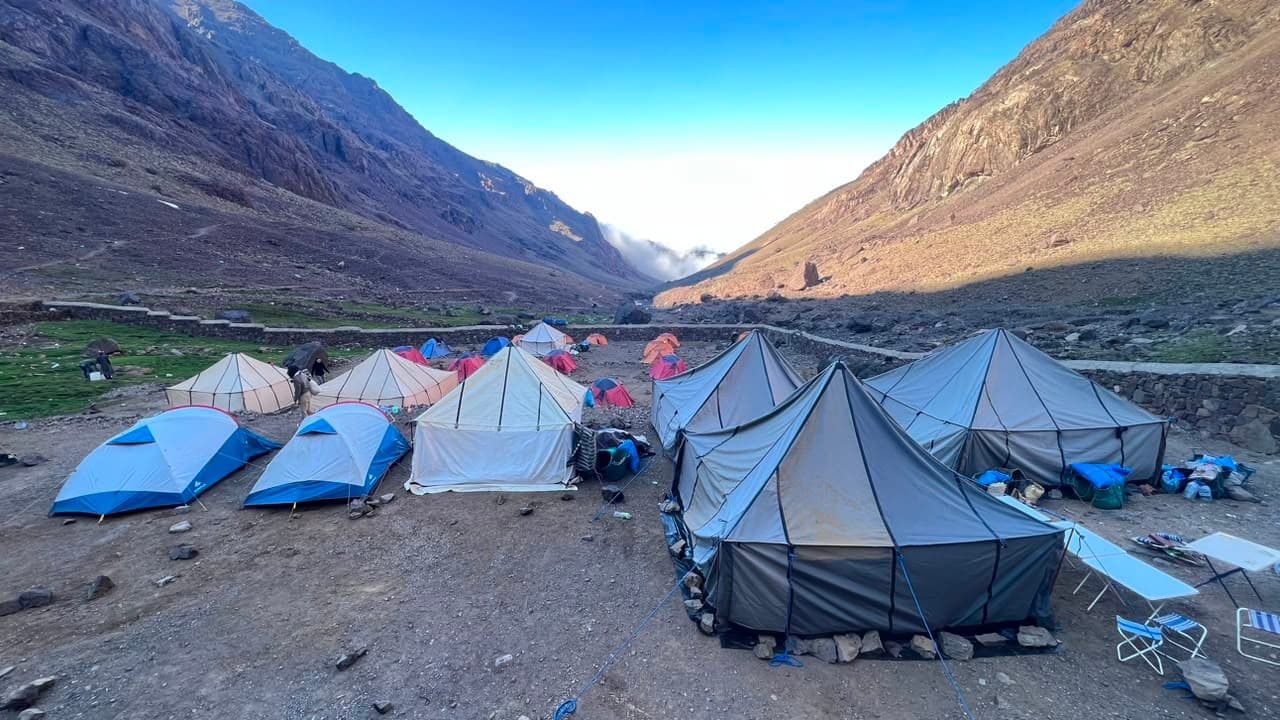
Seven days across the Mgoun massif, which is the part of the High Atlas that trekking traffic never reaches. Day one drives 5 hours to Aït M'hamed and a night with a Berber family. Day two walks through the Aït Bouguemez — the 'Happy Valley' — to camp at Agouti, 2,600 m. Day three crosses the first high pass, Tizi n'Ait Imi at 3,650 m, with 1,050 m of ascent. Day four is a pre-dawn start for the 4,068 m summit of Jbel Mgoun, Morocco's second-highest peak, then down into the Tessaoute gorge.
Days five and six are the reason experienced trekkers pick this over a Toubkal route. Five traverses the red-walled Tessaoute gorge with wild swimming in the river; six exits to Bou Tharar and a night with a village family. Day seven returns to Marrakech through the rose valley, finishing by about 4 pm. Four nights are wild camps, two are with families.
It is graded expert, and the grade is about accumulation rather than technique. No single day requires climbing skill. But it is seven consecutive days at altitude in country with few exit points, and the mule team carries the camp because there is nowhere to restock. Anyone who has done Toubkal comfortably and wants the next thing will find this is genuinely the next thing.
Per person: €1,350 solo, €760 for two, €710 for three, €680 for four, €625 for five and €596 at six, in a group capped at eight. Included are an expert licensed high-mountain guide, every meal for seven days, the mule team, the camps and homestays, national park fees, and — worth noting on a trek this remote — emergency satellite communication.
Travel and medical insurance is mandatory here rather than recommended, and you should read that as written: on days three to six you are a long way from a road. Technical mountaineering equipment and tips are not included. If you are weighing this against Toubkal, the honest split is that Toubkal is a summit you can fit into a holiday, and Mgoun is an expedition that becomes the holiday.