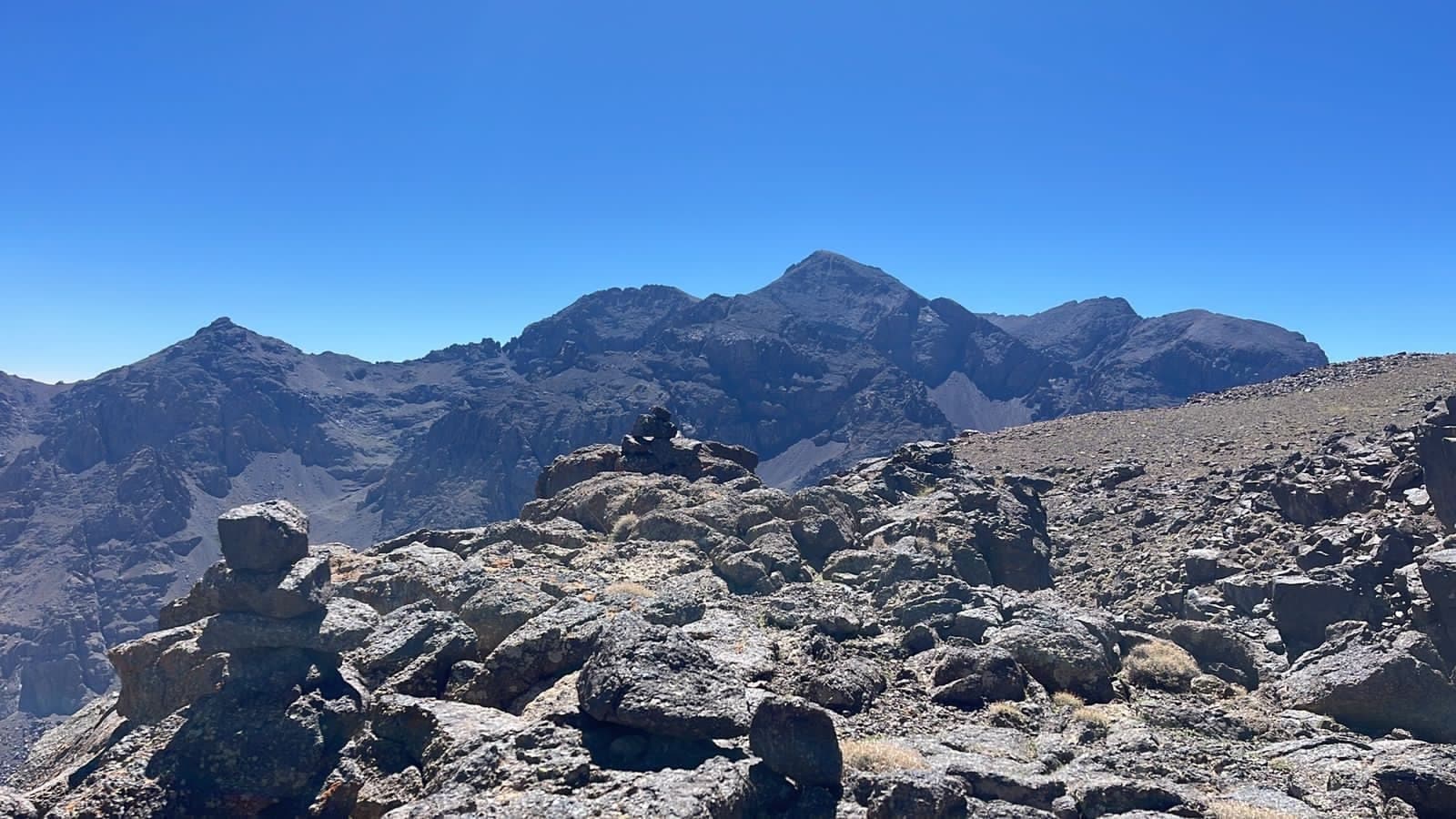
Toubkal gets the traffic, but it is one summit in a very large range. Four longer routes, what each demands, and how to pick by fitness and days available.
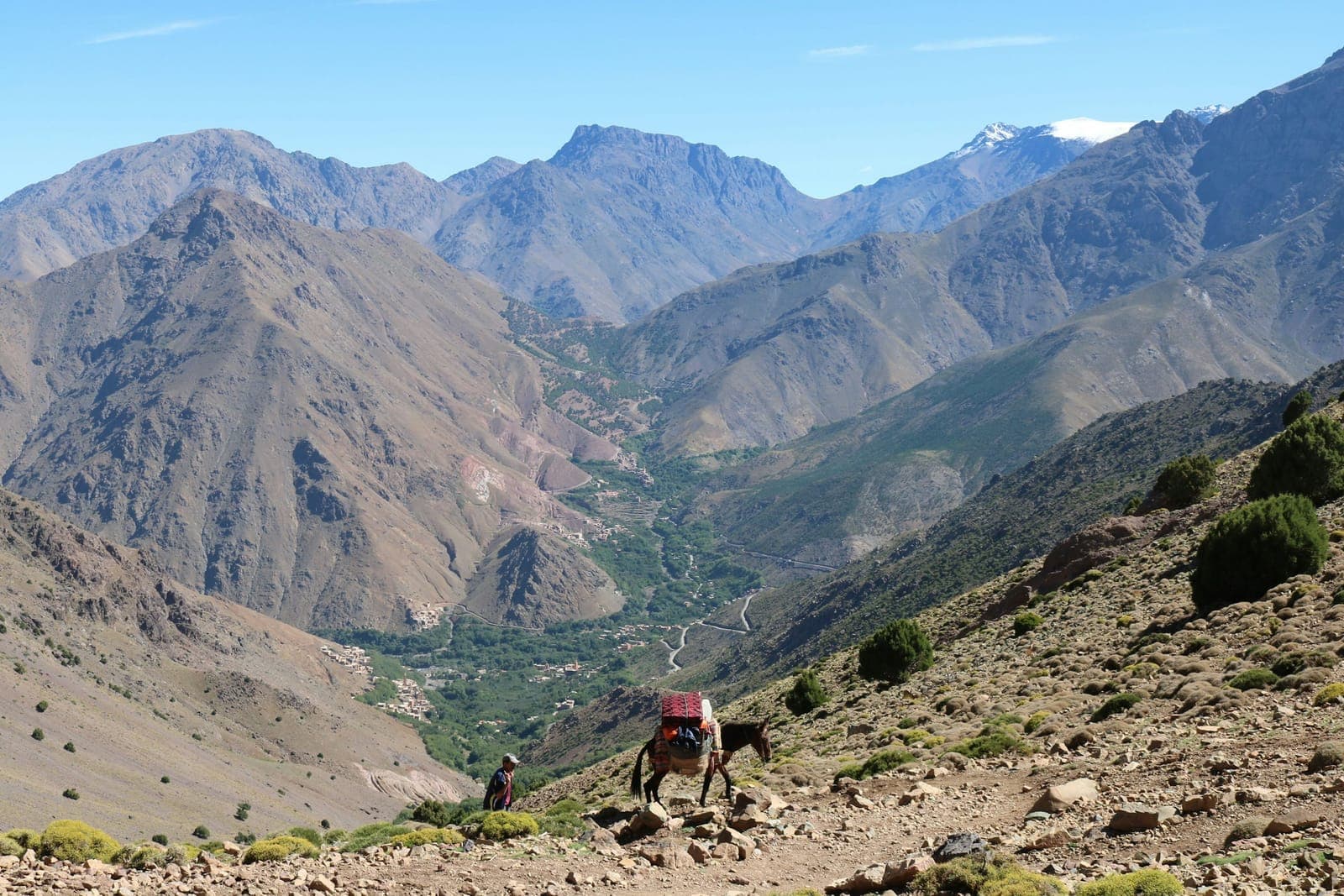
Toubkal absorbs most of Morocco's trekking attention because it is the highest point in North Africa and easy to reach from Marrakech. Standing on it is worth doing. But if you have more than a few days, the range has considerably more to offer, and the longer routes see a fraction of the traffic.
Toubkal Circuit and Ifni Lake — six days
The natural next step for anyone drawn to Toubkal but wanting more than a summit dash. The six-day circuit takes in the summit and then continues over to Lake Ifni on the far side of the massif — a turquoise lake in an otherwise arid bowl of mountains, and one of the more surprising sights in the Atlas.
Rated challenging. Six days gives your body time to acclimatise properly, which is a side benefit of the longer route that people underestimate.
Choose it if you want the summit but resent the idea of walking up and straight back down.
M'Goun Massif traverse — seven days
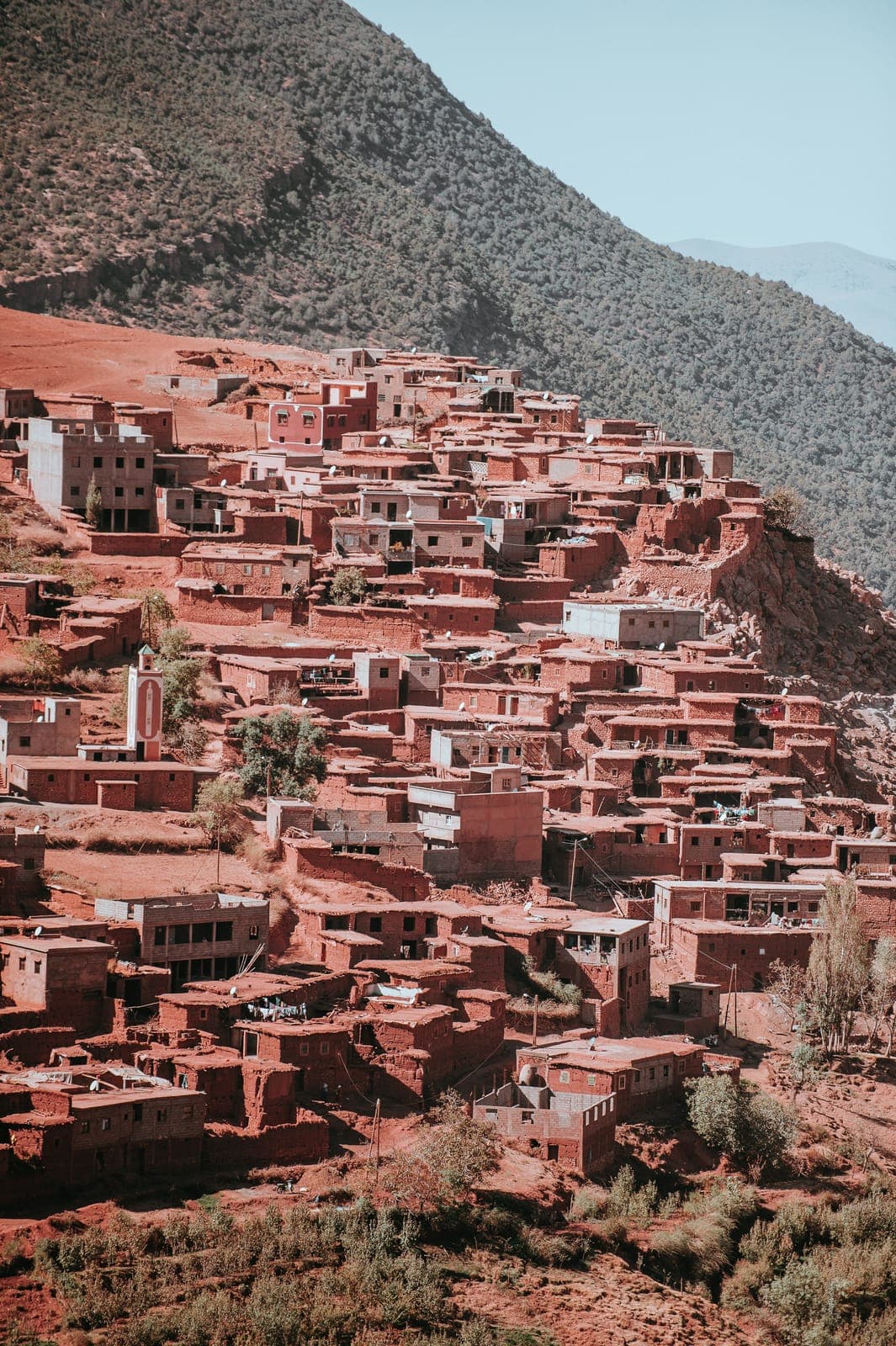
Morocco's second great massif, and the quietest of the routes here. Jbel M'Goun itself tops out at 4,071 metres — commonly cited as the second- or third-highest peak in the range depending on the source, but unambiguously one of only a handful of Moroccan summits over 4,000 metres. Unlike Toubkal's granite, the M'Goun massif is largely sandstone and limestone, which is why the terrain reads so differently: deep, colourful gorges cut between high ridgelines rather than Toubkal's more classic scree-and-summit shape. The seven-day traverse crosses this high country, dropping through the Aït Bouguemez valley — known locally as the "Happy Valley" for its fertile terraced fields and well-kept mud-brick villages — where trekking groups are still a novelty rather than routine.
We rate it expert. Not because any individual day is technical, but because seven consecutive days of walking in remote terrain with limited bail-out options asks more of you than a shorter, better-served route.
Choose it if you have walked multi-day routes before and want somewhere that does not feel processed.
Toubkal Three 4,000 m Peaks — three days
The concentrated option. Three days, several 4,000-metre summits, rated expert. This is the shortest route here but not the easiest — the difficulty is packed into a small number of days rather than spread out.
Choose it if you are already comfortable at altitude and want maximum height gain in a short window.
Anti-Atlas — three days
A completely different mountain character. The three-day Anti-Atlas trek from Agadir crosses lower, drier country around Tafraoute, with granite formations, almond groves and villages spread thinly across the landscape.
Rated moderate — the most approachable route here. Its season is inverted relative to the High Atlas: late winter and spring are ideal, and summer is too hot and exposed.
Choose it if you want multi-day walking without the altitude, or you are travelling in the months when the High Atlas is under snow.
Choosing by what you have
| Days | Route | Rating |
|---|---|---|
| 3 | Anti-Atlas | Moderate |
| 3 | Toubkal Three Peaks | Expert |
| 6 | Toubkal Circuit and Ifni Lake | Challenging |
| 7 | M'Goun Massif traverse | Expert |
What these treks have in common
- Mules carry the load. You walk with a daypack; baggage, food and camping gear move separately. This is what makes a seven-day route feasible for people who have never camped at altitude.
- Accommodation is mixed. Refuges, village gites and guesthouses, with some nights under canvas on the longer routes.
- A guide is standard. Legally required in the Toubkal massif, and practically necessary elsewhere — these paths are unmarked and the villages are far apart.
- Season matters. High Atlas routes run roughly April to October. The Anti-Atlas runs the opposite way.
Where to start
If this is your first multi-day trek in Morocco, the Ifni circuit is the best balance of ambition and support. If you have done this before and want quiet, M'Goun is the one.
For how the standard Toubkal routes compare, see Toubkal in 2 Days or 4, and How Hard Is Toubkal, Really? for what the walking actually involves.
Frequently asked questions
What is the best multi-day trek in Morocco?
Is M'Goun harder than Toubkal?
Do you need technical climbing skills for these treks?
How do I choose between the longer Atlas treks?
What is the Aït Bougmez trek like?
Which trek is best for Berber village life?
Trips that go here
Guided by the team who wrote this guide.
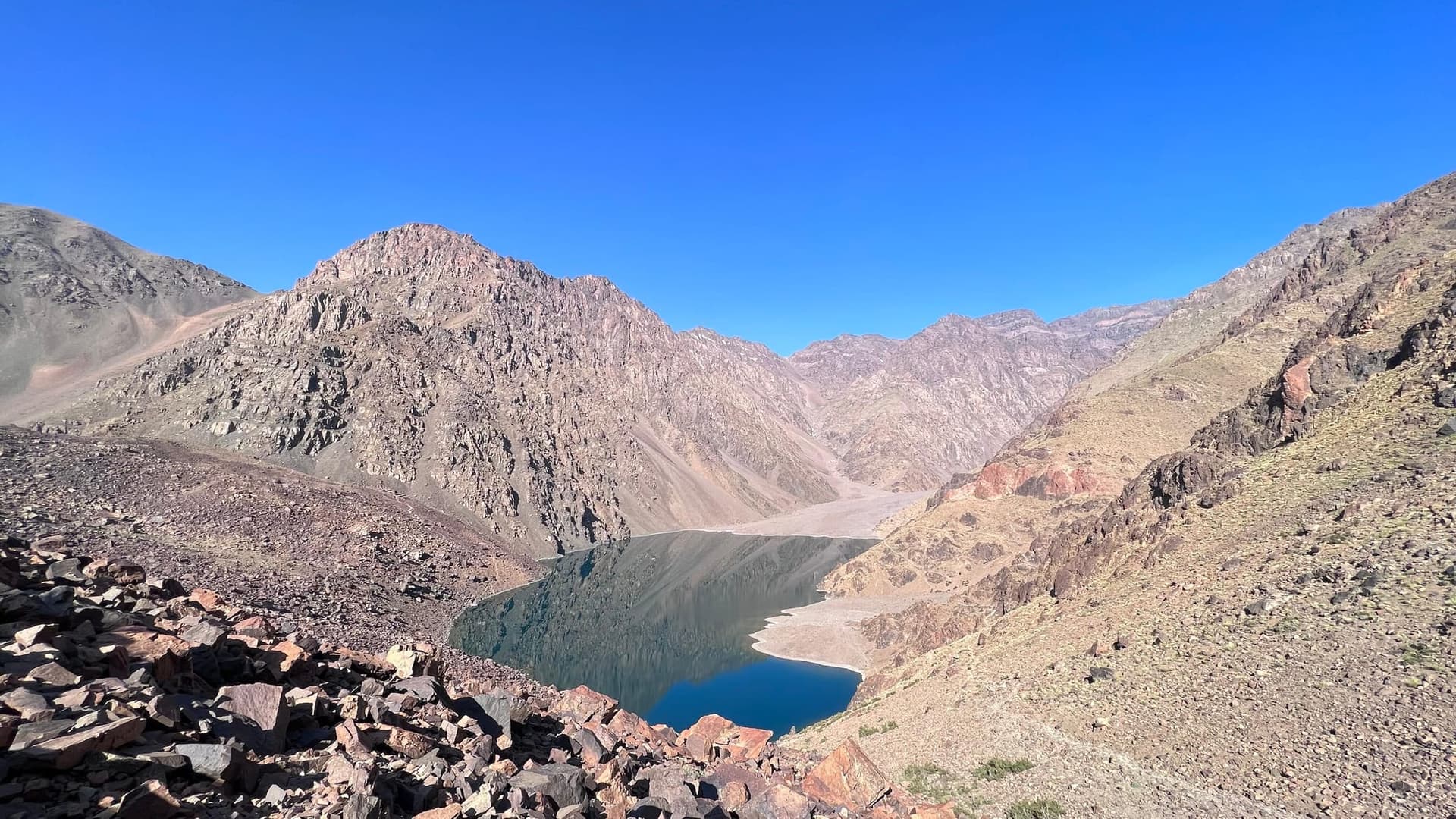
Toubkal Circuit & Ifni Lake from Marrakech — 6-Day Trek
- Camp beside the turquoise Lake Ifni (2,295 m), the Atlas's most beautiful lake
- Cross four high passes including Tizi n'Ouanoums (3,664 m) and Tizi Likemt (3,555 m)
- Summit Jbel Toubkal (4,167 m) — the highest peak in North Africa
€450 / person for 6+
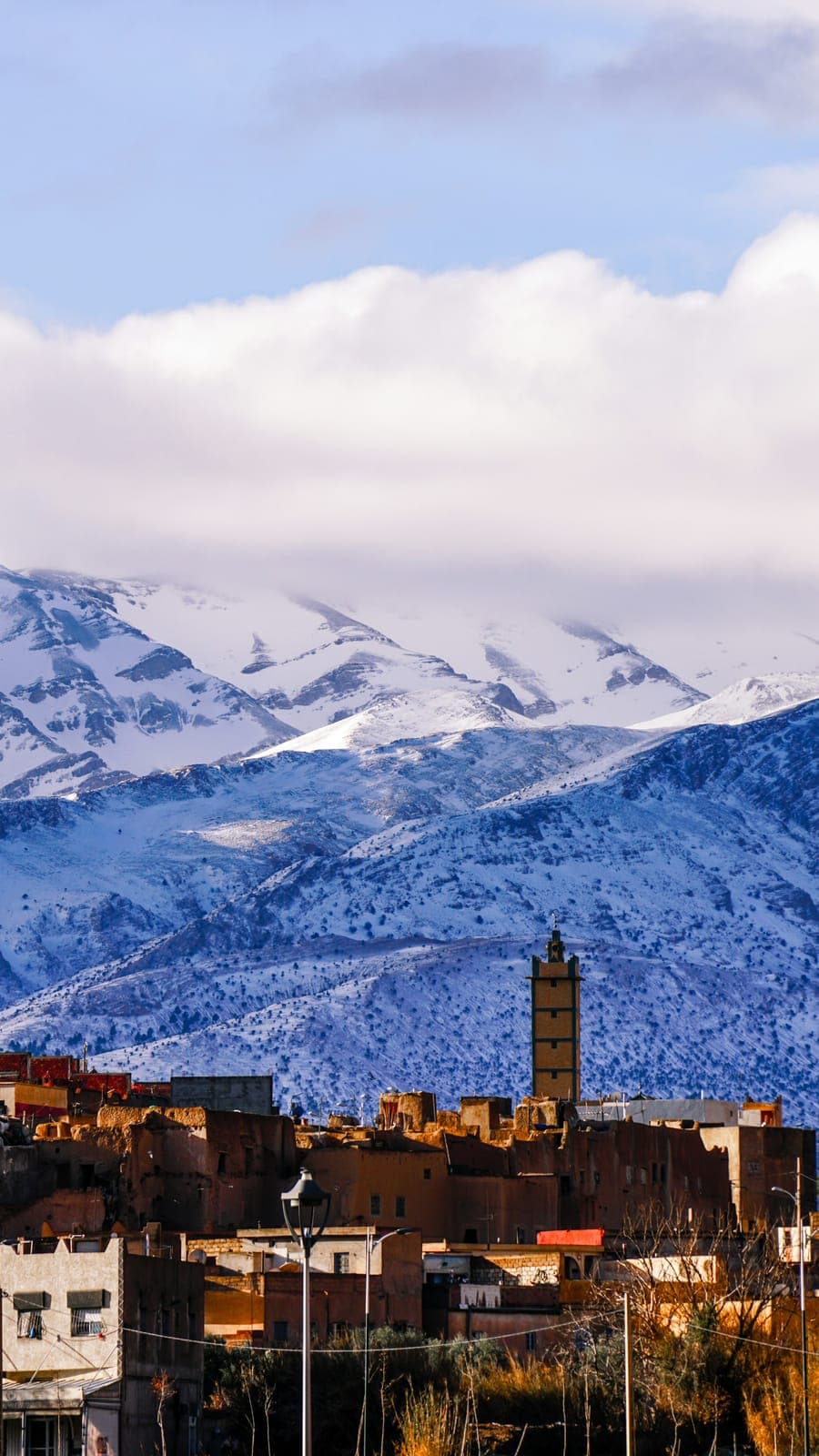
Marrakech to Mgoun Massif — 7-Day Traverse
- Summit Jbel Mgoun — Morocco's 2nd highest peak at 4,068 m
- Completely off the tourist trail
- Berber family homestays in remote villages
€596 / person for 6+
Agadir to Anti-Atlas Mountains — 3-Day Trek
- Ancient pink granite peaks of the Anti-Atlas
- Tafraoute — the painted rocks valley
- Almond blossom gorges (February–March)
€186 / person for 6+
Toubkal Three 4,000 m Peaks from Marrakech — 3-Day Challenge
- Summit three 4,000 m peaks: Timesguida (4,089 m), Ras Ouanoukrim (4,083 m) & Toubkal (4,167 m)
- One of the toughest and most rewarding treks in the High Atlas
- Base from the Toubkal Refuge at 3,207 m
€230 / person for 6+