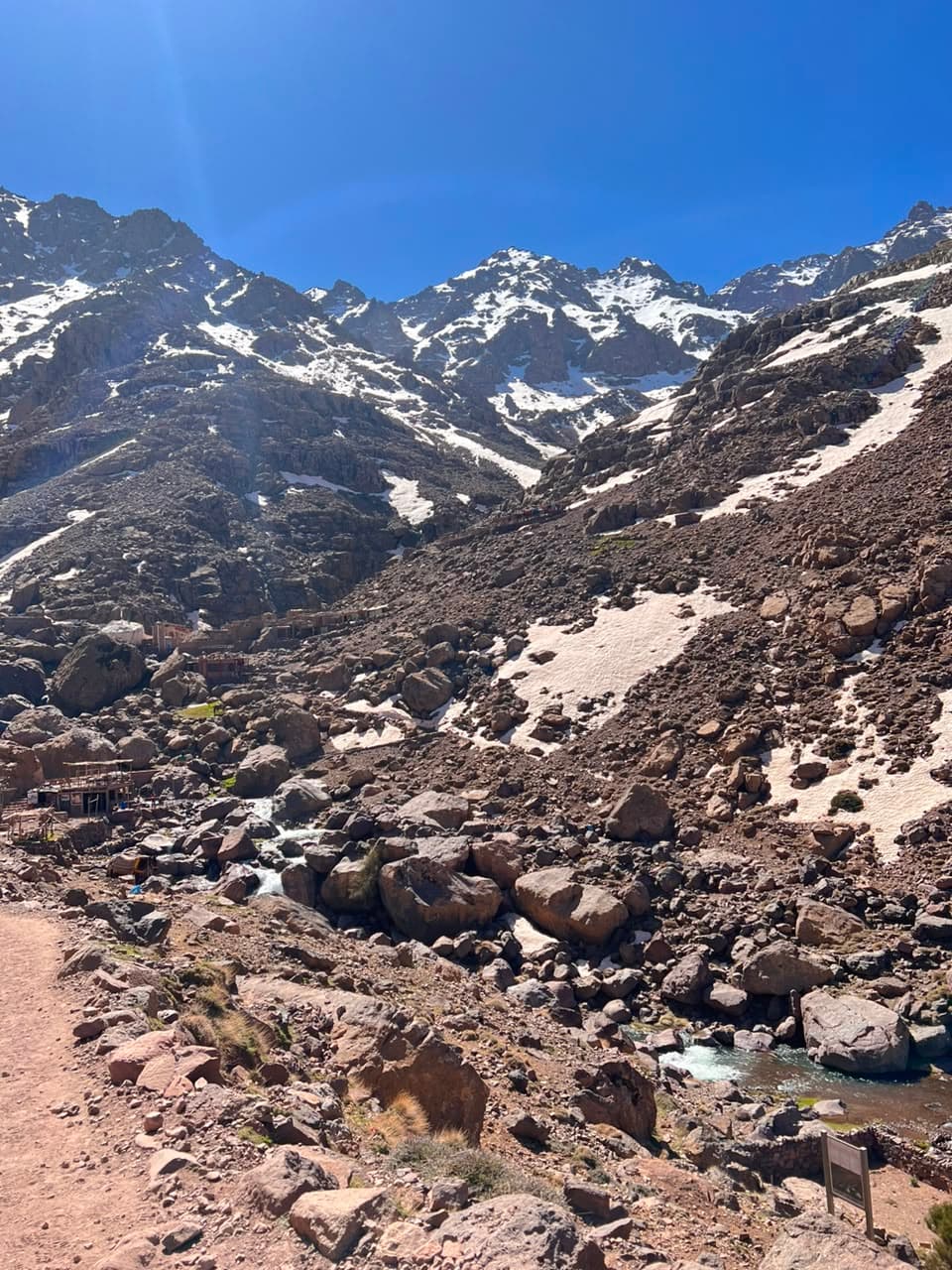
Toubkal is high enough for altitude sickness and low enough that it is almost always mild. Here is what the altitude does to you, the symptoms that mean slow down, the ones that mean go down, and why the itinerary you choose matters more than your fitness.
The altitude, in plain numbers
Four figures decide everything about this subject:
| Place | Altitude |
|---|---|
| Imlil, the trailhead | 1,740 m |
| Sidi Chamharouch | 2,350 m |
| Toubkal Refuge | 3,207 m |
| Toubkal summit | 4,167 m |
Acute mountain sickness — AMS — becomes possible above roughly 2,500 m. So you
cross into the zone somewhere around Sidi Chamharouch on your first morning, sleep
700 m above it, and summit 1,600 m above it.
That makes Toubkal genuinely high. It also makes it, by the standards of the world's
big mountains, quite modest: the summit is lower than Everest Base Camp, and the
whole route is a walk-in and walk-out with no technical ground in summer. The
combination is what shapes the risk — **high enough that mild symptoms are normal,
low enough that serious illness is rare.**
What altitude actually does
Air at 4,167 m is not short of oxygen as a proportion — it is still 21% oxygen. What
falls is the pressure pushing that oxygen across your lungs into your blood. At the
summit each breath delivers roughly 60% of the oxygen the same breath gives you in
Marrakech.
Your body notices within minutes and starts compensating: you breathe faster and
deeper, your heart rate rises, and over a day or two your kidneys begin adjusting
your blood chemistry. **Acclimatisation is that adjustment, and it takes time you
cannot substitute with fitness or willpower.**
AMS is what happens when you climb faster than the adjustment can keep up.
The symptoms that mean slow down
Mild AMS is common at the refuge and, in itself, not an emergency:
- Headache — the signature symptom, usually frontal, often worse lying down
- Poor appetite or nausea — dinner at the refuge going untouched is a classic
- Broken sleep — including the unsettling sensation of waking short of breath
- Fatigue beyond what the day's walking explains
- Dizziness when you stand up quickly
If this is you, the plan is: stop climbing, drink, eat what you can, rest, and see
how the night goes. Many people wake up better. Plenty summit the next morning.
The symptoms that mean go down
These are different in kind, not just degree. They point at the two dangerous forms
of altitude illness — fluid on the brain (HACE) and fluid in the lungs (HAPE):
- Severe headache that does not respond to rest or painkillers
- Confusion, slurred speech, or unusual behaviour — often noticed by others first
- Loss of coordination — the classic test is being unable to walk a straight line
heel-to-toe
- Breathlessness at rest, a persistent cough, chest tightness, or breathing that
sounds wet or gurgly
- Any symptom that keeps getting worse while you are resting
There is no clever management of these on the mountain. **The treatment is descent,
and it is not a decision to sleep on.** From the refuge, Imlil is a few hours down
and 1,500 m lower, which is the single most reassuring fact about this route: the cure
is always available and always downhill.
Why the itinerary matters more than the drug
This is the part most pages skip, and it is where an operator can actually help.
The 2-day trek and the 4-day trek reach the same summit. The difference is what
happens before summit day:
| 2-day | 4-day | |
|---|---|---|
| Nights above 3,000 m before summit | 1 | 2 |
| Acclimatisation day | none | yes |
| Ascent on summit day | 960 m | 960 m |
| Typical turn-back rate | higher | noticeably lower |
Our 4-day Toubkal summit trek exists because of
that middle row. The extra days are not spent covering more ground — they are spent
letting your body catch up, which is the only intervention with a large effect on how
summit day feels. The 2-day version is a
real trip and plenty of people do it well, but it asks more of a body that has had
less warning.
If you have never been near 4,000 m, the honest recommendation is the longer
itinerary. It is not upselling — it is the difference between standing on the summit
and turning around 300 m below it with a headache.
Fitness is not the protection you think it is
Susceptibility to AMS is mostly individual physiology. Some people acclimatise easily
and some do not, and there is no reliable way to know which you are until you go high.
Marathon runners get altitude sickness. So do people who have summited before without
trouble — previous success is a weak predictor, though previous *failure* is a
reasonable warning.
If anything, being very fit carries a small extra risk, because fit walkers climb
faster and can out-pace their own adjustment. On summit morning the guides deliberately
set a pace that feels too slow to the strongest person in the group. That is not
caution for its own sake; it is the mechanism working.
What our guides do about it
Every trek we run to altitude is led by a licensed Moroccan mountain guide, and
altitude management is a routine part of the job rather than an emergency skill:
- Pace set from the front, deliberately slow on the climb to the refuge and again
on summit morning
- Symptom checks that sound like conversation — appetite, sleep, headache, how
you feel on the flat sections
- Water discipline — 3 to 4 litres a day, which sounds excessive until you notice
how dry the air is
- A decision made early rather than late if someone is struggling, because
descending in daylight is straightforward and descending at night is not
- The authority to turn a party around, which is worth more than any equipment
Our guides are from the valleys below this mountain and climb it through the season.
They have watched a great many people feel rough at 3,207 m and be fine by morning,
and they know the small number of signs that mean this one is different.
Practical things that genuinely help
- Drink more than you want to. Dehydration mimics and worsens AMS.
- Eat, even without appetite. Carbohydrate is the fuel your compensating body wants.
- No alcohol at the refuge. It suppresses breathing at night, which is the worst
possible time.
- Climb high, sleep low where the itinerary allows — our longer circuits are
built this way.
- Do not hide symptoms. The commonest reason a mild problem becomes a serious one
is somebody not wanting to spoil the group's summit day.
- Arrive a day early in Marrakech if you have flown far. Marrakech is only 466 m,
so it does not acclimatise you, but starting rested is worth real altitude.
So how worried should you be?
Mildly. Expect a headache at the refuge and treat it as normal. Expect to sleep badly
and to not want dinner. Expect the guide to walk slower than you would.
Serious altitude illness on Toubkal is uncommon, and the reason is structural rather
than luck: the mountain tops out at 4,167 m, the refuge is a few hours from a road
head, and the descent is a walk rather than a rescue. Very few 4,000 m peaks are this
forgiving of a bad night.
Choose the itinerary that gives your body time, tell your guide the truth about how
you feel, and the altitude becomes a thing you notice rather than a thing that stops
you.
👉 See our Toubkal treks — the 4-day includes a
dedicated acclimatisation day, and every departure is led by a licensed local
mountain guide.
Frequently asked questions
Can you get altitude sickness on Toubkal?
Does being fit protect you from altitude sickness?
Is the 2-day Toubkal trek dangerous because of altitude?
Should I take Diamox for Toubkal?
What happens if I get sick at the refuge?
Do children get altitude sickness more easily?
Trips that go here
Guided by the team who wrote this guide.

4-Day Toubkal Summit Trek from Marrakech
- Summit Jbel Toubkal at 4,167 m — highest peak in North Africa
- Sleep in traditional Berber mountain refuges at 3,207 m
- Start in the trailhead village of Imlil, deep in the Atlas
€260 / person for 6+
Mount Toubkal Express — 2-Day Summit from Marrakech
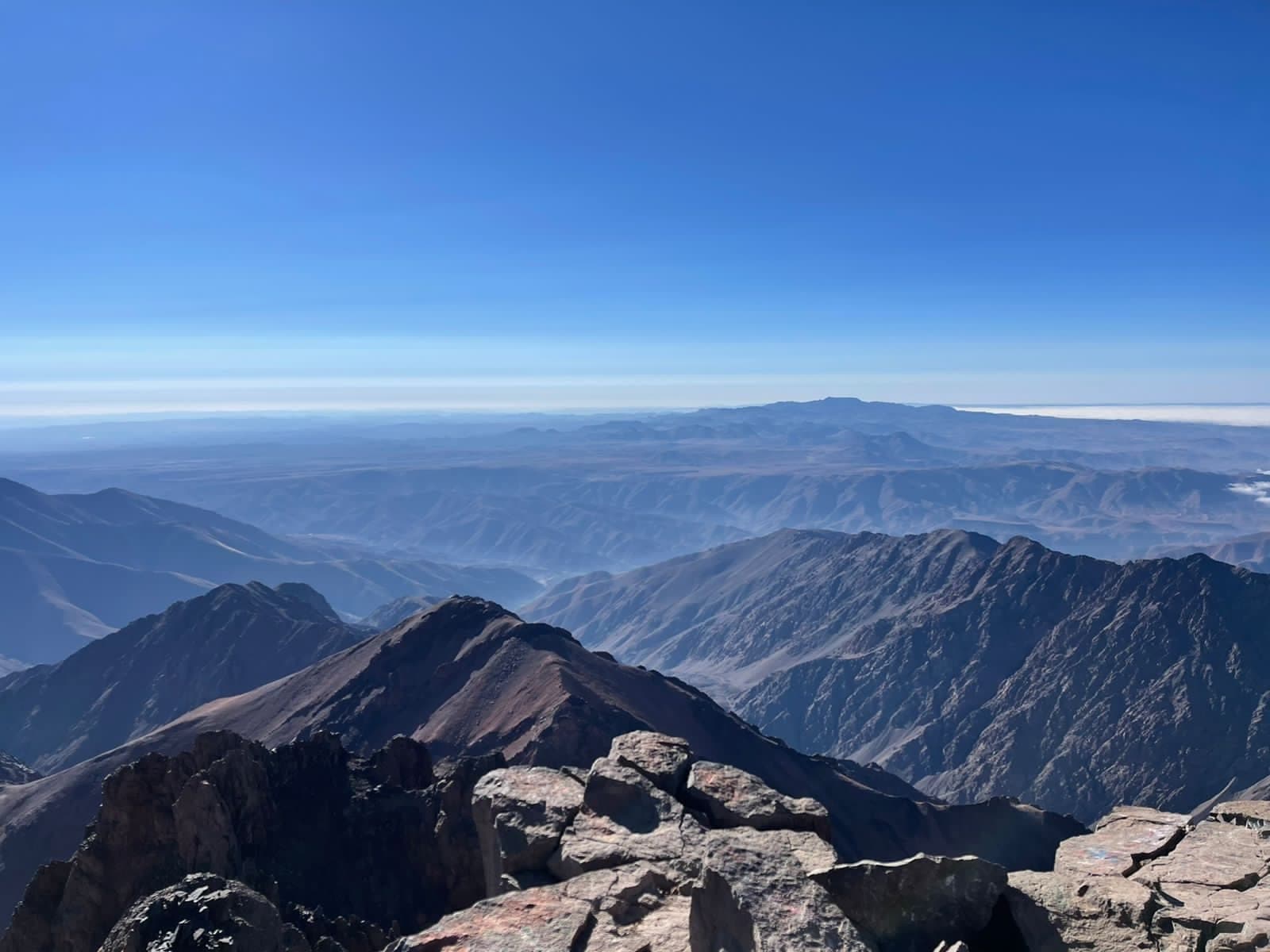
- Summit Jbel Toubkal (4,167 m) in just two days from Marrakech
- Overnight in the Toubkal Refuge at 3,207 m
- Pass the Sidi Chamharouch shrine and its waterfall
€153 / person for 6+
Toubkal Circuit & Ifni Lake from Marrakech — 6-Day Trek
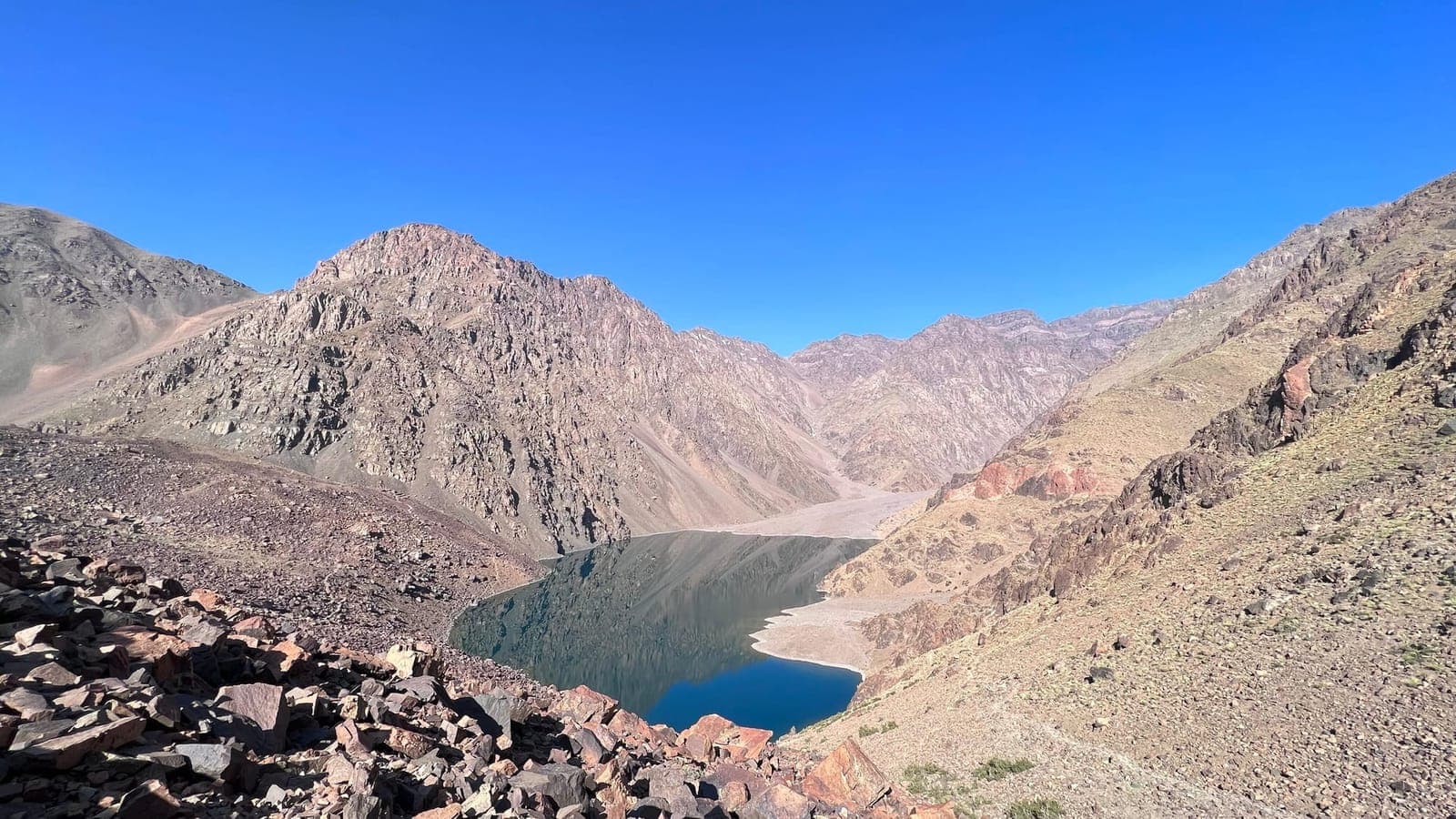
- Camp beside the turquoise Lake Ifni (2,295 m), the Atlas's most beautiful lake
- Cross four high passes including Tizi n'Ouanoums (3,664 m) and Tizi Likemt (3,555 m)
- Summit Jbel Toubkal (4,167 m) — the highest peak in North Africa
€450 / person for 6+
Toubkal Three 4,000 m Peaks from Marrakech — 3-Day Challenge
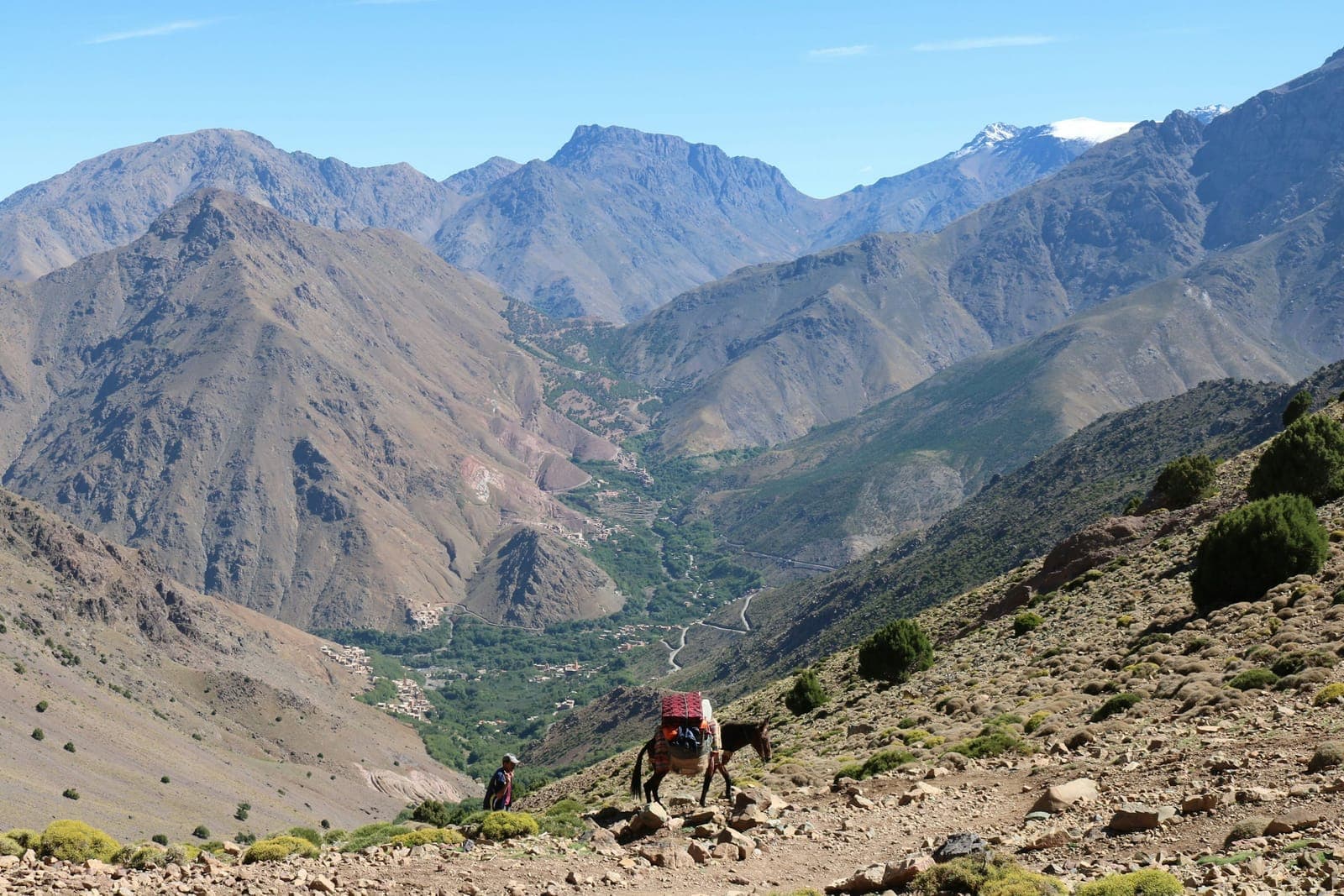
- Summit three 4,000 m peaks: Timesguida (4,089 m), Ras Ouanoukrim (4,083 m) & Toubkal (4,167 m)
- One of the toughest and most rewarding treks in the High Atlas
- Base from the Toubkal Refuge at 3,207 m
€230 / person for 6+