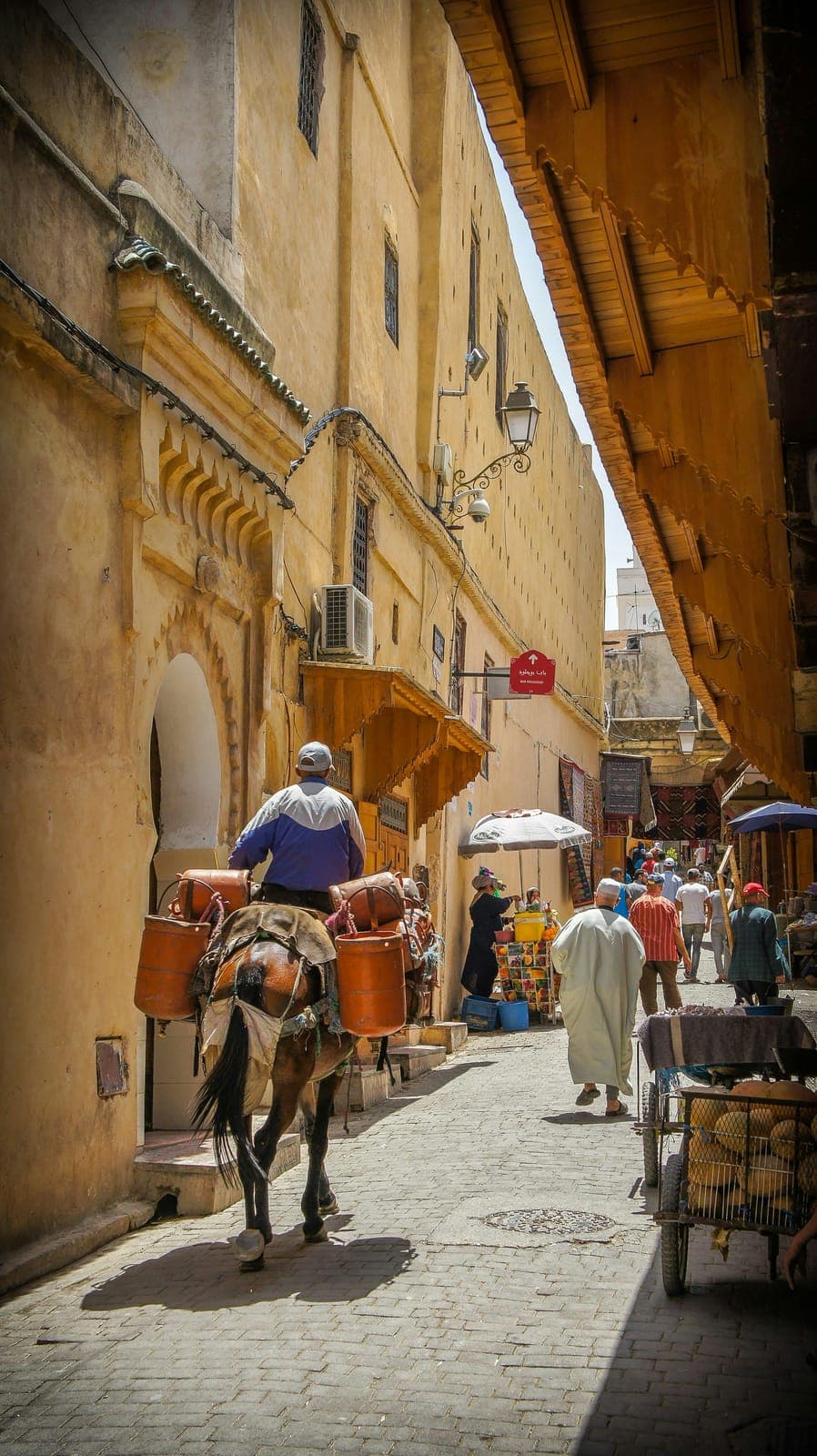
Fes el-Bali is the most complete surviving medieval city on earth — a UNESCO World Heritage labyrinth of 9,400 alleyways, 785 mosques, and a tannery unchanged since the 12th century. Here is how to do it justice.
Why Fes Is Different from Marrakech
Marrakech is spectacular. Fes is deeper. Where Marrakech has absorbed centuries of international tourism and adapted accordingly, Fes remains predominantly a city for Fassis — for the people who have lived here across generations. The medina is not a stage set; it is a functioning city, where craftsmen have worked the same trades in the same buildings for 500 years.
Fes el-Bali (Old Fes) traces back to 789 AD, when Idris I, founder of Morocco's first Islamic dynasty, established a settlement on one bank of the river here. The city as it's really understood today, though, came from his son: Idris II founded a second settlement on the opposite bank around 808 AD and made it his capital, and the two rival walled towns — each with its own mosque, its own gates, its own identity — stood more or less separately for nearly three centuries until the Almoravid dynasty finally unified them into one city in the 11th century. That two-settlement origin is part of why the old medina still reads, to a careful eye, as two cities grown together rather than one planned from scratch. Fes was designated a UNESCO World Heritage Site in 1981. It is the world's largest car-free urban area, the site of the oldest university in continuous operation (Al-Qarawiyyin, founded 859 AD), and home to crafts — leatherwork, metalwork, pottery, weaving, wood carving — that remain largely unchanged from the medieval period.
Give it two full days minimum. One is not enough.
The Chouara Tanneries
The most iconic sight in Fes and one of the most extraordinary in Morocco. The Chouara tanneries — in operation since the 11th century — produce some of the world's finest leather using methods unchanged for a thousand years. Hides are soaked in pigeon dung to soften them, then dyed in stone vats filled with natural pigments: poppy for red, saffron for yellow, indigo for blue, mint for green, henna for orange.
How to see them: The tanneries are best viewed from the leather shop terraces above. Access is free with a visit to any of the surrounding leather shops — most will offer you a sprig of mint to hold against your nose (the smell is considerable). The best light is in the morning (9:00–11:00 am). Avoid afternoons when hides are drying and the vats are less active.
On buying leather: The leather shops above the tanneries are legitimate and the goods are genuine. The quality is high and the prices, while not rock-bottom, are fair for handmade Moroccan leather. Babouches (traditional slippers), bags, and poufs are the best value. Bargain respectfully — prices are usually set higher for tourists but 20–30% reduction is typically achievable.
Al-Qarawiyyin University and Mosque
Founded in 859 AD by Fatima al-Fihri, Al-Qarawiyyin is the oldest continuously operating educational institution in the world. The mosque complex — which non-Muslims cannot enter — is visible from several open doors and through the courtyard gates. The library, which reopened after restoration in 2016, contains some of the oldest manuscripts in the Islamic world.
The area immediately surrounding the mosque is the most ancient part of Fes — narrow alleyways, carved plaster facades, and the sound of Quranic recitation drifting from the medersa windows.
Medersa Bou Inania
The finest surviving medersa (Islamic college) in Fes, built between 1350 and 1357 under the Merinid sultan Bou Inan. It is open to non-Muslims and entry is 70 MAD. The interior courtyard is a masterwork: three tiers of carved cedarwood, zellij tilework rising to eye level, and carved stucco above that. The student cells around the upper galleries house temporary exhibitions.
Visit in the morning when light falls into the courtyard from the east. The carved cedar screen above the entrance is one of the finest examples of Merinid craftsmanship in existence.
Souk el-Attarin (Spice Market)
Adjacent to the Qarawiyyin mosque, the Souk el-Attarin is Fes's traditional spice and perfume market. The building itself — a 14th-century structure with a wooden ceiling and mosaic tilework — is as interesting as the merchandise. Look for ras el-hanout (the signature Moroccan spice blend of 20–30 ingredients), argan oil, rose water, and orange blossom water. Prices here are generally more honest than in Marrakech.
The Jewish Quarter (Mellah)
Fes has one of the oldest Jewish quarters in North Africa, established in 1438. The Mellah is immediately adjacent to the Royal Palace and the Andalusian Quarter. The distinctive architecture — overhanging upper storeys, wrought-iron balconies — distinguishes it from the rest of the medina. The Ibn Danan Synagogue (entry 20 MAD) is beautifully restored and offers a window into the once-thriving Jewish community of Fes. Hebrew inscriptions are visible above many doorways.
Practical Tips
- Hire a guide for day one. Fes's medina has over 9,000 alleyways. Even with a detailed map and a GPS, first-time visitors get profoundly lost. A certified guide (licensed by the Ministry of Tourism) for the first day pays for itself in time saved and context gained. Your riad can recommend trustworthy guides.
- Day two: go alone. Armed with the knowledge from day one, walking the medina independently on day two is one of the great travel experiences. Get lost deliberately. Follow your nose.
- Start at Bab Bou Jeloud. The main gate into the medina. From here, the two main arteries — Talaa Kebira and Talaa Seghira — lead into the heart of the old city.
- The best time is dawn. The medina wakes early — bakers, butchers, and spice merchants begin before 6:00 am. An early morning walk, when the light is low and the city is doing its own business rather than performing for tourists, is extraordinary.
- Stay inside the medina. A riad within the medina walls — even a simple one — gives you access to the city at its best hours. Riads on the outer edge of Fes (Ville Nouvelle) miss the point.
Getting to Fes
Fes sits in the north, and how you arrive shapes how much of Morocco you see on the way.
- From Marrakech. The direct train takes around 7 hours. Driving it over two or three days instead turns the transfer into the trip: the Tizi n'Tichka pass, Aït Ben Haddou, and the Middle Atlas cedar forests all sit on the route. Our 3-day Marrakech to Fes tour covers that ground with a driver-guide.
- From Agadir. There is no direct train, and the drive is long enough that doing it in one push wastes the landscape. Our 4-day Agadir to Fes tour breaks it at Marrakech and Midelt, arriving with a full day left for the medina.
- By air. Fès–Saïss (FEZ) has direct flights from several European cities and is 15 minutes from the medina. If your time is short, fly in and spend all of it here rather than on the road.
Whichever way you arrive, give the medina two full days. One is enough to see it and not enough to understand it.
Trips that go here
Guided by the team who wrote this guide.
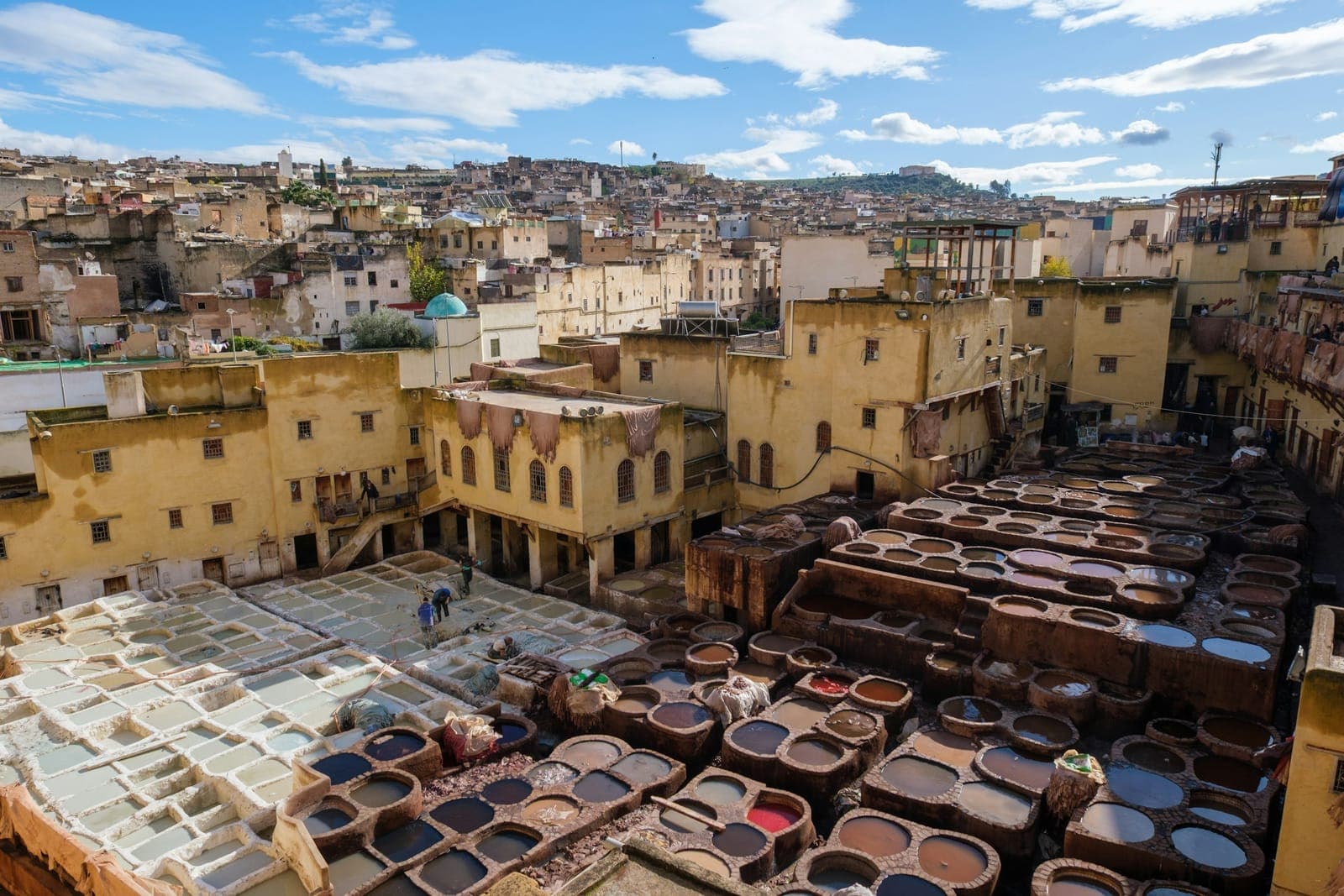
Marrakech to Fes — 3-Day Imperial Cities Tour
- Tizi n'Tichka mountain pass (2,260 m)
- Aït Ben Haddou UNESCO World Heritage Ksar
- Ifrane — Morocco's Alpine village
€299 / person for 14+
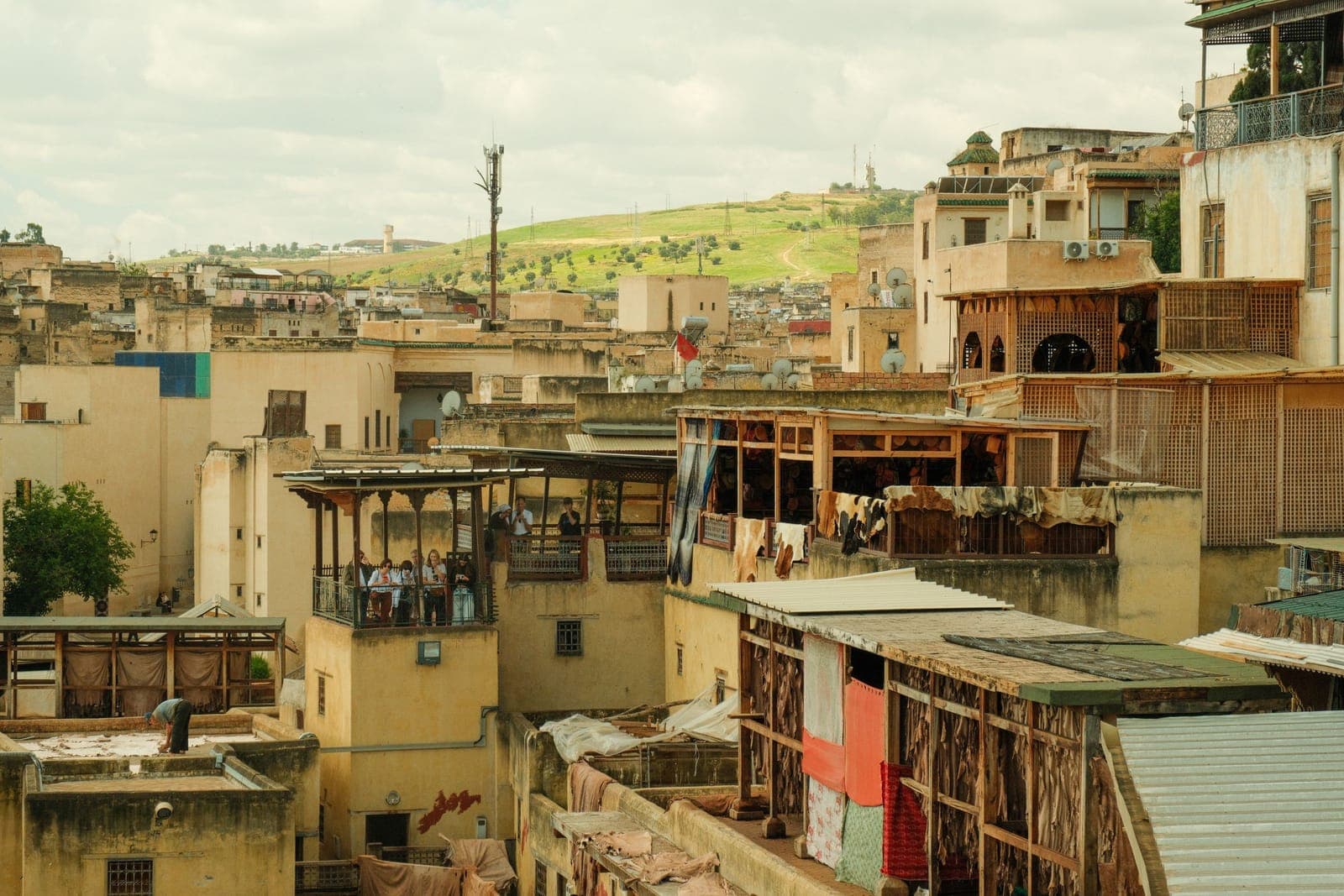
Agadir to Fes — 4-Day Imperial Cities Tour
- Tizi n'Tichka mountain pass (2,260 m)
- Aït Ben Haddou UNESCO World Heritage Ksar
- Ifrane — Morocco's Alpine village
€272 / person for 14+