Meknes was the capital of Morocco for fifty-five years and has the gate to prove it. Most itineraries give it ninety minutes on the way to Fes. Here is what is actually there, and why the holy town on the hill above it is worth the detour.
The city that stopped being the capital
For fifty-five years Meknes was the capital of Morocco. Sultan Moulay Ismail, founder of the Alaouite dynasty — the family that still rules the country — built it into an imperial city on a scale meant to rival what he had heard of Versailles. Then the capital moved, and Meknes was left with the walls, the gates, the granaries and the stables of a court that had gone.
That is why it feels the way it does. Meknes has imperial architecture at imperial scale and a fraction of the visitors of Fes or Marrakech. You can stand in front of its greatest monument without queuing.
Bab Mansour
Bab Mansour is the reason most people stop, and it earns it. It is generally reckoned the finest gate in Morocco: a vast ceremonial arch facing Place el-Hedim, covered in zellij tilework, framed by marble columns the builders took from Volubilis up the road.
It was a gate for a court, not for traffic — the point was what visitors felt approaching the sultan. That is still roughly the effect, and it is best in late afternoon when the light comes across the square onto the tilework rather than flattening it.
Place el-Hedim in front of it is a working square, smaller and calmer than Jemaa el-Fna, with the food market along one side. It is a good place to sit for twenty minutes and watch a Moroccan city go about its evening.
The granaries, which are the real surprise
Heri es-Souani is what people remember. Moulay Ismail built it inside the kasbah to store grain and provision the city and its horses through a siege — a vast complex of vaulted halls with walls thick enough to hold the temperature steady through summer.
Part of the roof has collapsed over the centuries, so light falls in shafts through the arches into rooms that were designed to be dark. The result is one of the most photogenic interiors in Morocco, and it is nearly always quiet.
Entry is about 10 dirhams, cash only. Opening hours run roughly 9am to noon and 3pm to 6:30pm — the midday closure catches people out, and it is the single most common reason visitors miss it.
Next door are the ruins of the royal stables, built for a cavalry numbered in the thousands.
The mausoleum of Moulay Ismail
The mausoleum of Moulay Ismail is one of the few active religious sites in Morocco that non-Muslims may enter, which makes it unusual and worth taking up. The courtyards are calm, the tilework is exceptional, and it gives you a sense of the man whose ambition explains everything else in the city.
Dress conservatively, remove shoes where indicated, and keep your voice down — people are praying, and this is not a museum.
Moulay Idriss, on the hill
Five kilometres from Volubilis, a white town drapes over two hilltops: Moulay Idriss Zerhoun, the holiest town in Morocco.
It is built around the tomb of Moulay Idriss I, who brought Islam to Morocco in the eighth century and founded its first dynasty. For centuries non-Muslims could not stay here overnight. That restriction is long gone and the town now has guesthouses, but the atmosphere it produced has not entirely faded — this is a pilgrimage town first and a tourist destination second, which by Moroccan standards makes it exceptionally relaxed. Nobody is trying to sell you a carpet.
What to do: climb. The town is steep and the reward is the terrace viewpoints, where you look down over the green-tiled roof of the shrine and out across the Zerhoun plain toward Volubilis. Everyone will point you toward them, and it takes about twenty minutes of uphill walking.
What you cannot do: enter the shrine itself. Non-Muslims may walk the town freely but not pass into the sanctuary — a wooden bar across the lane marks the line clearly.
Doing all three
Volubilis, Moulay Idriss and Meknes sit within about forty minutes of each other, and they make more sense together than separately: the Roman city, the holy town partly built from its stones, and the imperial capital that reused its marble a thousand years later.
From Fes as a day trip that is a long day — 10 to 11 hours, most of it driving. It works far better as part of a route already heading that way. Our 5-day Casablanca to Marrakech tour takes Rabat in the morning and Volubilis and Meknes in the afternoon, arriving in Fes for the night, so the sites cost you no extra day at all. The imperial cities tour does the same from Marrakech, covering all four capitals.
If you want the detail on the Roman site before you go, our guide to Volubilis covers what to look for and when to arrive.
A note on time
The honest problem with Meknes is that it is an hour from Fes, and Fes is overwhelming in the best way. Most itineraries give Meknes ninety minutes because the schedule is built around getting to Fes before dark.
If that is your situation, spend the ninety minutes on Bab Mansour and the granaries and skip the medina. The medina is pleasant and you will see a better one tomorrow. The granaries you will not see anywhere else.
Frequently asked questions
Is Meknes worth visiting, or should I just go to Fes?
How long do you need in Meknes?
Can non-Muslims visit Moulay Idriss?
How far is Moulay Idriss from Volubilis?
What is Heri es-Souani and is it worth the entry?
Trips that go here
Guided by the team who wrote this guide.
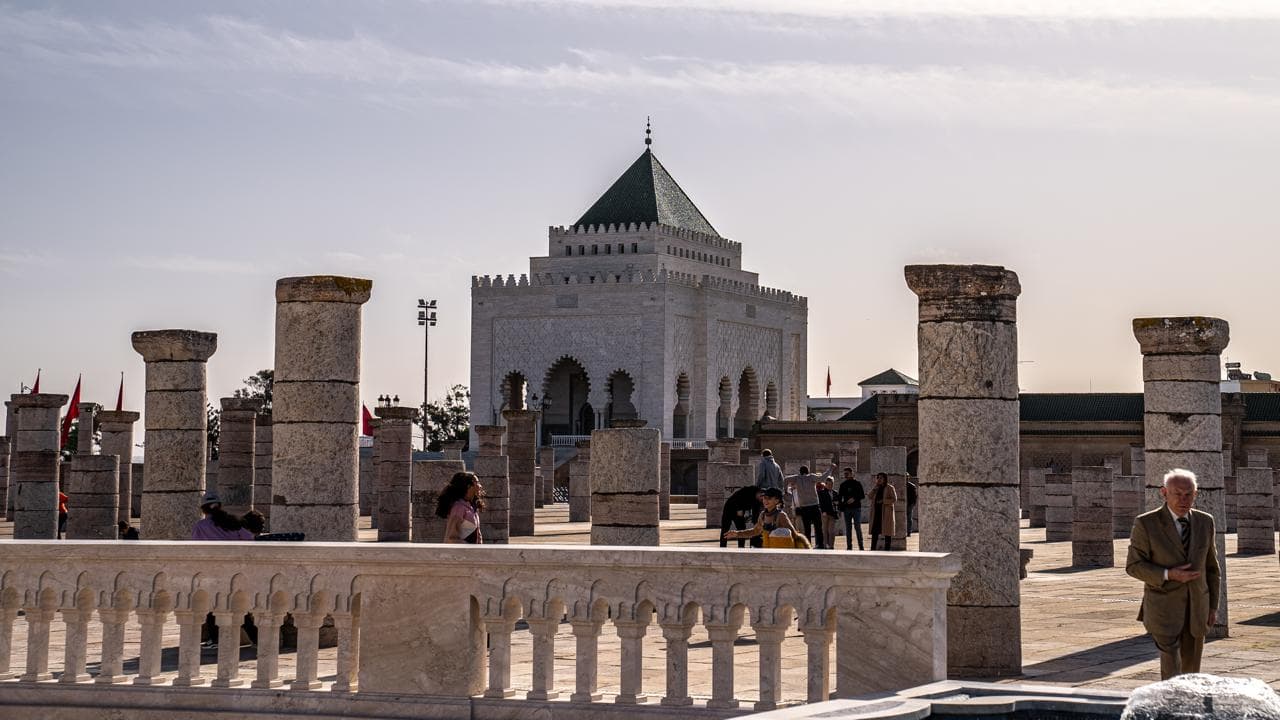
Casablanca to Marrakech — 5-Day Imperial Cities & Sahara
- Hassan Tower and the Kasbah of the Udayas in Rabat
- Volubilis — Roman mosaics still in the ground where they were laid
- Bab Mansour and the imperial granaries at Meknes
€470 / person for 6+
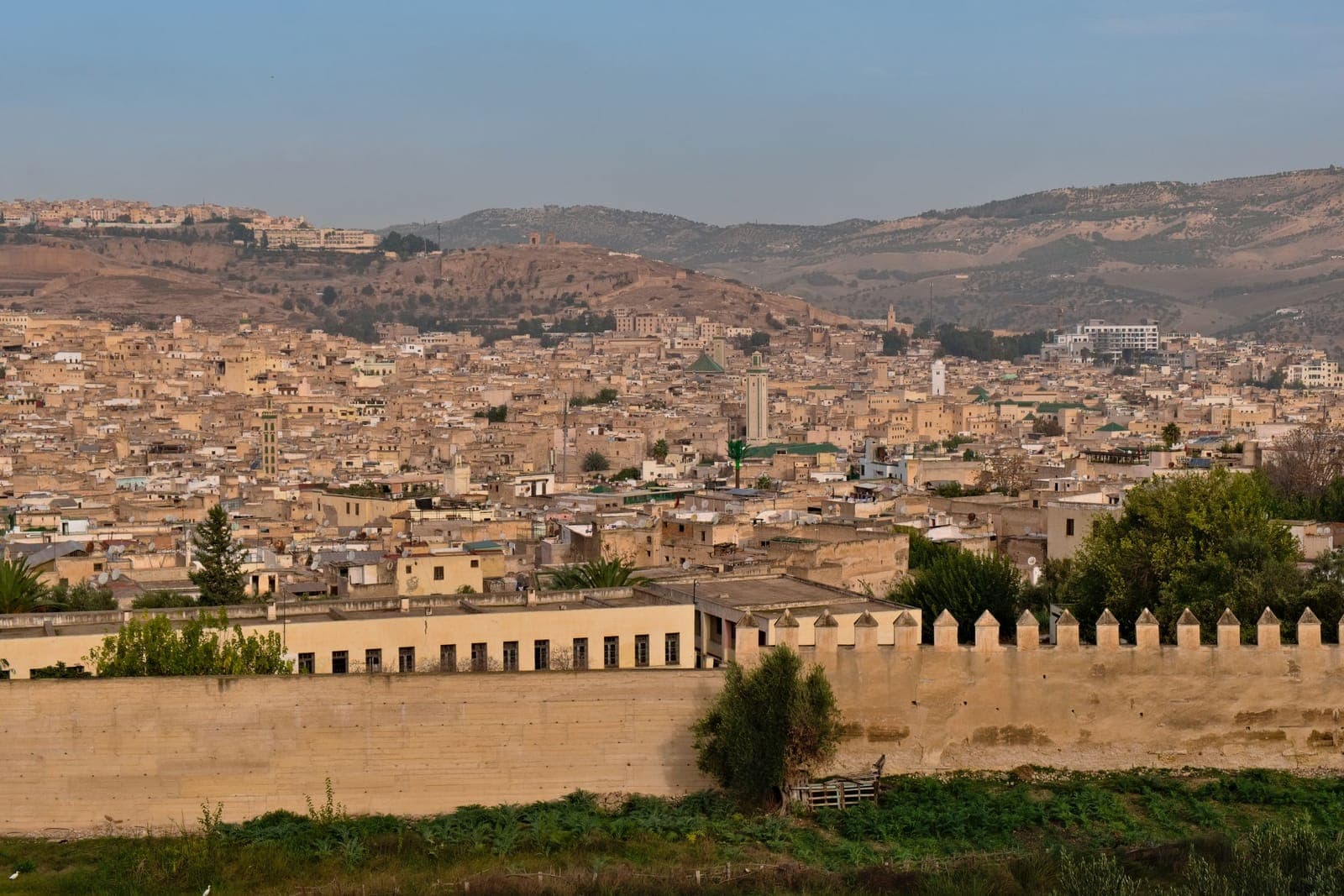
Marrakech — All 4 Imperial Cities — 5-Day Grand Tour
- All 4 Imperial Cities: Marrakech, Meknes, Fes, Rabat
- Volubilis Roman ruins (UNESCO World Heritage)
- Hassan II Mosque in Rabat
€261 / person for 6+
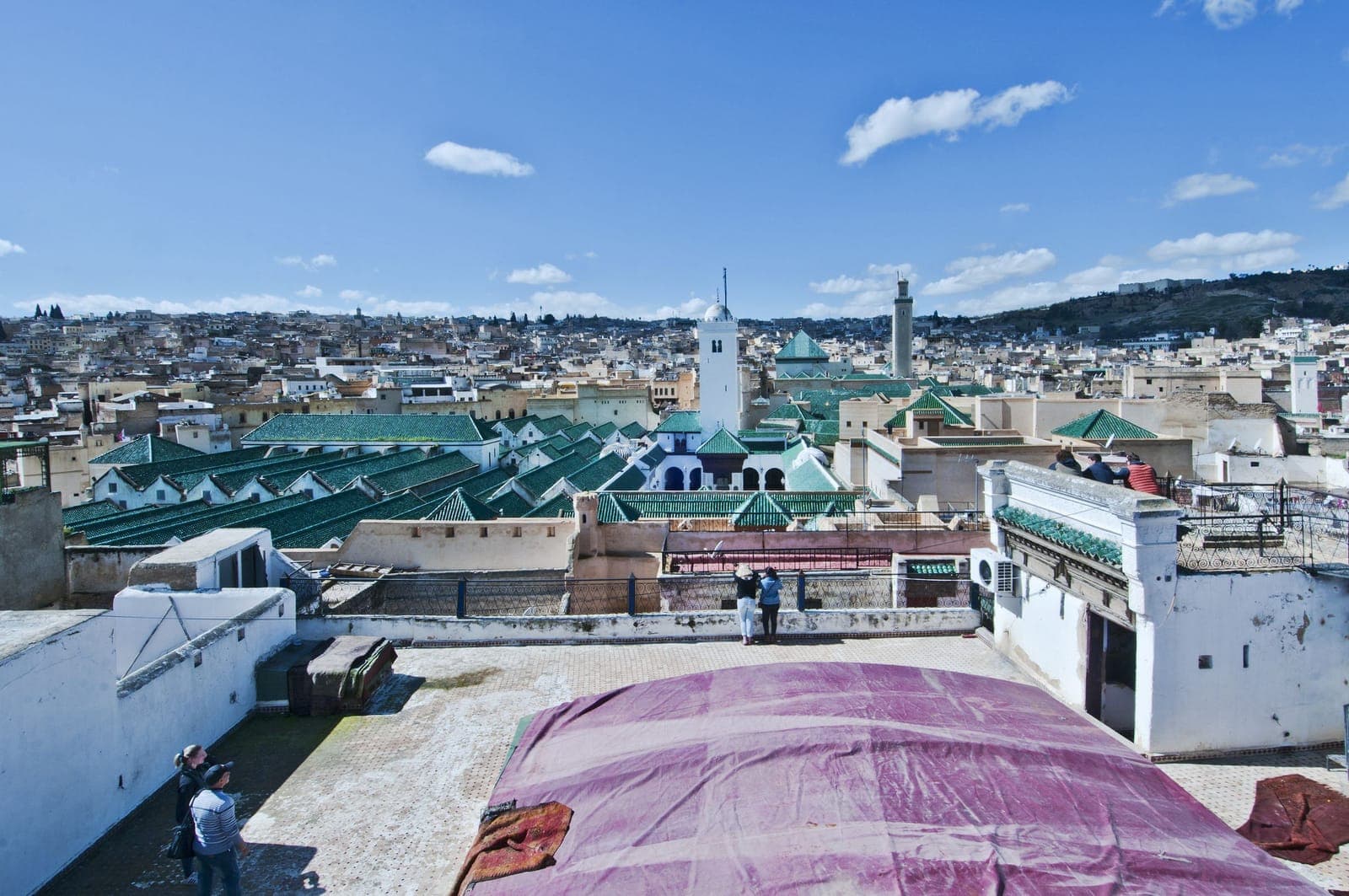
Agadir — All 4 Imperial Cities — 6-Day Grand Tour
- All 4 Imperial Cities: Marrakech, Meknes, Fes, Rabat
- Volubilis Roman ruins (UNESCO World Heritage)
- Hassan II Mosque in Rabat
€303 / person for 6+