The best-preserved Roman site in Morocco, and the only one where the mosaics are still in the floors they were laid in. What is actually there, what it costs, when to go, and how it fits into a route south.
What Volubilis actually is
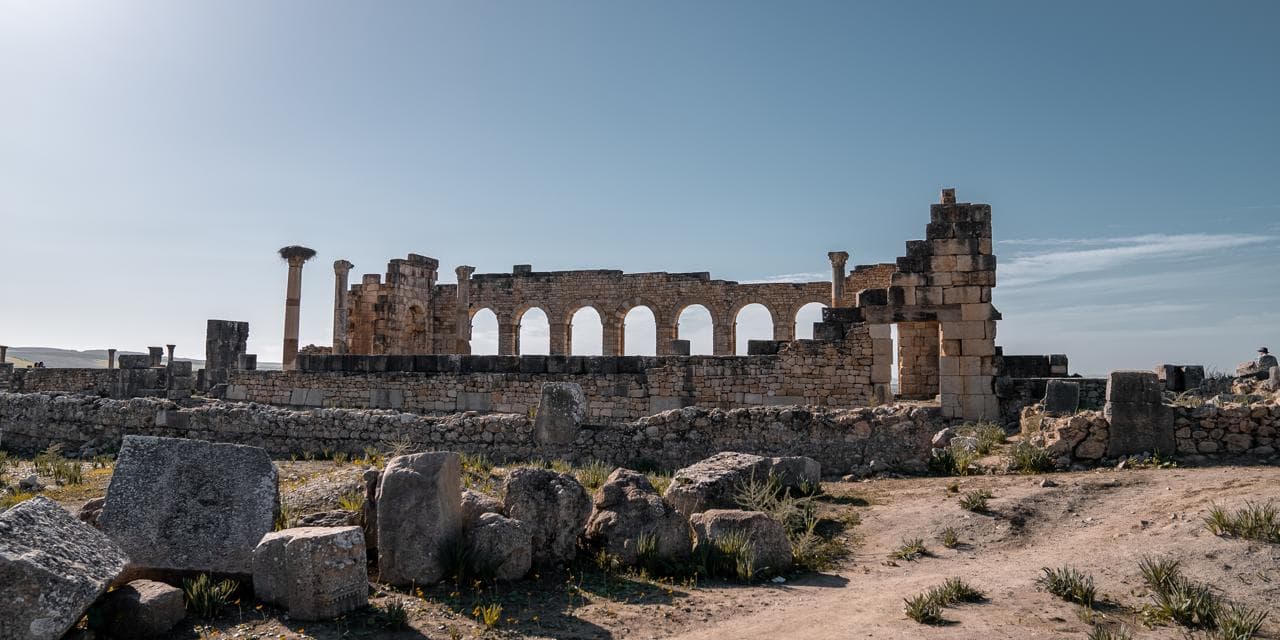
Volubilis is the best-preserved Roman city in Morocco, sitting on a slope above the Zerhoun plain about thirty kilometres north of Meknes. It was made a UNESCO World Heritage Site in 1997.
The short version of its history is stranger than most guidebooks make it sound. In the first century BC the city belonged not to Rome but to Mauretania, and its king was Juba II — raised in Rome, installed by Augustus, and married to Cleopatra Selene, the daughter of Cleopatra and Mark Antony. Under him Volubilis became a wealthy centre of late Hellenistic culture, which is why the mosaics here draw on Greek mythology rather than Roman military scenes.
Rome annexed the kingdom after Juba's son was killed. The city kept growing, and in around 216-217 AD its council put up an arch to the emperor Caracalla, thanking him for granting Roman citizenship to its inhabitants and exempting them from tax. That arch is still standing, and it is still the first thing you see.
The thing that makes it different
Most Roman sites in the Mediterranean have been stripped of their floors. The mosaics were lifted, crated, and moved to a museum, often in a different city, and what you walk through is the outline of rooms with the art removed.
At Volubilis the mosaics are still where they were laid. They sit in the floors of the houses along the main street, open to the sky, with nothing between you and them but a low rope. You look down at a second-century dining room floor while standing in the doorway the diners used.
This is the single reason to come, and it is worth understanding before you arrive, because it changes how you walk the site. The temptation is to make for the big standing structures — the basilica, the capitol, the arch. Those are impressive. But the mosaics are in the domestic buildings, and if you only walk the monumental spine you will miss almost all of them.
What to look for
The House of Orpheus is the largest house on the site and holds the best-known floor: Orpheus playing to the animals, with a dolphin mosaic in the dining room. It had a courtyard with a pool and a garden, and several rooms with mythological floors.
The Arch of Caracalla spans one end of the Decumanus Maximus, the main street. That street was lined with broad walkways and something like two hundred shops — standing under the arch and looking down it is the clearest sense you get of Volubilis as a working town rather than a ruin.
The basilica and capitol are the tallest surviving structures and the ones in every photograph. They are the civic centre: law courts and temple, the Roman equivalent of a town hall square.
The olive presses. Easy to walk past, and they explain the whole city. Volubilis was rich because this plain grew olives, and the presses are scattered right through the residential quarters. The wealth that paid for the mosaics came out of the ground here.
Practicalities
Entry is 70 dirhams. Cash only in practice.
Opening hours are 8am to 6pm, closing at 5pm in winter.
Time needed: two hours for a proper look.
Guides wait at the entrance, around 150-200 dirhams per group. At most Moroccan sites a guide is optional. Here it changes the visit, because much of the site is foundations and street plans — without someone to tell you which house you are in, a lot of it reads as low walls.
Shade: effectively none. In summer the site is exposed and hot, reaching the high thirties and occasionally low forties in July and August. Hat, water, and an early start are not optional in those months.
When to go
Early morning, in any season. The gates open at 8, the coaches from Fes arrive around 10, and the difference between those two hours is the difference between having the Decumanus to yourself and queuing to photograph the arch.
Spring is the best season overall. The Zerhoun plain is green, the wildflowers are out around the site, and the temperature is comfortable enough to spend two hours walking on open ground. Autumn is a close second.
Winter is quiet and cold and perfectly pleasant for walking, with a 5pm close. Summer is hard work in the middle of the day and fine at either end of it.
How Volubilis fits a route
Volubilis, Moulay Idriss, and Meknes sit within about forty minutes of each other, and almost everyone visits them as one loop. Done from Fes as a day trip, that is a 10 to 11 hour day, most of it in a vehicle.
It works far better as part of a journey that is already going that way. Coming south from Rabat, the three sit naturally on the road toward Fes, which is how our Casablanca to Marrakech 5-day tour handles it: Rabat in the morning, Volubilis and Meknes in the afternoon, Fes for the night. You see the same sites without a day of doubling back.
Most five-day Casablanca-to-Marrakech itineraries sold online route through Chefchaouen instead. That is a good trip and a beautiful town, but it means skipping the Roman city entirely. If the ancient world is part of why you are coming to Morocco, check the itinerary before you book — the two routes share a start and a finish and very little in between.
If you would rather see it from Marrakech, our imperial cities tour covers all four imperial capitals and takes in Volubilis on the way north.
Frequently asked questions
How much does it cost to enter Volubilis?
How long do you need at Volubilis?
Is Volubilis worth visiting if I have already seen Roman ruins in Europe?
Can you visit Volubilis and Meknes in the same day?
What is the best time of day to visit?
Trips that go here
Guided by the team who wrote this guide.
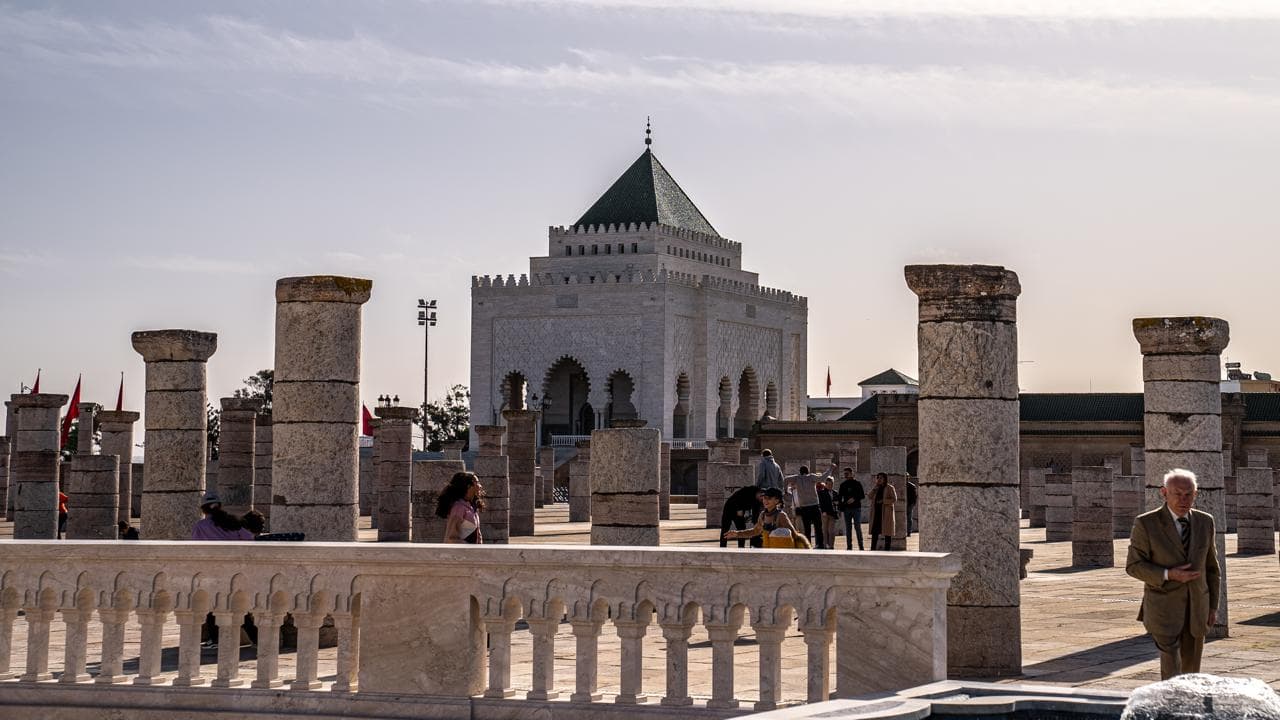
Casablanca to Marrakech — 5-Day Imperial Cities & Sahara
- Hassan Tower and the Kasbah of the Udayas in Rabat
- Volubilis — Roman mosaics still in the ground where they were laid
- Bab Mansour and the imperial granaries at Meknes
€470 / person for 6+
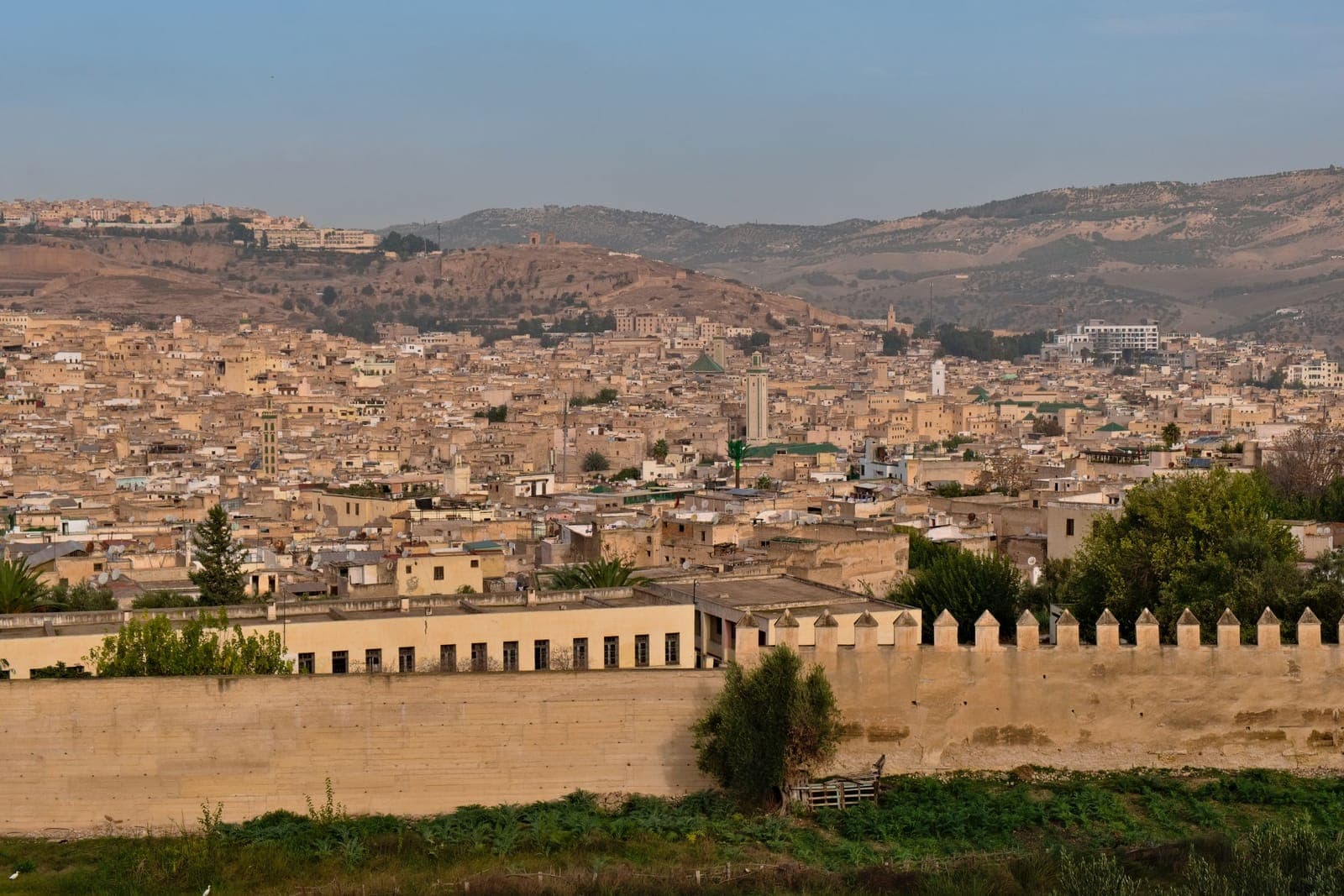
Marrakech — All 4 Imperial Cities — 5-Day Grand Tour
- All 4 Imperial Cities: Marrakech, Meknes, Fes, Rabat
- Volubilis Roman ruins (UNESCO World Heritage)
- Hassan II Mosque in Rabat
€261 / person for 6+
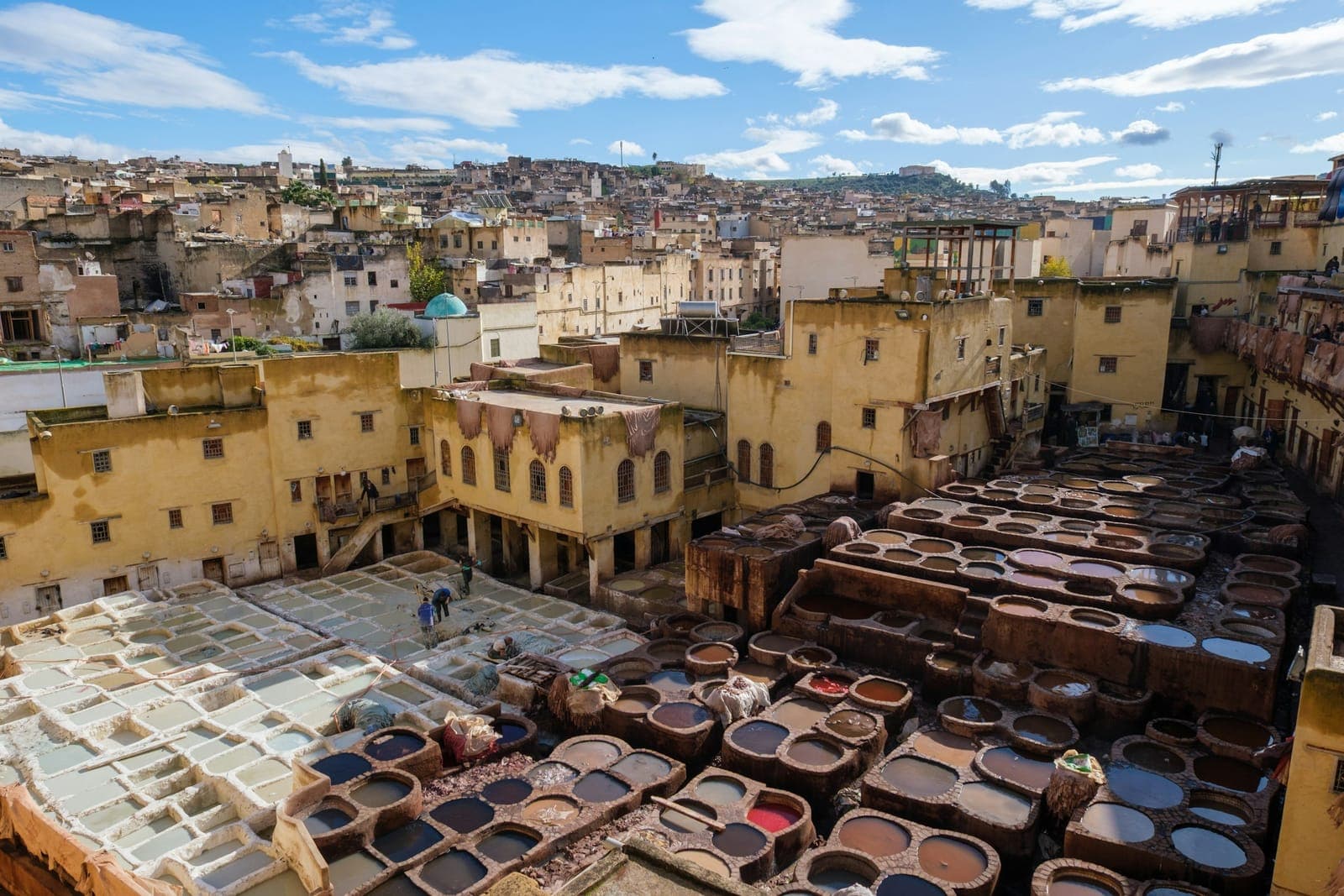
Marrakech to Fes — 3-Day Imperial Cities Tour
- Tizi n'Tichka mountain pass (2,260 m)
- Aït Ben Haddou UNESCO World Heritage Ksar
- Ifrane — Morocco's Alpine village
€299 / person for 14+