The dirham cannot leave the country, the souks run on cash and tips are always your choice: how to bring, get, spend and change back money in Morocco, from the 2026 rules.
Morocco runs on cash. The dirham cannot be bought or sold outside the country, card machines are rare in the souks, and a few practical rules decide what you can bring in and change back. A little planning saves you fees, queues and a pocket of leftover notes at the airport.
The rules below come from the Office des Changes, Morocco's foreign-exchange authority, in its General Instruction on Exchange Operations for 2026 (in French). What we add is how money works on our trips.
The dirham stays in Morocco
The Moroccan dirham (MAD, often written DH) is a closed currency. Taking dirhams into or out of the country is forbidden, with one allowance for travellers: you may carry up to 2,000 dirhams in banknotes, so you have something for the first taxi when you come back.
In practice, you arrive with euros, pounds, dollars or a card, and get your dirhams once you land.
Bringing foreign cash
Foreign banknotes can be brought into Morocco freely. If the cash you carry is worth 100,000 dirhams or more, you must declare it to customs when you arrive. Below that, the declaration is optional, but ask for one if you are bringing a large amount you may take home again: it is the proof you need to take unused foreign cash back out, and for visitors it is valid for six months.
Getting dirhams
- ATMs are the simplest way. Your own bank may charge for withdrawals abroad and the machine may add a fee of its own, so check before you travel and take out larger amounts less often rather than a little every day.
- Choose dirhams. Some ATMs and card machines offer to charge you in euros or pounds instead of dirhams. Say no: the conversion is then made at a rate chosen by the machine's bank, which is often worse than your own bank's.
- Banks and exchange offices change foreign banknotes into dirhams. Keep the receipt they give you, the *bordereau de change*: you need it to change dirhams back when you leave.
Where you need cash
Riads, hotels and some restaurants take cards, but the souks, taxis, small cafés, the food stalls of Djemaa el-Fna and village shops work in cash. Carry the day's dirhams in small notes and leave the rest in your room. If you plan to shop in the souks, read our haggling guide first.
Paying for your trip with us
- Deposit. A deposit, normally 20% of the tour price, secures your dates. You pay it by PayPal or bank transfer; we send you the details once you confirm your booking.
- Balance. The rest is paid on arrival, at the start of the tour, in cash (euros or dirhams), or by bank transfer before the date.
- No cards. We do not accept card payments, so plan the cash for the balance before the first day.
- Fees. Any PayPal or bank fees for sending a payment are paid by the sender. The full rules are in our terms.
Tipping
Tips are not included in our prices, on any trip. Whether you tip your guide, your driver, the camp team or the muleteers on a trek is always your choice, and any amount is fine. A tip is a thank-you, never part of the price.
Changing dirhams back when you leave
Leftover dirhams can only be changed back in Morocco, at a bank or an exchange office, so do it before you fly:
- With the customs declaration you made on arrival and your exchange receipts, the bank changes back what you exchanged.
- Without a declaration, you can change back up to 20,000 dirhams, on showing an exchange receipt in your name less than six months old.
- At airport and port exchange counters, on showing your boarding pass, the limit is 2,000 dirhams per passport.
The rules speak of exchange receipts, which banks and exchange offices give you. If most of your dirhams come from ATMs, the simplest plan is to take out only what you will spend.
A short checklist
- Bring a card that works abroad and some euros, pounds or dollars in cash.
- Get your dirhams after you land: you may bring in no more than 2,000.
- Declare foreign cash worth 100,000 dirhams or more on arrival.
- Choose dirhams whenever a machine offers to convert.
- Keep your exchange receipts.
- Bring the balance for your trip in cash (euros or dirhams), or pay it by transfer before you come.
- Tip as you wish, or not at all.
👉 See our tours, or ask us anything about payments before you book.
Frequently Asked Questions
Can I bring Moroccan dirhams into Morocco?
Do I have to declare cash when I arrive in Morocco?
Can I pay for my tour by card?
How much should I tip my guide or driver?
Can I change leftover dirhams back?
Trips that go here
Guided by the team who wrote this guide.
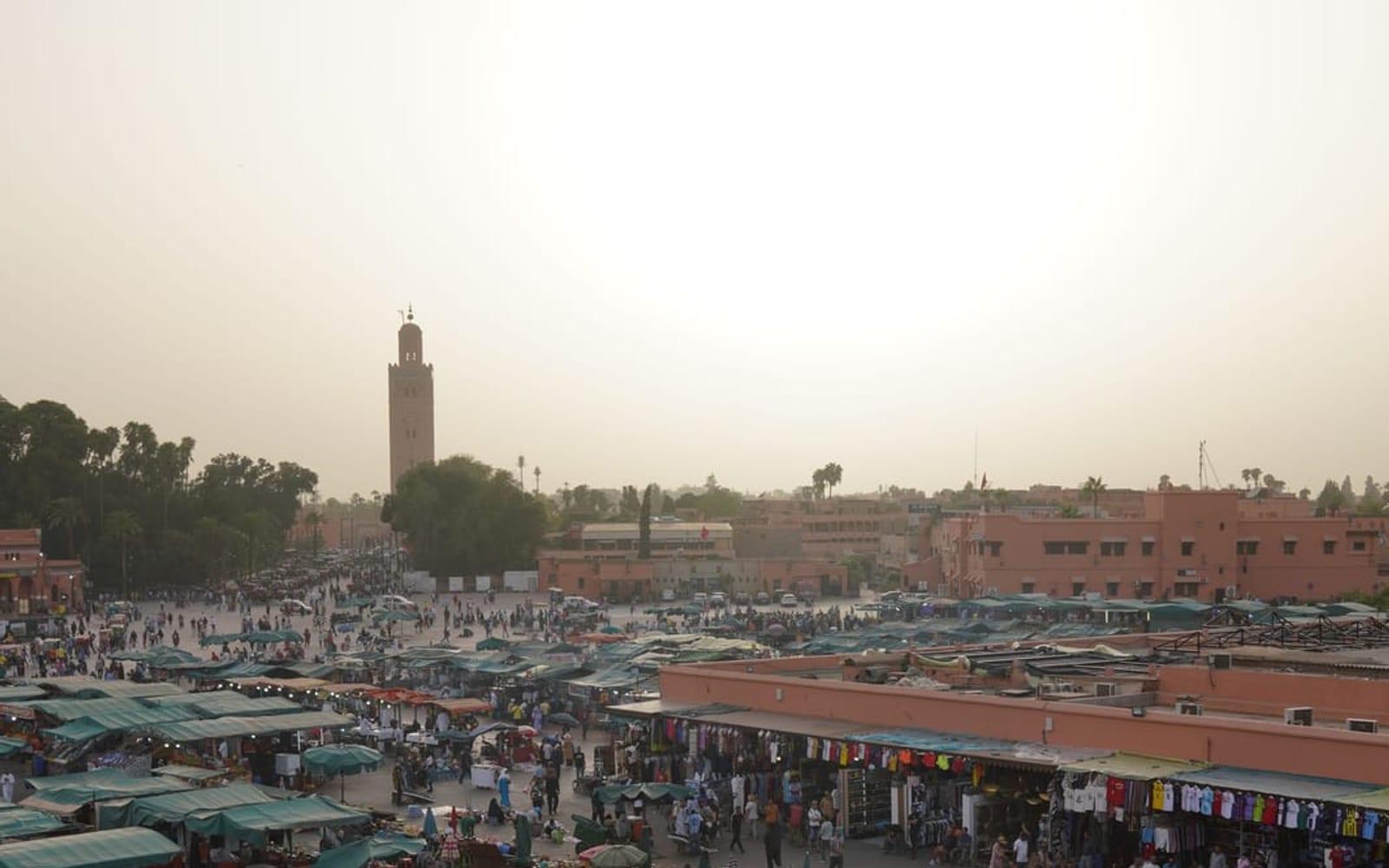
Marrakech Medina — Cultural Tour
- Djemaa El-Fna square at its most vibrant
- Leather tanneries viewed from a private rooftop
- Ben Youssef Madrasa — 16th-century Islamic college
€31 / person for 6+
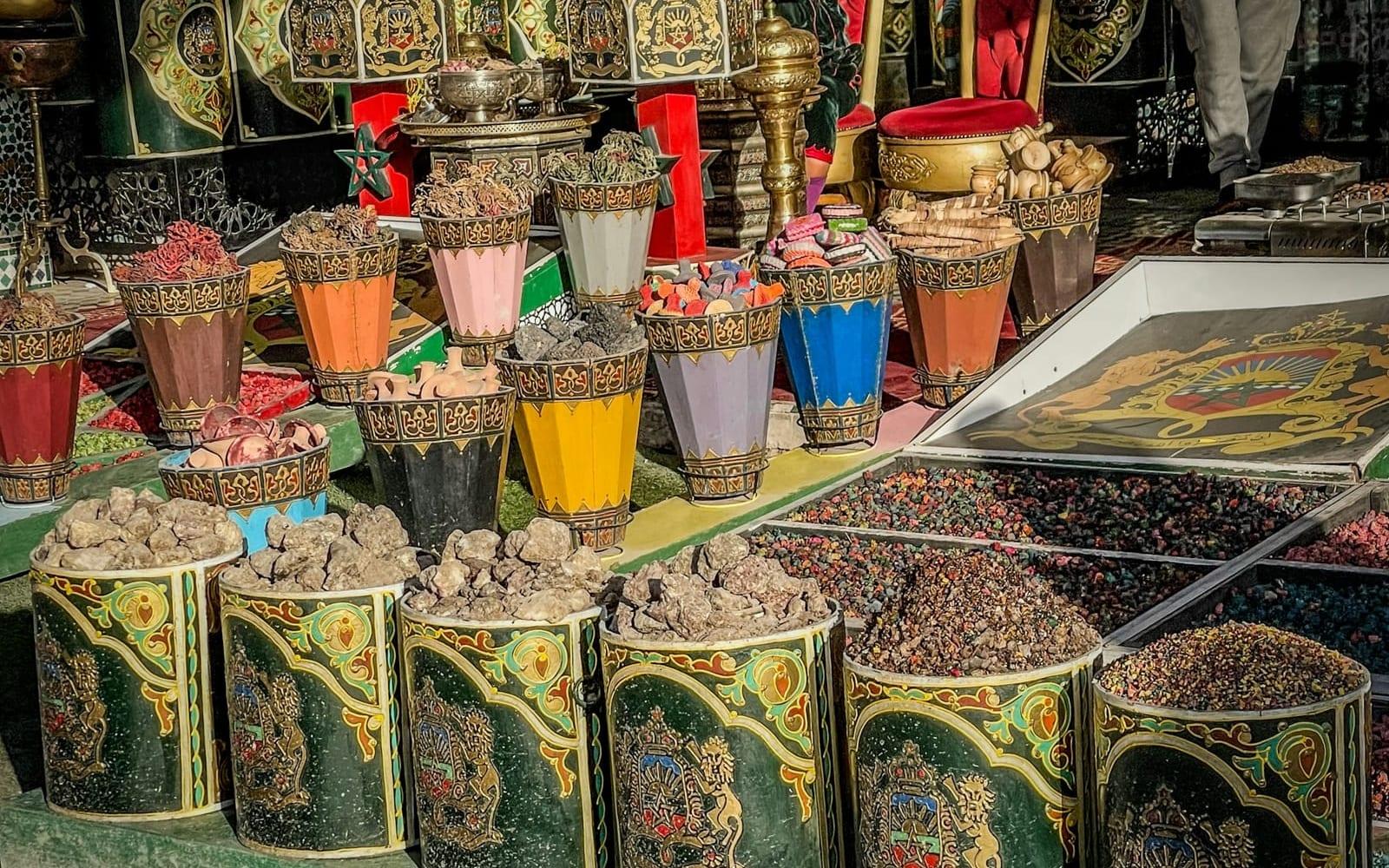
Marrakech Food & Market Tour — Half-Day Culinary Walk
- Rahba Kedima spice square — real saffron vs. dyed imitations
- Guided tastings through the medina's working food souks
- Hands-on tagine cooking class with a local family
€100 / person
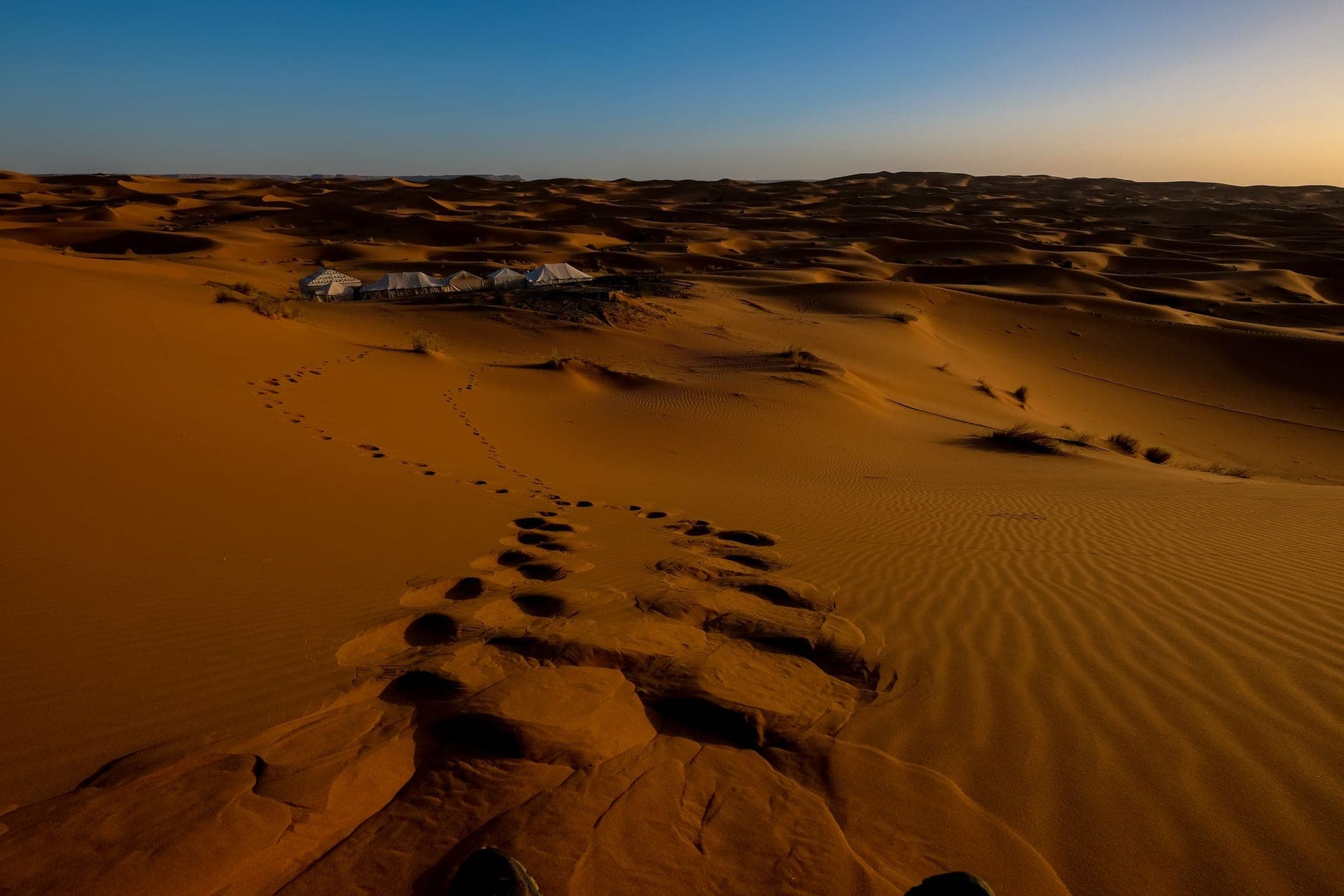
Marrakech to Merzouga — 3-Day Desert Tour
- Camel trek into Erg Chebbi dunes at sunset
- Overnight in a luxury Berber desert camp
- Stargazing with no light pollution at all
€230 / person for 6+
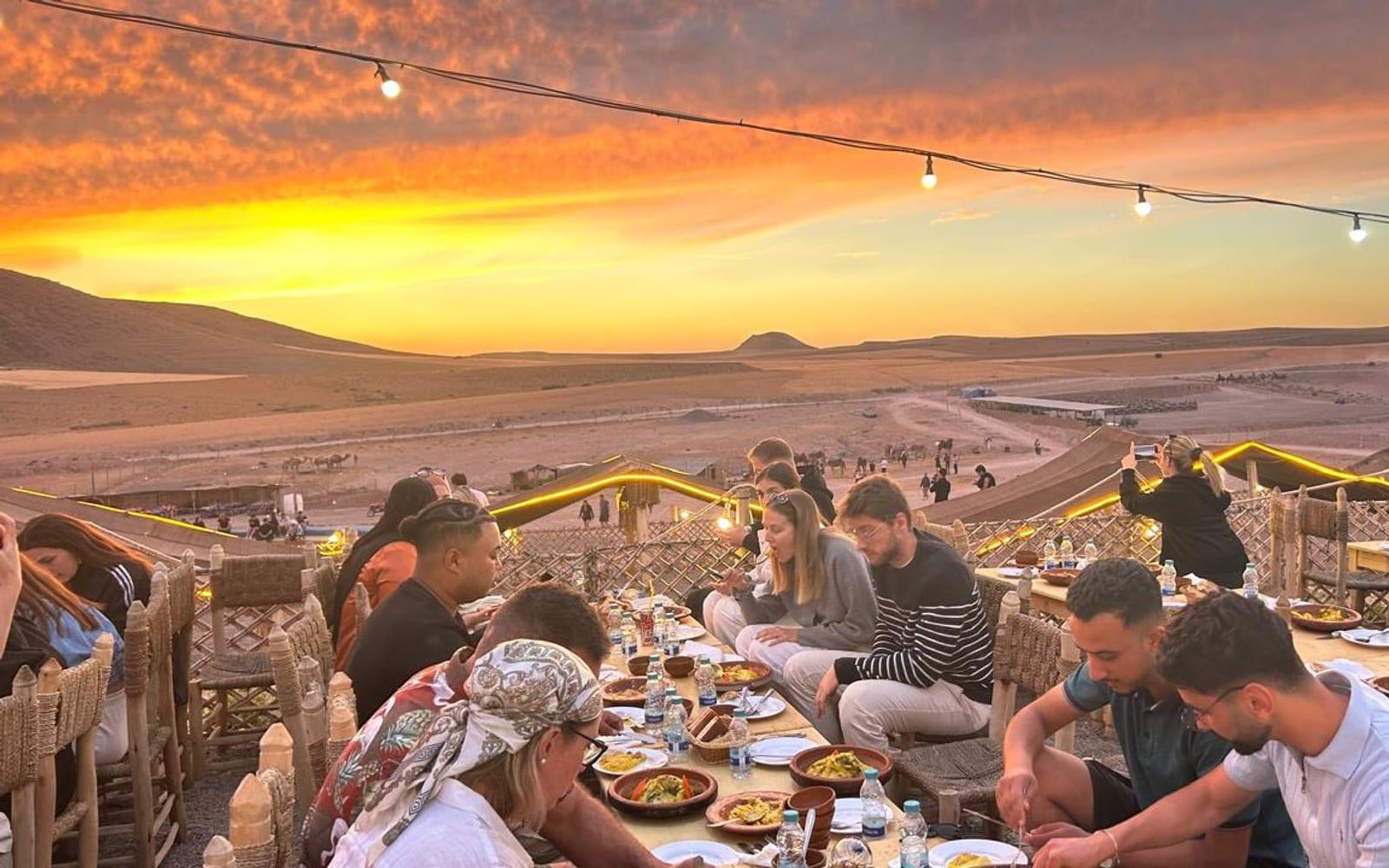
Marrakech to Agafay Desert — Sunset & Dinner
- Quad biking across the Agafay stone desert
- Camel ride to the sunset viewpoint
- Traditional Berber dinner in a desert camp
€56 / person for 6+