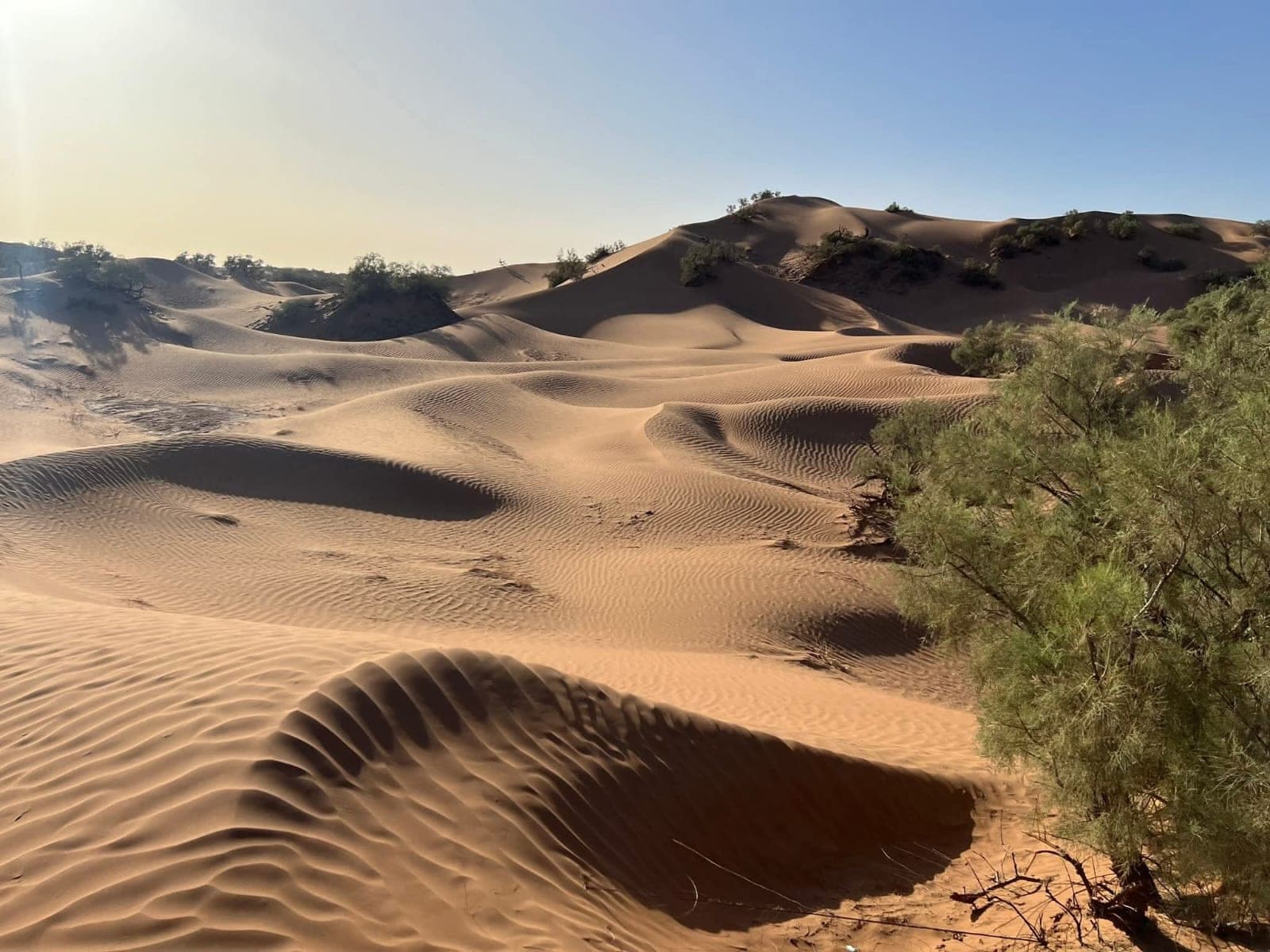
Merzouga runs from 19°C in January to 43°C in July — and the nights collapse. The dunes sit at 730 m, which is why. Month by month, and what actually goes in the bag.
The single most common mistake on a Moroccan desert trip is packing for a
desert. People bring shorts and a sun hat, and then spend the night awake and
cold. Erg Chebbi sits at 730 metres of altitude in extremely dry air, and
once the sun drops there is nothing to hold the heat in.
Merzouga, month by month
Average daytime highs at Merzouga:
| Month | High | Notes |
|---|---|---|
| January | 19°C | Nights near freezing. Clearest skies of the year. |
| February | 21°C | Still cold after dark. |
| March | 26°C | Excellent. Some wind. |
| April | 30°C | Arguably the best month. |
| May | 34°C | Getting hot by midday. |
| June | 39°C | Hard going. |
| July | 43°C | Nights stay around 29°C. |
| August | 42°C | As above. |
| September | 37°C | Cooling. |
| October | 30°C | Excellent. |
| November | 24°C | Excellent, cold nights returning. |
| December | 20°C | Cold nights, clear skies. |
Night-time lows run from about 6°C in January to 29°C in July on the
averages — and on a still, cloudless winter night the reading at the camp can
be several degrees below that January figure. Different sources put it
anywhere from 6°C down to below zero, which tells you something in itself:
pack for the cold end, not the average.
What the swing actually feels like
In November you can be walking a dune ridge in a t-shirt at four in the
afternoon, and reaching for a fleece, a hat and a second blanket by eight in
the evening. The drop is fast — most of it happens in the hour around sunset.
This is also why the winter desert is so good for stars. Cold, dry, still air
is exactly what you want, and there is no light pollution for a hundred
kilometres. Our
Merzouga stargazing tour exists
because those winter nights are genuinely exceptional.
The best months
October, November, March, April. Days of 24–30°C, nights cool but not
punishing. This is when we run the most departures and when the camps are
fullest — book earlier than you think.
December to February. Cold nights, but the clearest skies, the emptiest
dunes and the sharpest light for photography. Entirely worth it if you bring
the right layers.
May and September. Shoulder months. Hot at midday, fine morning and
evening.
July and August. 42–43°C. Tours run — camel treks move to dawn and dusk,
the middle of the day is for shade — but it is not the season for a first
visit, and it is difficult with young children. If you are travelling with
kids, see our family desert tour and
aim for spring or autumn.
Wind and sand
Spring brings the chergui, the hot dry wind off the interior. Most days it
is just wind. Occasionally it lifts enough sand to cut visibility properly, at
which point camps stop and wait it out.
A sandstorm is uncomfortable rather than dangerous when you are with people who
know the terrain. Sand gets into cameras, bags and hair regardless. The
cotton scarf every guide wears is not decorative — wrapped over the nose and
mouth it is the single most useful thing you will own that day.
Rain is rare but real, mostly spring and autumn. When it comes it can be
sudden, and dry riverbeds flood quickly. That is why a good guide never camps
in a wadi, whatever the forecast says.
What to actually pack
For the daytime, all year: loose long sleeves and long trousers (more
comfortable than shorts in real heat, and they stop you burning), a brimmed
hat, high-factor sunscreen, sunglasses, and more water than you think.
For the nights, October through April, this is the part people get wrong:
- A proper insulating layer — fleece or down, not a hoodie
- A windproof outer layer
- A hat and thin gloves for December to February
- Warm socks; camp floors are cold sand
- Closed shoes for the evening
Camps provide thick blankets and most have heaters in winter, but you will be
outside for dinner, for the stars, and for sunrise. That is when the cold
finds you.
For the full list, including what to leave behind, see
what to pack for a desert tour.
Choosing your dates
If the weather is what decides your trip, aim for late October, November, March
or early April, and book the camp early because everyone else has worked this
out too. Our [three-day Merzouga
departure](/en/tours/shared-merzouga-3day-marrakech) runs daily year-round at
€120 per person, and we will tell you honestly if the month you are
considering is a bad one.
Not sure which desert to choose? [Merzouga versus
Zagora](/en/blog/merzouga-vs-zagora-which-desert-tour) compares the drives, the
dunes and the cost.
Frequently asked questions
How cold does the Sahara get at night in Morocco?
What is the best month to visit the Moroccan Sahara?
How hot is the Sahara in summer?
Does it rain in the Moroccan Sahara?
What about sandstorms?
Trips that go here
Guided by the team who wrote this guide.
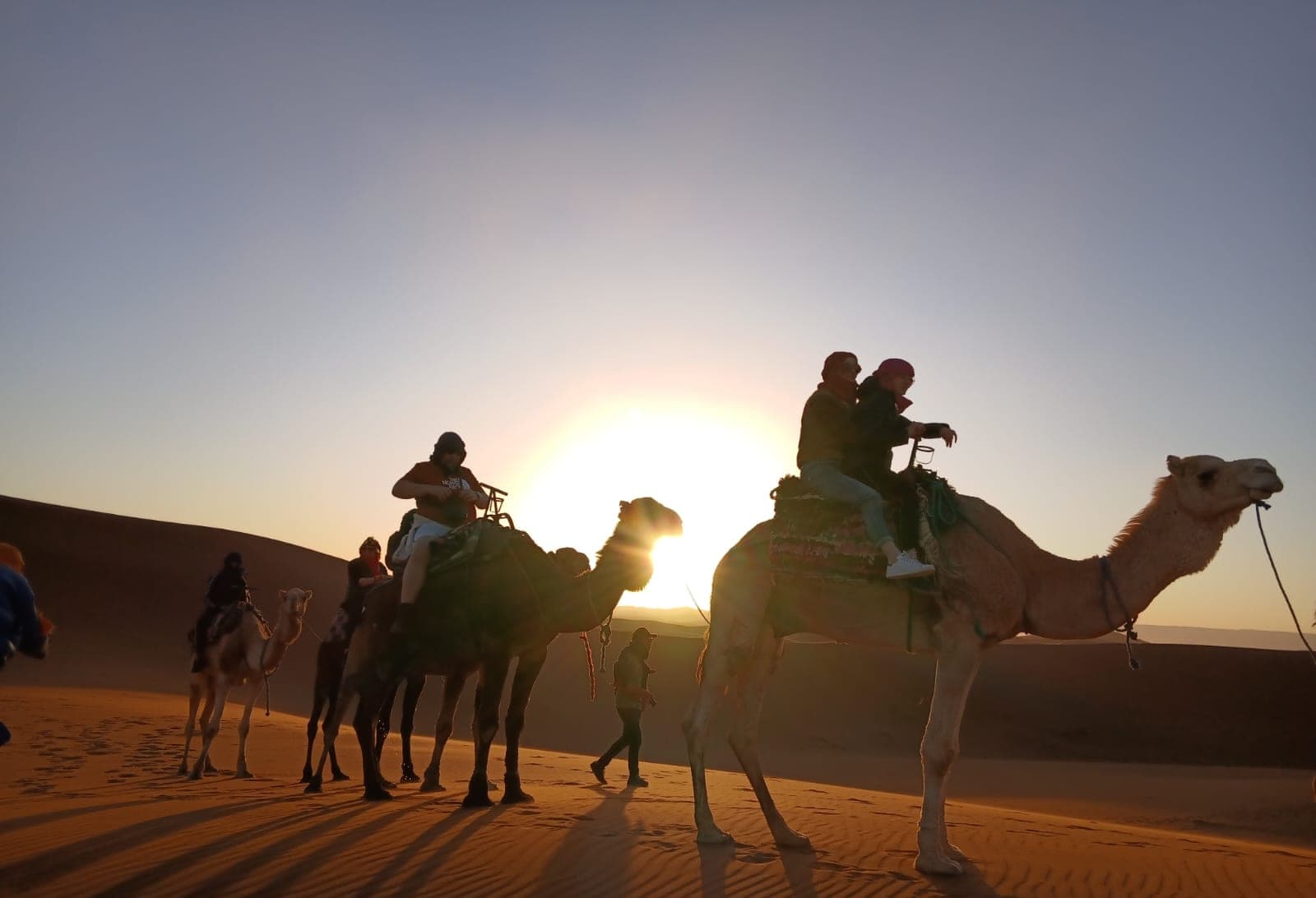
Merzouga Desert from Marrakech — 3-Day Shared Tour
- Tizi n'Tichka pass through the High Atlas
- UNESCO Ksar of Aït Ben Haddou
- Dades and Todra gorges
€120 / person
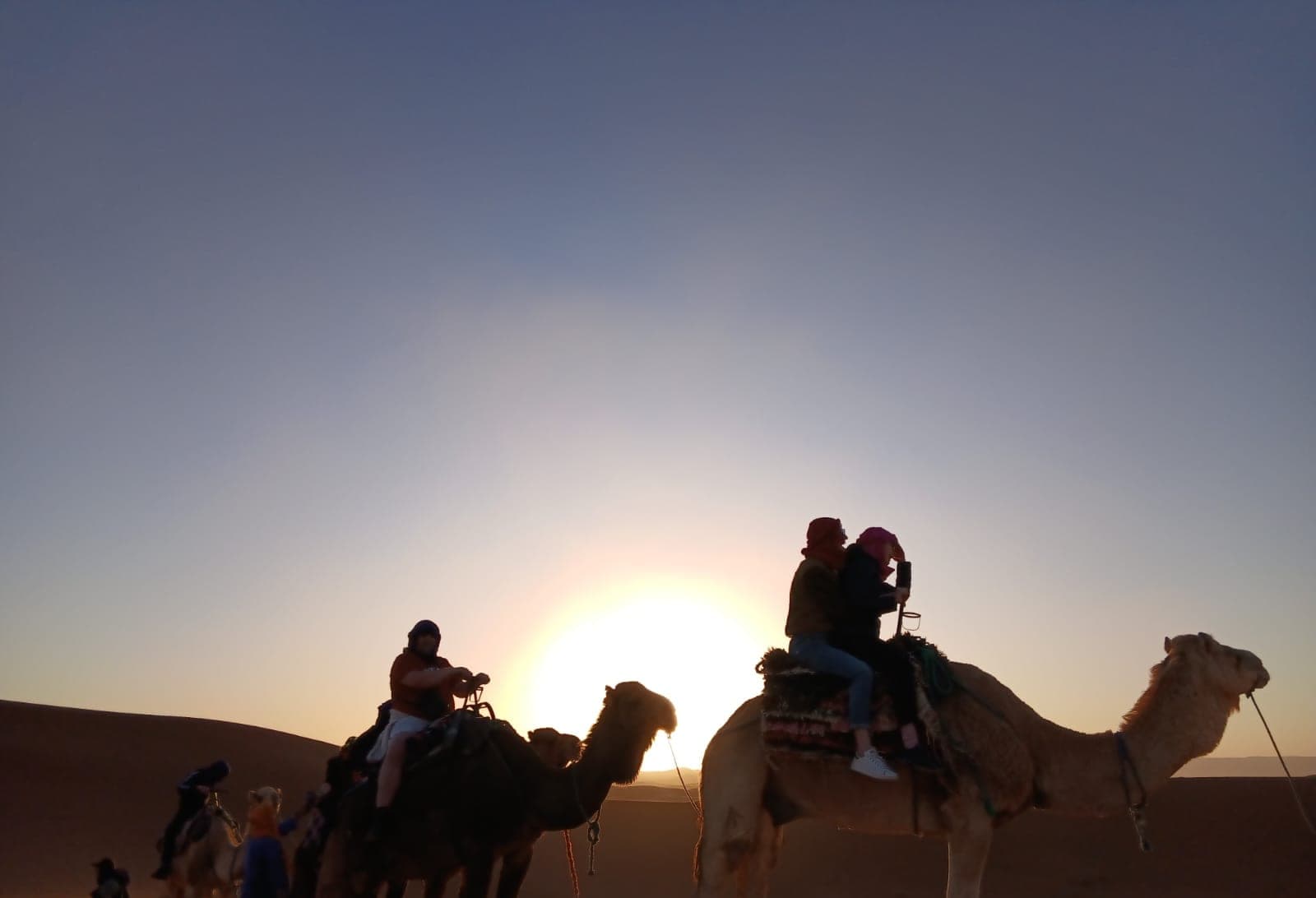
Merzouga Stargazing from Marrakech — 2-Day Dark Sky Desert Tour
- Guided naked-eye and telescope stargazing session with an astronomy guide
- Sunset camel trek into the Erg Chebbi dunes
- One night in a traditional Berber desert camp, far from any light pollution
€121 / person for 6+
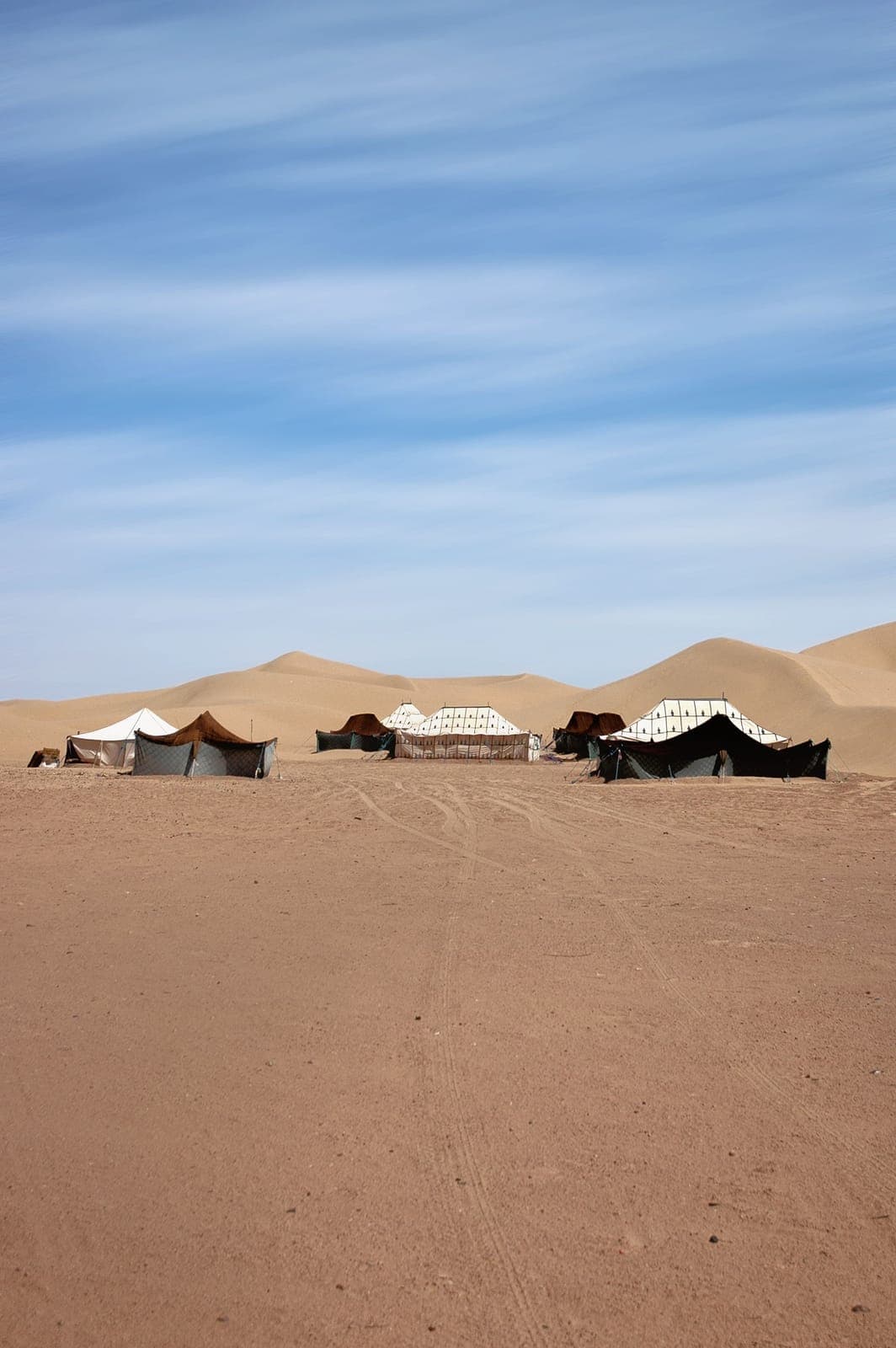
Erg Chegaga from Marrakech — 3-Day Remote Desert Expedition
- Erg Chegaga — fewer tourists, 120 m dunes, profound silence
- 4x4 off-road desert crossing from M'Hamid into the dune field
- 2 nights in a desert camp with no other camps in sight
€281 / person for 5+
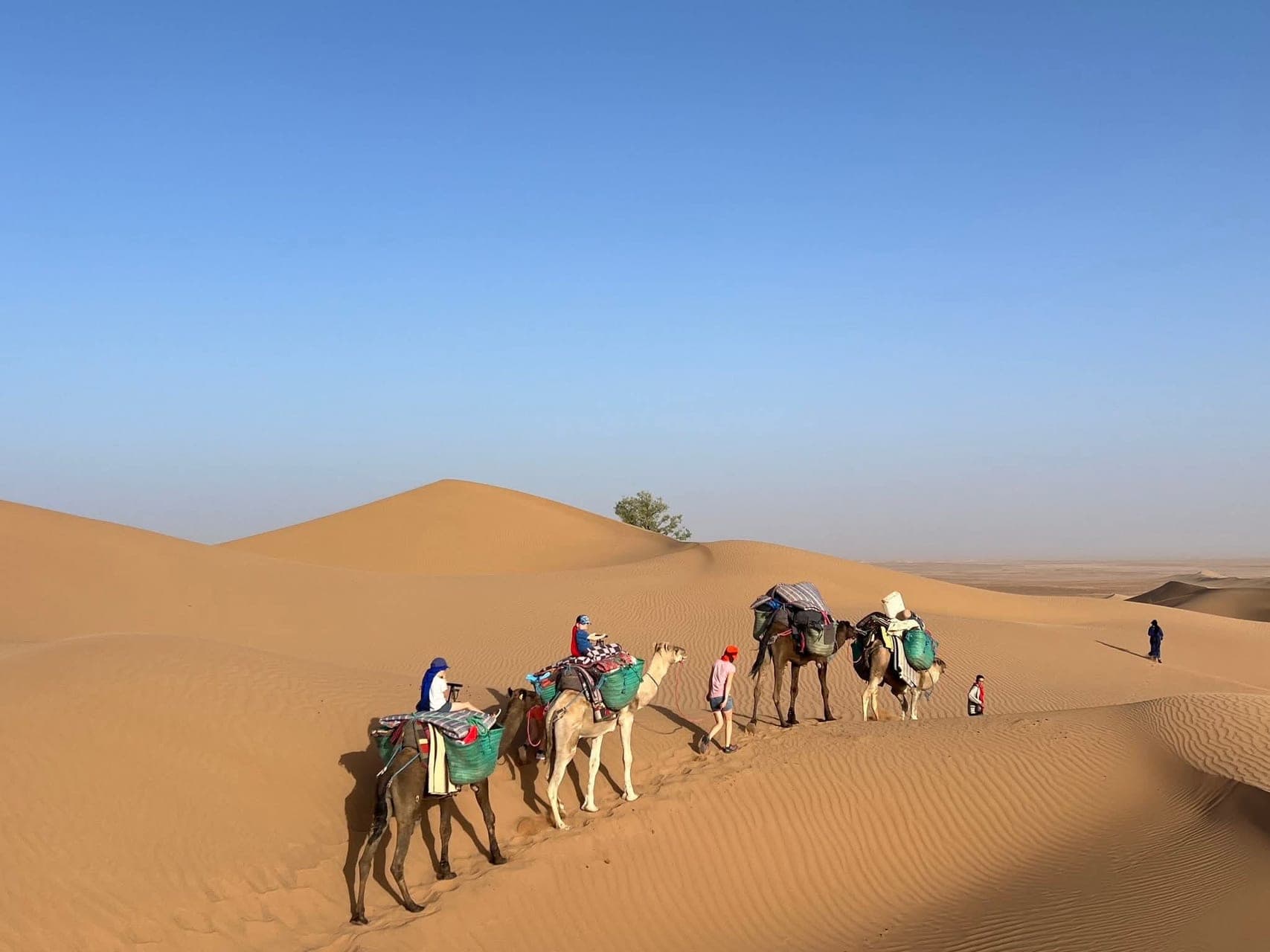
Family Desert Adventure — 4-Day Marrakech to Sahara
- A full night on the Erg Chebbi dunes in a family-friendly desert camp
- Camel rides and sandboarding on the dunes for the kids
- Explore the Aït Ben Haddou kasbah — a Game of Thrones and Gladiator film set
€263 / person for 14+