Al Boraq does Tangier to Casablanca in 2h10. But no train reaches Merzouga, Chefchaouen, Essaouira or Ouarzazate — and that is where most people actually want to go.
Morocco's transport splits cleanly in two, and knowing where the line falls
saves a lot of wasted planning. The northern cities are joined by fast, cheap,
comfortable trains. Everywhere most visitors actually want to go — the desert,
the gorges, the blue city, the Atlantic — has no train at all.
The trains, where they run
Al Boraq is Africa's first high-speed rail line, open since November 2018
and running up to 320 km/h on the dedicated Tangier–Kenitra section. It cut
Tangier to Casablanca from 4h45 to 2h10.
From Casablanca, classic Al Atlas expresses continue:
| Route | Journey time |
|---|---|
| Tangier → Casablanca (Al Boraq) | 2h10 |
| Tangier → Rabat (Al Boraq) | 1h20 |
| Casablanca → Marrakech | ~2h40 |
| Casablanca → Fes | ~3h45 |
| Marrakech → Tangier (one change) | ~5h30–6h |
Fares are low: Tangier–Casablanca costs 99 to 224 dirhams in second class,
129 to 292 in first, depending on how early you book. **Booking opens three
months ahead.** First class gets you a six-seat air-conditioned compartment and
is worth the small premium in summer.
An extension of the high-speed line towards Marrakech is under construction,
which will eventually cut the Casablanca run substantially. It is not open yet.
Where the trains do not go
This is the part that catches people out. No railway reaches:
- Merzouga or the Erg Chebbi dunes — the Sahara
- Ouarzazate, Ait Ben Haddou, the Dades and Todra gorges
- Chefchaouen — the blue city
- Essaouira — the Atlantic coast
- Imlil and the Toubkal trailheads
That is, more or less, the entire list of reasons people come to Morocco in the
first place. For these you need a bus, a grand taxi, a hire car, or a tour.
Buses
CTM and Supratours are the two intercity operators worth using. Both
are modern, air-conditioned, run to a timetable and let you book online.
Supratours is run by the rail operator and connects to train stations, which
makes rail-plus-bus combinations straightforward — the standard way to reach
Essaouira is the train to Marrakech and a bus onward, roughly three hours, with
departures every two to three hours.
The cheaper local buses that leave from souk stations are an experience, but
they stop constantly and have no fixed departure time.
Grands taxis
A shared long-distance taxi, usually an ageing Mercedes, running a fixed route
and leaving when six passengers have accumulated. They are cheap, frequent and
the normal way Moroccans move between neighbouring towns. If you do not want to
wait, buy the remaining seats — still inexpensive, and the taxi leaves at once.
Agree the fare before getting in. Rates on established routes are effectively
fixed and locals will tell you what they are.
Hiring a car
Sensible if you want to explore the Atlantic coast or the Anti-Atlas at your
own pace. Less sensible than it looks for the mountain and desert routes.
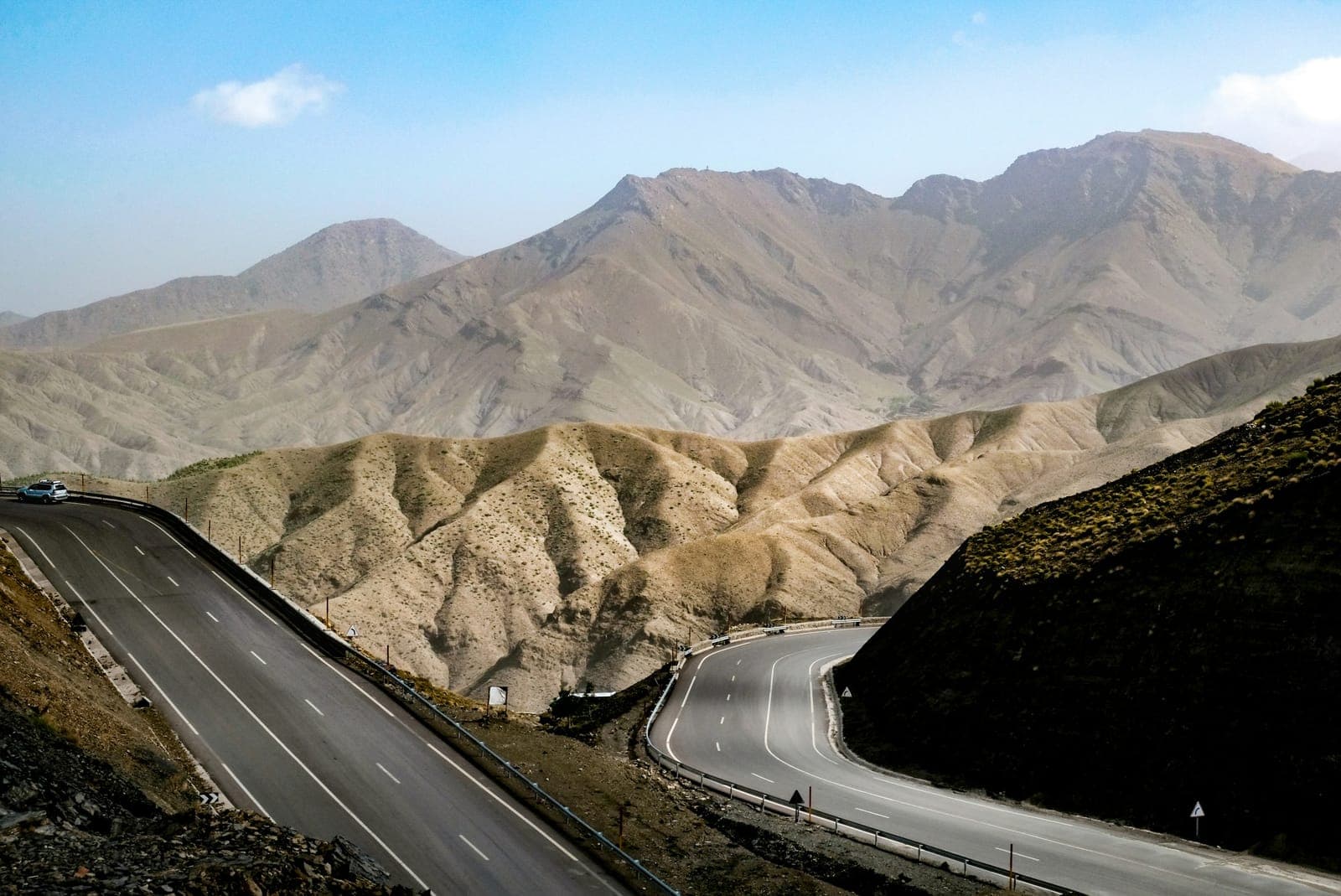
The Tizi n'Tichka — the pass every Marrakech-to-Sahara journey crosses — is
a long climb of tight switchbacks with drops, slow lorries and, in winter,
snow. It is a genuinely demanding drive, and after seven or eight hours of it
you arrive at the dunes tired. Add that most desert accommodation is down
unsigned pistes that a standard hire car should not attempt, and the appeal
narrows.
Also budget for: a credit card deposit, careful photography of existing damage
at pickup, and police checkpoints where you simply slow down, say hello and
carry on.
When a driver or a tour is genuinely the better answer
Not for everything. If you are moving between Marrakech, Casablanca, Rabat, Fes
and Tangier, take the train — it is faster, cheaper and more comfortable than
anything we could sell you.
It changes when the destination has no railway and the drive is the hard part:
- Marrakech to the Sahara. Two long driving days each way over the Tichka.
Our three-day Merzouga run is
€120 per person shared — less than hiring a car for the same days, and you
are not the one driving the pass.
- Marrakech to Chefchaouen. Four days,
because doing it in one is nine hours of motorway.
- The imperial cities. Five days
covering Fes, Meknes and Volubilis — the last of which has no public
transport at all.
- Marrakech to Fes overland, via [Ait Ben Haddou and the
gorges](/en/tours/marrakech-to-fes-3day) rather than the motorway, which is
the whole point of going that way.
For a fuller cost comparison, see
booking direct versus a platform
and what group size does to the price.
A sensible default
Trains between the big northern cities. Tour or driver for the desert, the
gorges and the mountains. Grands taxis for short hops. Hire a car only if the
driving is the part you are looking forward to.
Frequently asked questions
Does Morocco have good trains?
Can you take a train to the Sahara or Chefchaouen?
How much do Moroccan trains cost?
Is it safe to drive in Morocco?
What is a grand taxi?
Trips that go here
Guided by the team who wrote this guide.
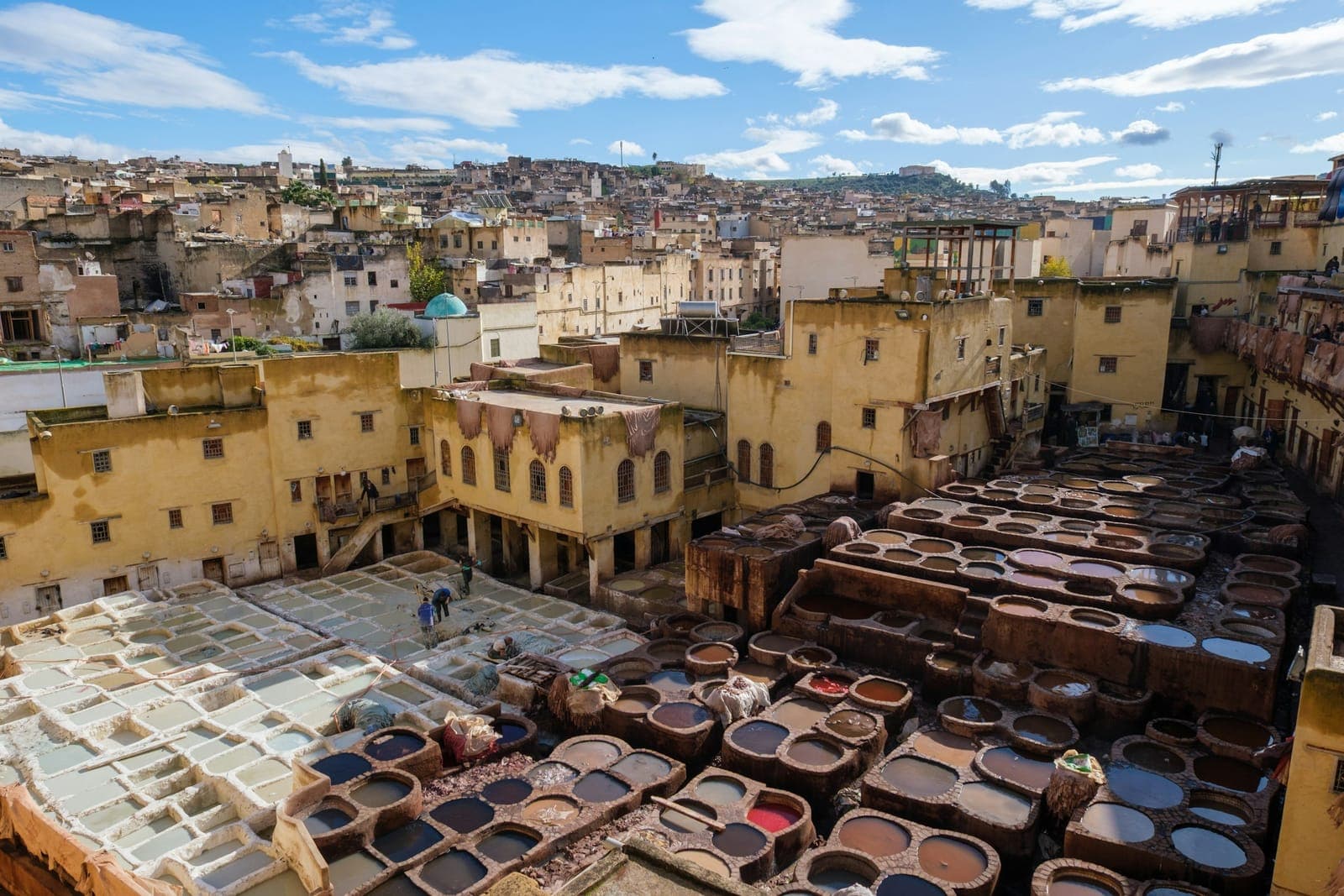
Marrakech to Fes — 3-Day Imperial Cities Tour
- Tizi n'Tichka mountain pass (2,260 m)
- Aït Ben Haddou UNESCO World Heritage Ksar
- Ifrane — Morocco's Alpine village
€299 / person for 14+
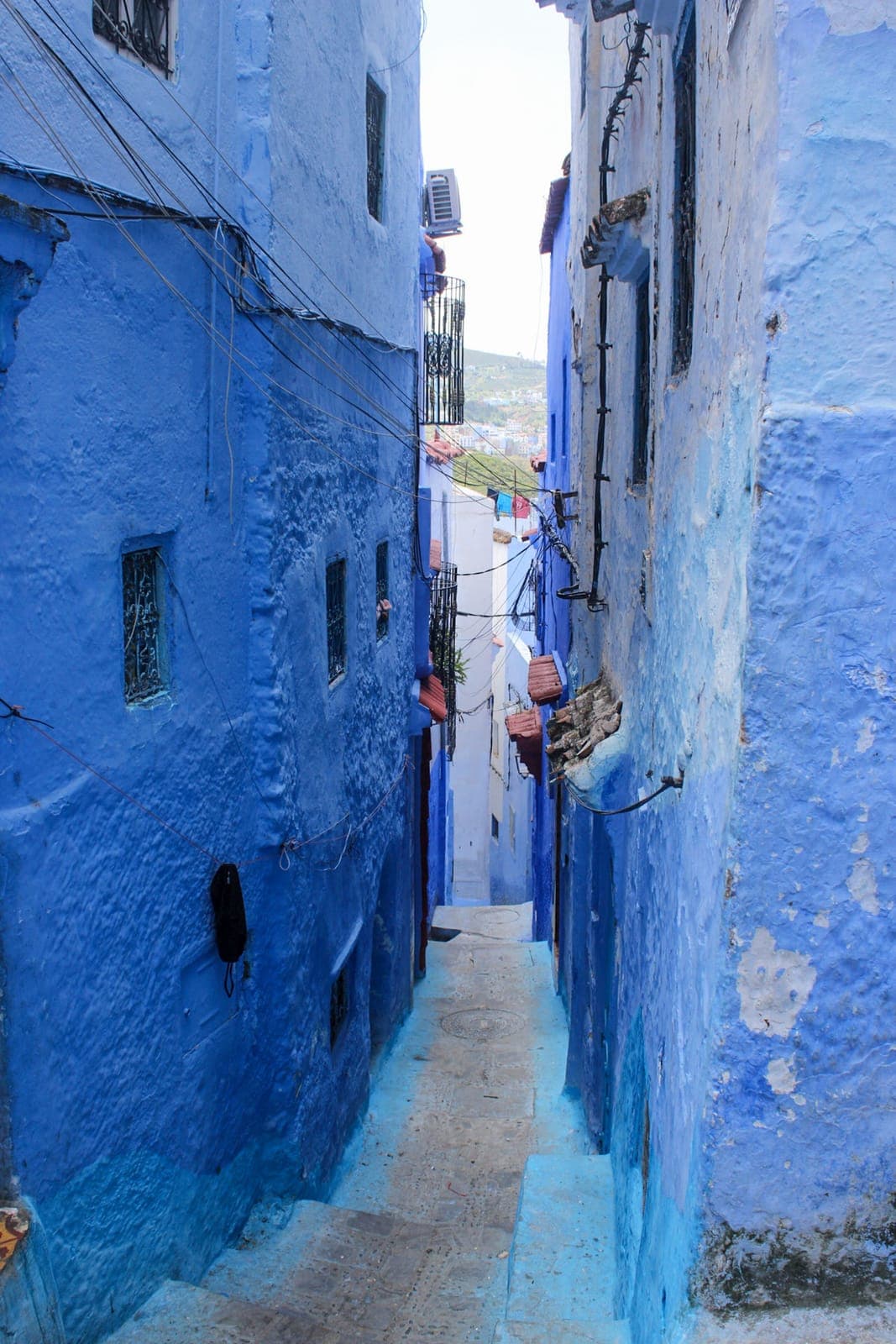
Marrakech to Chefchaouen — 4-Day Blue City Tour
- Chefchaouen — the Blue City of the Rif Mountains
- Fes el-Bali UNESCO medina and Chouara Tanneries
- Cedar Forest of Azrou and wild Barbary macaques
€185 / person for 6+
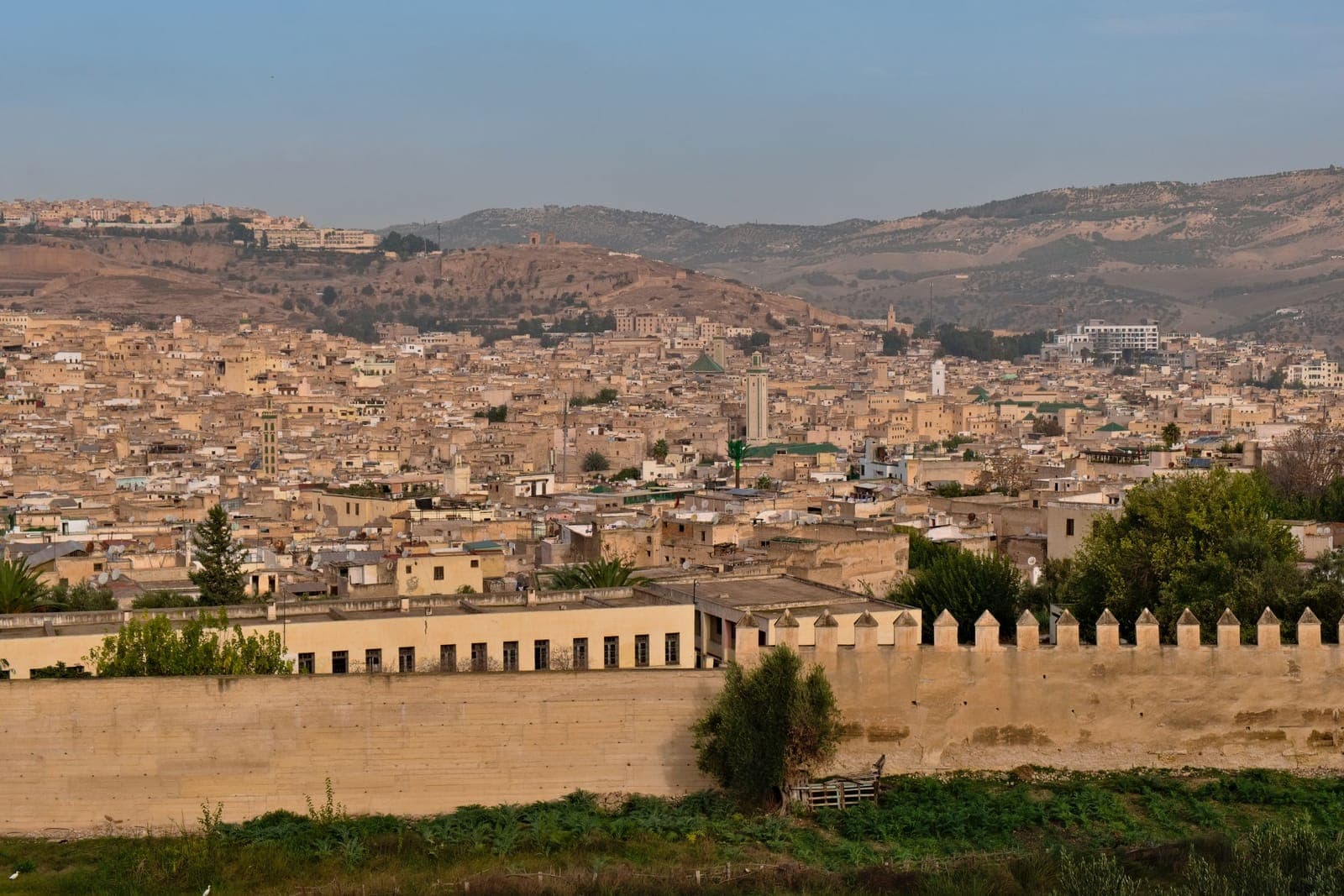
Marrakech — All 4 Imperial Cities — 5-Day Grand Tour
- All 4 Imperial Cities: Marrakech, Meknes, Fes, Rabat
- Volubilis Roman ruins (UNESCO World Heritage)
- Hassan II Mosque in Rabat
€261 / person for 6+
Essaouira — Shared Day Trip from Marrakech
- UNESCO-listed medina and 18th-century ramparts
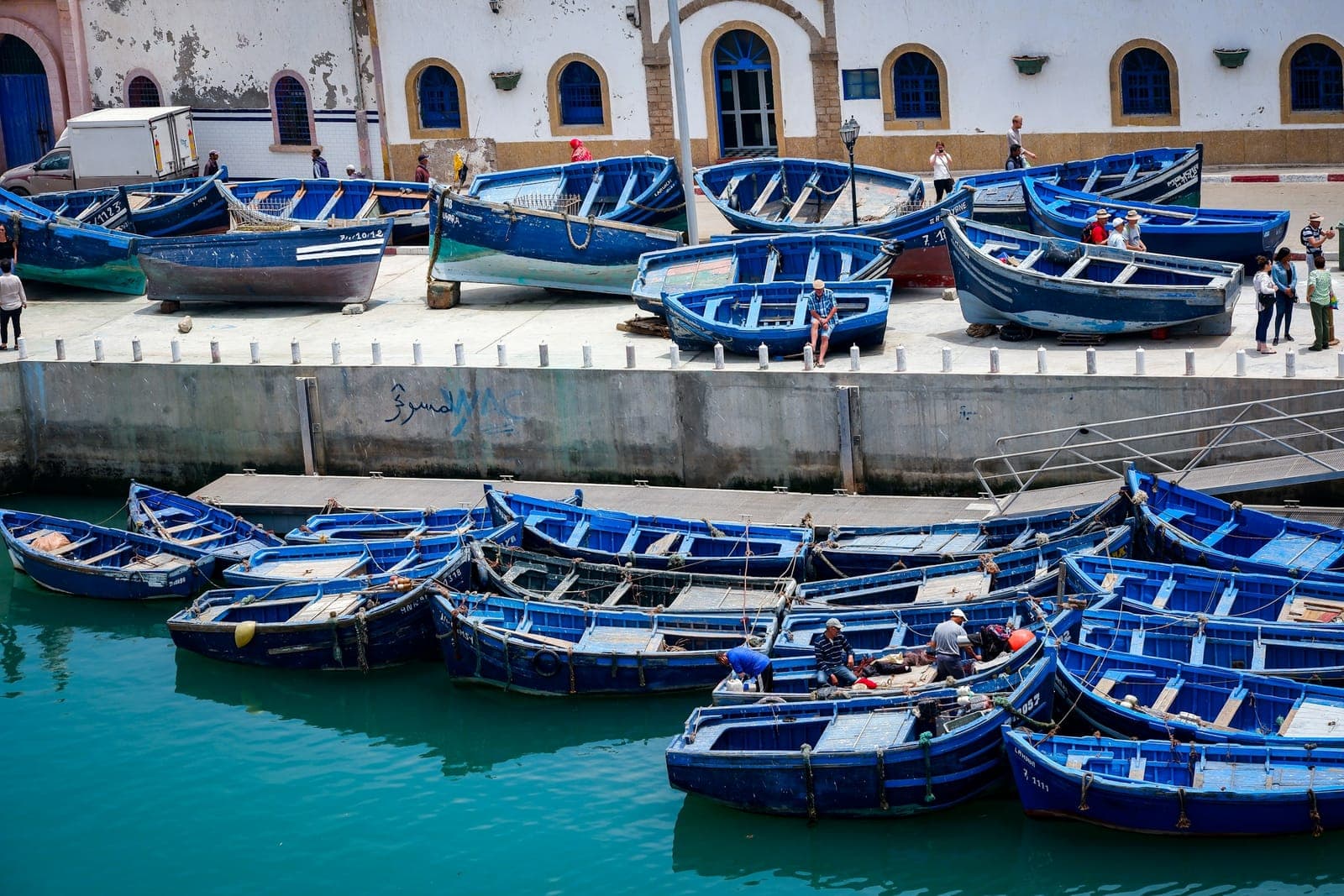
- The blue fishing fleet in the working harbour
- Argan oil cooperative on the Marrakech road
€30 / person