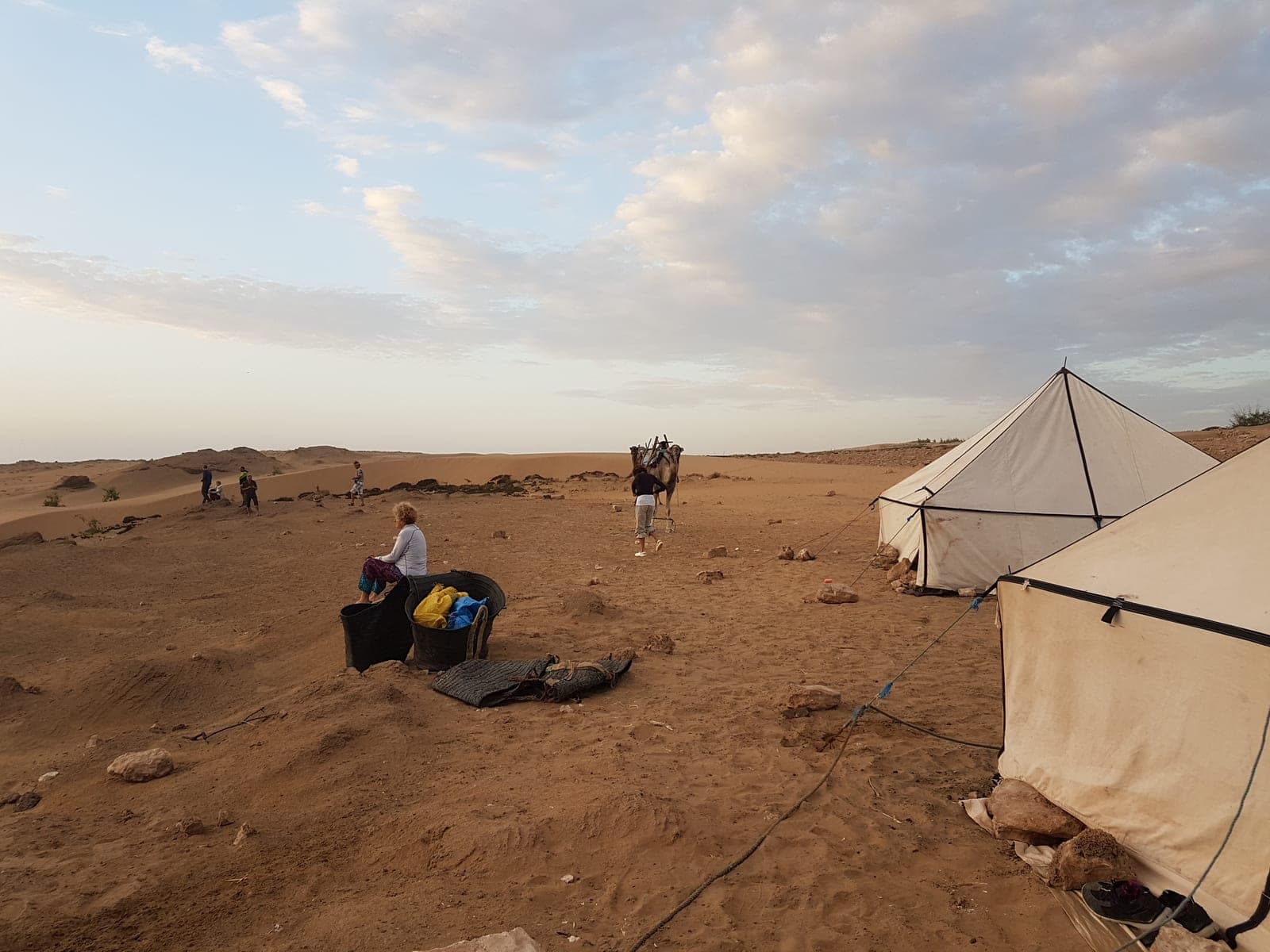
Winter is one of the best times to see the Moroccan desert, and almost nobody tells you how cold the nights actually get. Temperatures, what to pack, snow on the Atlas passes, and why the light is better.
Most people book Morocco's desert for spring or autumn, on the reasonable theory that a desert in summer is unbearable and a desert in winter is a compromise.
Half of that is right. Summer at Erg Chebbi is genuinely brutal. But winter is not the compromise — for a lot of travellers it is the best time of year to be out there, provided you know what the nights do.
Valley-level reading, updated every three hours via Open-Meteo. The summit runs far colder — see the table below.
The numbers
At Erg Chebbi, roughly:
| Daytime high | Night low | |
|---|---|---|
| December | 18-21C | 3-7C |
| January | 17-20C | 2-6C |
| February | 20-23C | 4-8C |
Those daytime figures are the point. Walking up a dune at 20C is a pleasure. Walking up the same dune in July at 43C is an ordeal you endure for the view at the top.
The night figures are the warning. A clear, still desert night in January can reach freezing. That is not a problem — camps carry heavy blankets and the tents hold heat — but it is a problem if you packed for the afternoon.
Why the light is better
Winter sun sits low. That means the golden hour lasts significantly longer, the dunes hold shadow and texture through much more of the day, and the harsh vertical midday light that flattens everything in summer photographs simply does not happen.
If you are carrying a camera, this is the season.
The air is also drier and clearer, which means the night sky is at its best. Erg Chebbi is hundreds of kilometres from meaningful light pollution in any direction, and on a moonless winter night the Milky Way is bright enough to cast the faintest shadow.
Why it is quieter
Winter is low season everywhere except Christmas and New Year. Fewer 4x4s on the desert road, fewer groups at the viewpoints, fewer tents at the camp.
The gorges in particular — Todra and Dades — are transformed by this. In April, Todra can feel like a car park with a canyon attached. In January you can hear it.
The Atlas passes
This is the one real winter risk, and it is worth understanding rather than worrying about.
Every desert route from Marrakech crosses the High Atlas at the Tizi n'Tichka, 2,260 m. After heavy snow the pass can close for a few hours while the ploughs work, most often in January and February.
What that actually means in practice:
- It is uncommon, not routine
- We watch the forecast in the days before your departure
- If it looks likely, we tell you in advance rather than on the morning
- We can reroute or shift the schedule
The road has been substantially upgraded in recent years and clears faster than it used to. Treat it as a small scheduling risk, not a reason to avoid the season.
If your trip includes the mountains as well as the desert, our Toubkal in winter guide covers the higher-altitude side of it.
What to pack
The rule is layers, because you will genuinely wear everything you brought at 6am and one thin layer at 2pm.
For the cold end:
- A warm mid-layer — fleece or light down
- A windproof outer layer
- A hat. Most heat is lost from the head, and dawn on a dune is windy
- Gloves, or at minimum pockets you can commit to
- Warm socks specifically for the evening at camp
For the desert generally:
- Sunglasses. Winter sun is low and goes straight into your eyes
- Sunscreen. It is still the Sahara
- A scarf, for blown sand and for warmth
- Comfortable closed shoes for walking, sandals for camp
You do not need: a sleeping bag, technical mountaineering kit, or anything for rain. Winter rain in the pre-Sahara is rare and brief. Camps supply heavy blankets — our desert camp guide covers what the tents are actually like.
Ramadan
Check the dates. Ramadan moves roughly eleven days earlier each year, which through the late 2020s puts it in late winter and early spring.
Travelling during Ramadan is entirely workable and can be a fascinating time to visit, but it changes the rhythm of the day — restaurant hours, the pace of the afternoon, the atmosphere after sunset. We have covered what it means for travellers in visiting Morocco during Ramadan.
Christmas and New Year
The exception to winter being quiet. The last two weeks of December are busy, camps book out well ahead, and prices firm up.
If you want the desert at its emptiest, come in the middle of January instead. If you want to be somewhere extraordinary on New Year's Eve, book it in September.
Who winter suits
Good for: photographers, anyone who dislikes heat, travellers who want the dunes without the crowds, people combining the desert with the imperial cities where winter is also comfortable.
Less good for: anyone who feels the cold badly and will not pack for it, or a trip planned so tightly that a few hours' delay at a snowy pass would wreck it.
For most people, winter in the Moroccan Sahara is the version of it worth having: warm enough to enjoy, cold enough to remember, and quiet enough to hear.
Private 3-day desert tour · 4-day desert tour · Shared departure
Frequently asked questions
How cold is the Sahara desert at night in winter?
Is it worth visiting the Moroccan desert in winter?
Can the Tizi n'Tichka pass close in winter?
What should I pack for the Moroccan desert in winter?
Trips that go here
Guided by the team who wrote this guide.
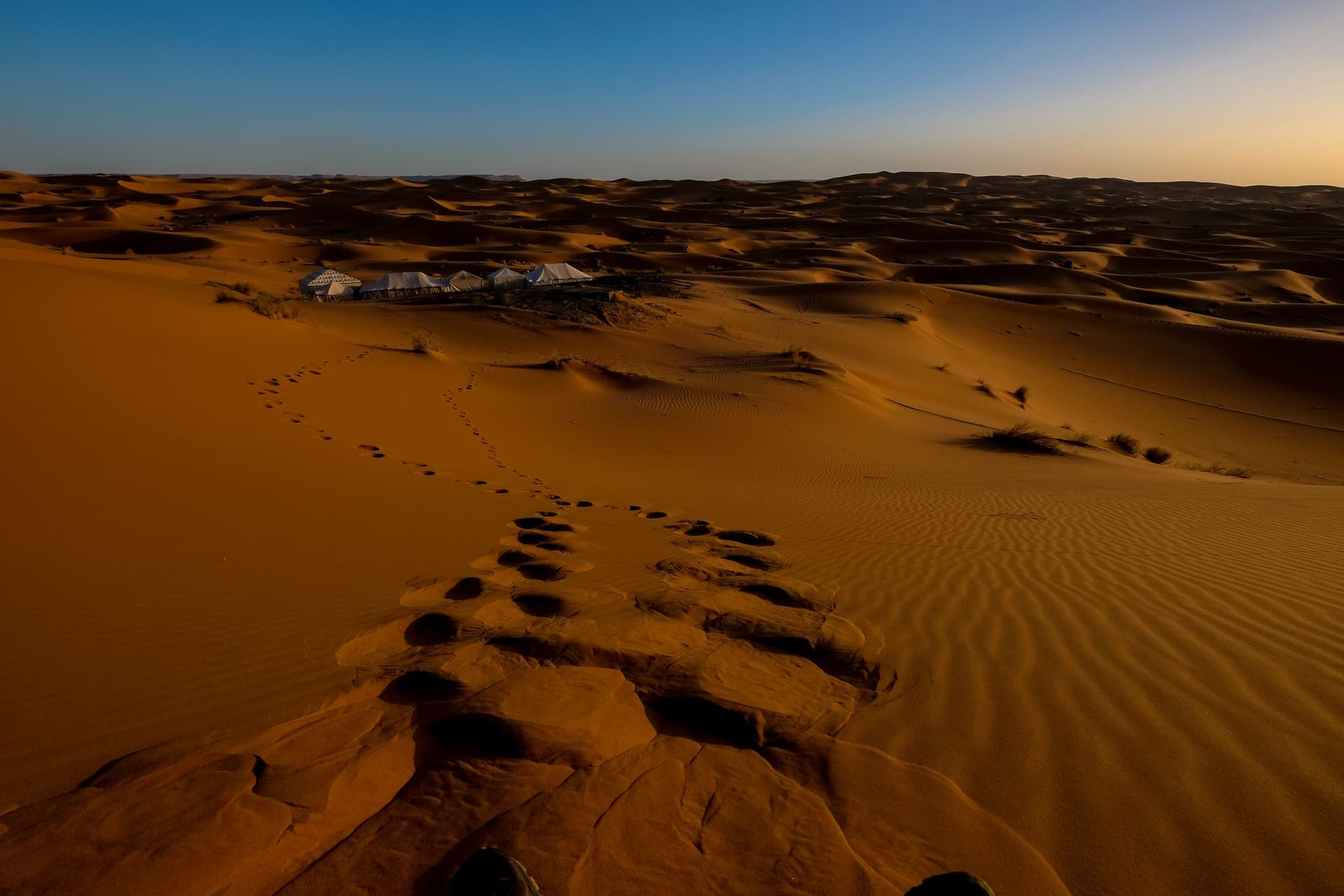
Marrakech to Merzouga — 3-Day Desert Tour
- Camel trek into Erg Chebbi dunes at sunset
- Overnight in a luxury Berber desert camp
- Stargazing with no light pollution at all
€230 / person for 6+
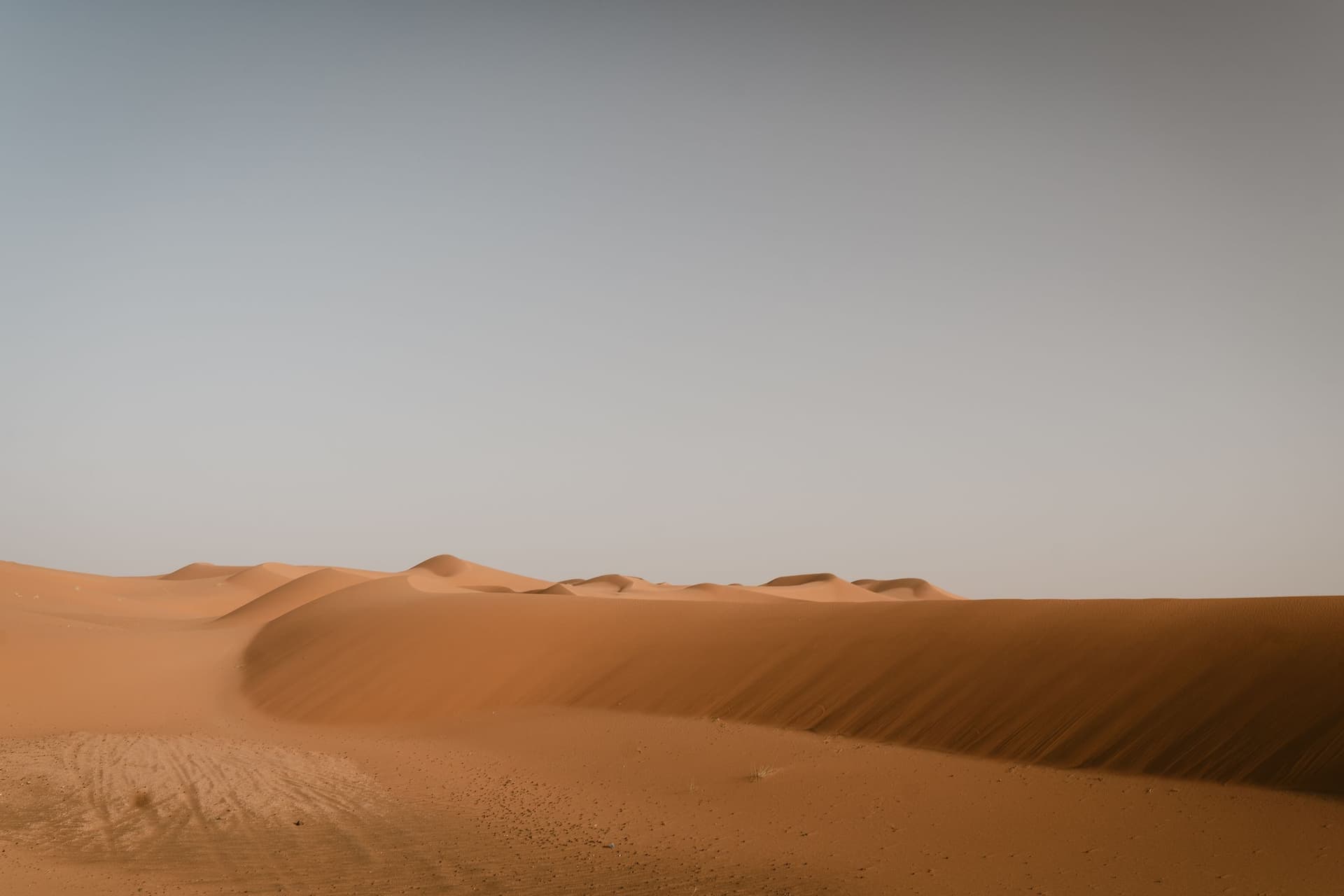
Marrakech Desert Grand Tour — 4 Days
- Full night at an Erg Chebbi desert camp — sunset and sunrise camel treks
- Todra Gorge — Morocco's most dramatic canyon (400 m walls, 4 km walk)
- UNESCO Ksar of Aït Ben Haddou — Gladiator and Game of Thrones location
€236 / person for 6+
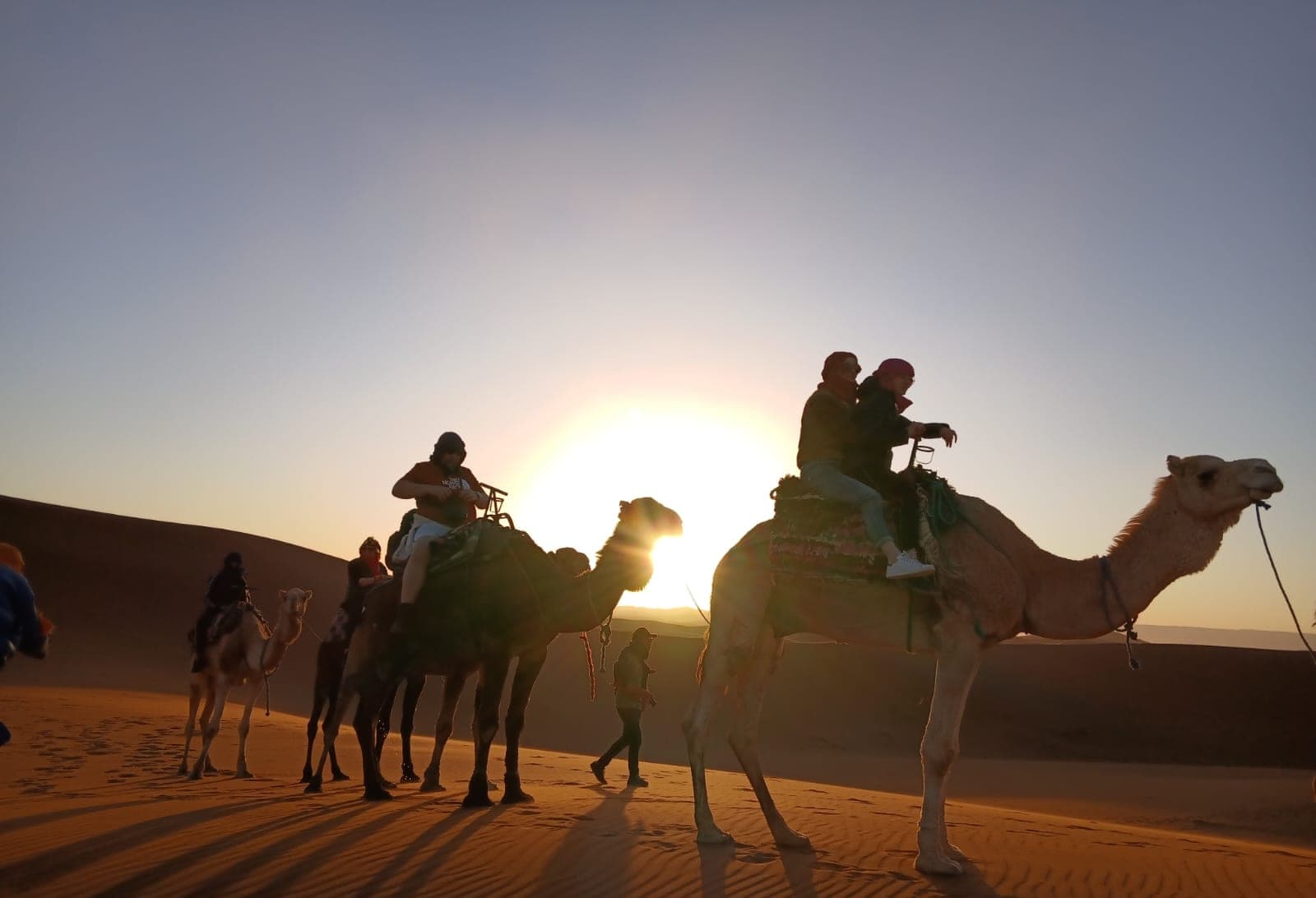
Merzouga Desert from Marrakech — 3-Day Shared Tour
- Tizi n'Tichka pass through the High Atlas
- UNESCO Ksar of Aït Ben Haddou
- Dades and Todra gorges
€120 / person