Camels are optional, the driving days are the real consideration, and a shared tour is not automatically the wrong choice. What actually matters when booking a Moroccan desert trip for older travellers.
We get this enquiry regularly, usually from someone booking for their parents, and usually phrased as a worry: is this too much for them?
Almost always, the answer is no — but not for the reason people expect, and the things that actually matter are not the things they ask about.
The camel is not the problem
This is the question everyone leads with, and it is the easiest to solve.
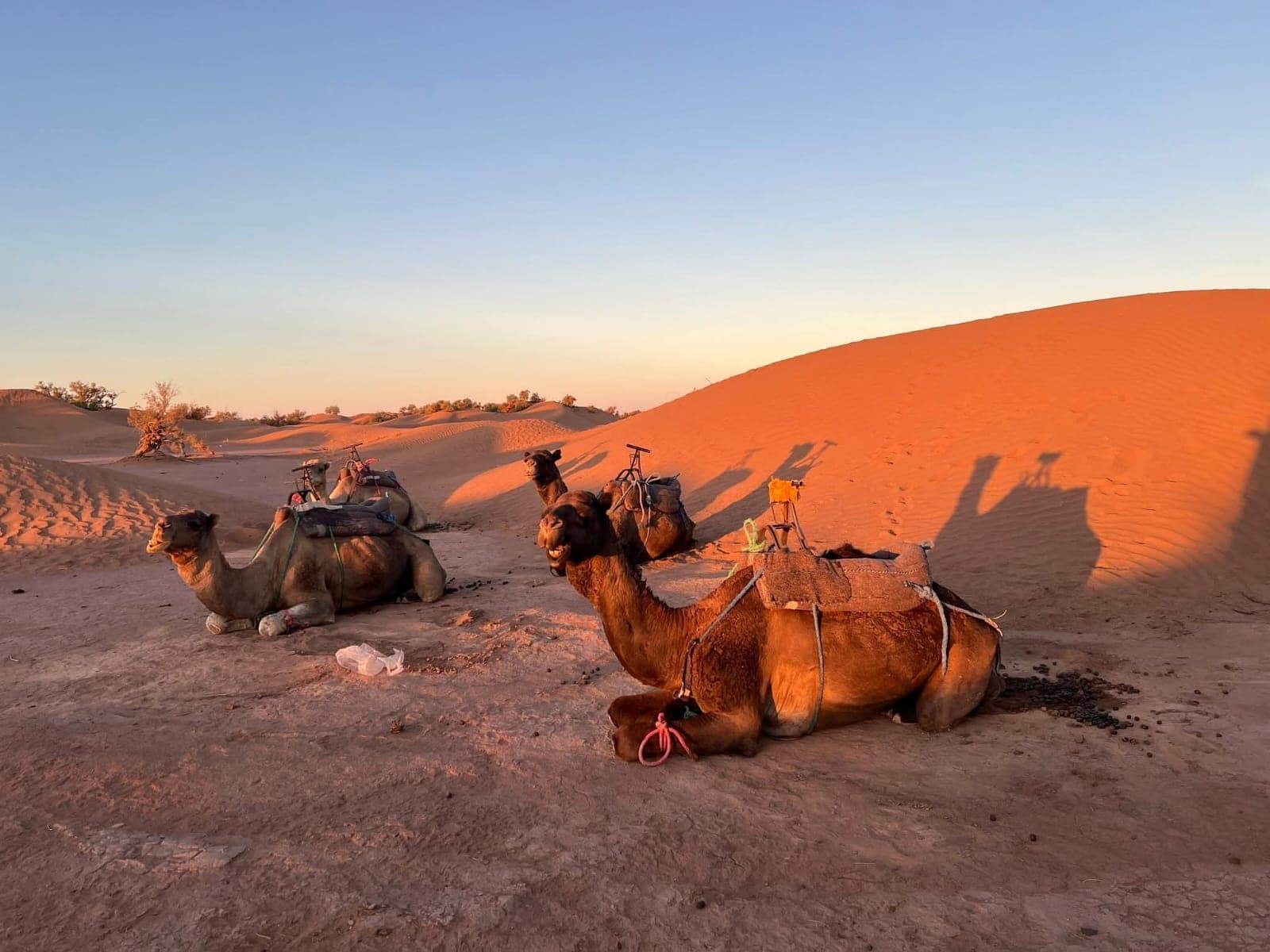
The camel ride into the dunes is how you normally reach the camp at Erg Chebbi. It takes about 45 minutes to an hour. Camels kneel to let you on and stand up in two lurching movements — front legs then back, or the reverse — and that motion is the part that gives people trouble, more than the ride itself.
If anyone would rather not, a 4x4 takes them to the camp instead. The rest of the group can still ride. Both arrive at the same place at the same time.
Say so at booking rather than at the trailhead. It is a completely routine request, but the vehicle has to be there.
The driving is the real consideration
Here is what nobody tells you clearly enough.
Morocco's desert is a long way from Marrakech. On the standard 3-day route:
- Day 1: about 7 hours' driving, roughly 420 km
- Day 2: about 5 hours, roughly 300 km
- Day 3: about 9 hours, roughly 560 km
That third day is the whole return journey in one go, and it is the part that tires people out — not the dunes, not the camel, not the camp. Nine hours in a vehicle is a long day at any age.
The fix is the 4-day itinerary. It covers the same ground but splits the return over two days with a night in Ouarzazate, so no single day is much over five hours. For older travellers this is usually the single most valuable change you can make to the trip, and it costs less than most people assume.
If the desert is not the fixed point, Zagora is a shorter run south — one driving day rather than two. The dunes are lower and less dramatic than Erg Chebbi, which is a real trade-off, but it is a genuinely easier trip.
Private or shared
The instinct is to assume older travellers need a private tour. Sometimes that is right, and sometimes it misses the point entirely.
Private gives you control. Stop when you want, take a longer break at the gorge, start later in the morning, ask the driver to pull over for a photograph. On a long driving day that flexibility is worth a great deal.
Shared gives you company. We have had enquiries where the whole reason for choosing a shared departure was that a traveller wanted their parents to meet other people rather than spending three days with only family. That is a completely valid reason, and it is not a compromise — it is the product they wanted.
The honest answer: if mobility, stamina or a medical consideration is in play, book private. If it is purely about sociability, shared is fine and the group is usually a broad mix of ages and nationalities.
What the days actually ask of you
Physically, a desert tour is undemanding:
- Getting in and out of a 4x4 or minibus, several times a day
- Walking on uneven ground at Aït Ben Haddou, which is a hillside kasbah with steps and no handrails
- A short, gentle walk at the Todra Gorge, on the flat
- Walking on sand at the camp — soft going, but short distances
- Optionally climbing a dune at sunrise, which is genuinely tiring and entirely optional
Nothing is timed. Nothing requires fitness beyond walking comfortably for twenty minutes.
Aït Ben Haddou is the one to think about. The old ksar is built up a hillside, the surfaces are uneven earth and stone, and the climb to the top is steep. Plenty of people admire it from the bottom, photograph it from the bridge, and skip the climb — the view from below is the famous one anyway.
Accommodation
Ask for specifics, as you would anywhere.
For older travellers the questions worth asking are: does the room have a private bathroom, is there a shower rather than only a bath, how many stairs, and — at the desert camp — is the bathroom in the tent or in a shared block a walk away.
At Sahara Garden, the camp we use in Erg Chebbi, tents are private with their own bathroom and shower. At standard camps on shared departures, the sleeping tent is private and the washing facilities are shared. Neither is worse; they are different, and at 70 the difference matters more than at 25. Our desert camp guide goes through this properly.
Getting up at 3am and walking a hundred metres across sand to a shared block is a genuine consideration. It is worth paying to avoid if it applies to you.
Heat, cold and season
Summer is the thing to avoid. July and August at Erg Chebbi routinely pass 43C, and that is hard on anybody.
Spring and autumn are the easy answer — March to May, September to November, comfortable by day and mild at night.
Winter is genuinely good if you pack for it: pleasant 18-22C afternoons, and nights that can approach freezing. Camps supply heavy blankets, but bring a warm layer, a hat, and warm socks. Our winter desert guide covers this properly.
Medical, practically
- Bring medication in your day bag, not the main luggage, and bring more than the trip needs
- Tell the operator about anything relevant at booking — mobility, heart conditions, diabetes. Not to be refused, but so the guide knows
- Merzouga has a small clinic. Serious cases go to Errachidia, about two hours away
- Travel insurance with medical cover is not required by us but is strongly recommended
- Bring copies of prescriptions if you carry anything unusual
The short version
The desert is far more accessible to older travellers than most people assume. The camel is optional, the walking is modest, and the camps are more comfortable than the word "camp" implies.
The thing that actually determines whether the trip is a pleasure or an endurance test is the length of the driving days — and that is a booking decision, made before you leave home.
4-day desert tour — the one we usually recommend · 3-day private · 2-day Zagora
Frequently asked questions
Do I have to ride a camel on a Morocco desert tour?
Is a Sahara desert tour suitable for someone in their sixties or seventies?
How long are the drives on a Morocco desert tour?
Should older travellers book a private or a shared desert tour?
Trips that go here
Guided by the team who wrote this guide.
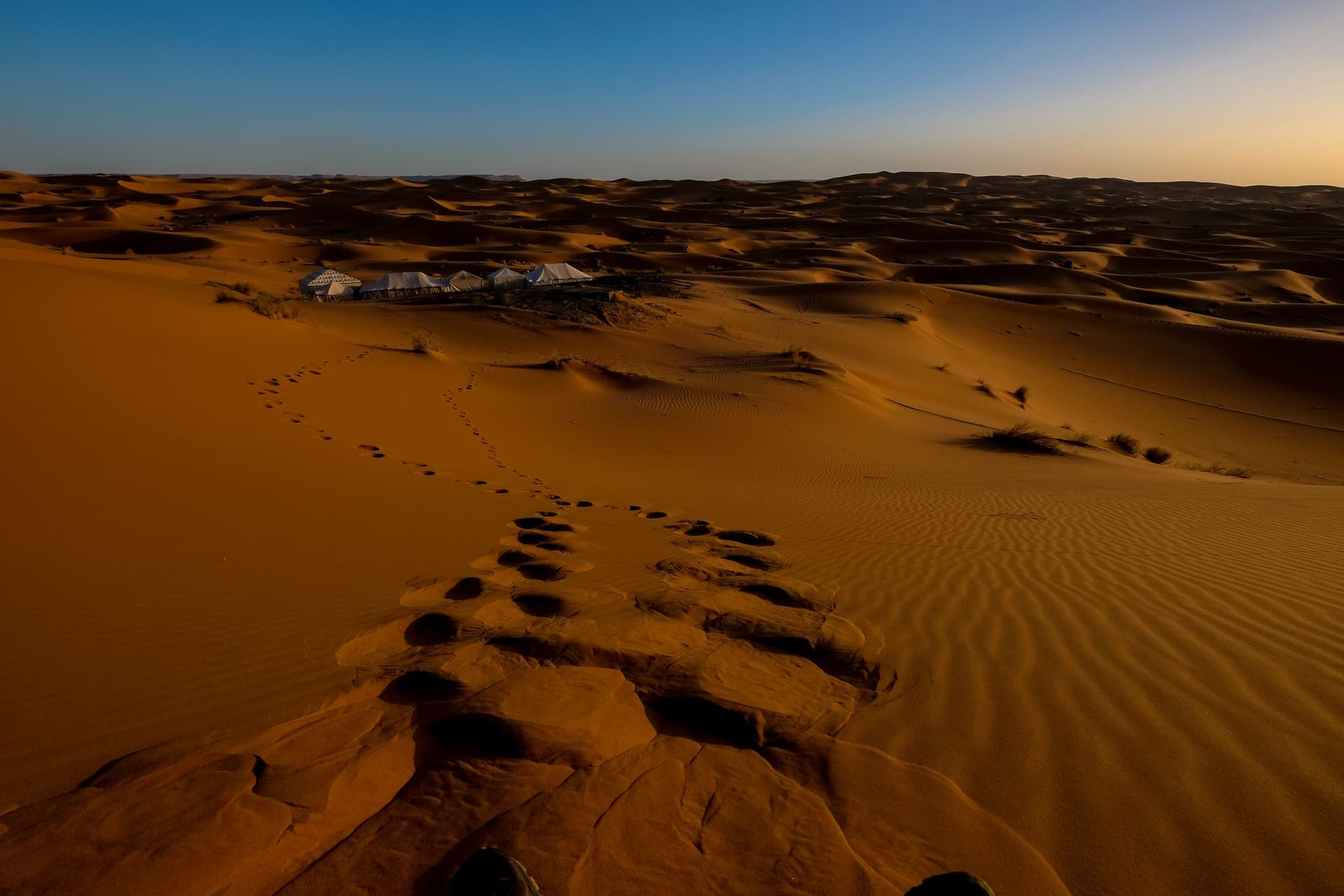
Marrakech to Merzouga — 3-Day Desert Tour
- Camel trek into Erg Chebbi dunes at sunset
- Overnight in a luxury Berber desert camp
- Stargazing with no light pollution at all
€230 / person for 6+
Marrakech Desert Grand Tour — 4 Days
- Full night at an Erg Chebbi desert camp — sunset and sunrise camel treks
- Todra Gorge — Morocco's most dramatic canyon (400 m walls, 4 km walk)
- UNESCO Ksar of Aït Ben Haddou — Gladiator and Game of Thrones location
€236 / person for 6+
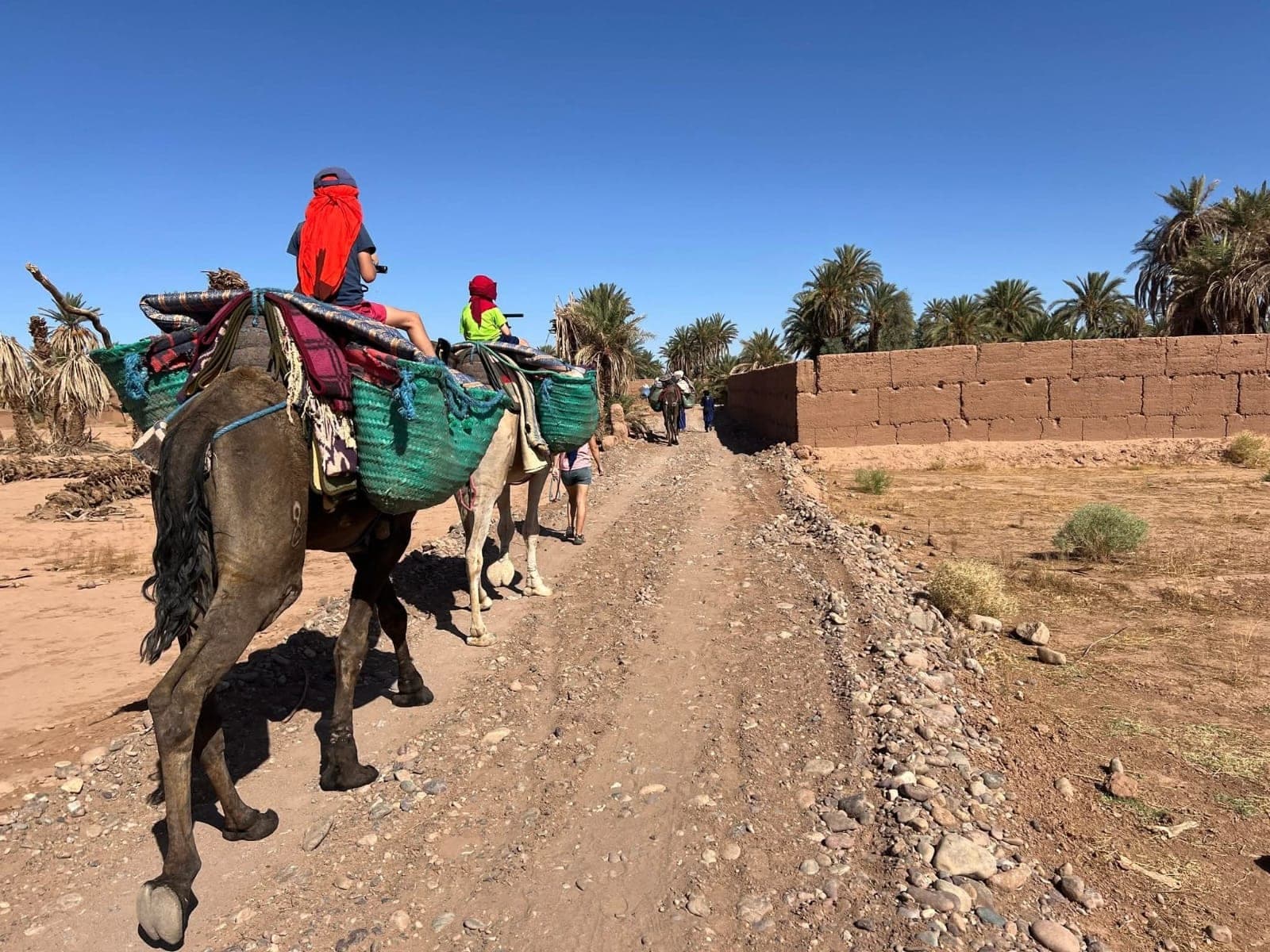
Marrakech to Zagora — 2-Day Desert Tour
- Draa Valley — Morocco's longest oasis, 200 km of date palms and kasbahs
- Camel trek on the Erg Lehoudi dunes at sunset
- Overnight in a Berber desert camp with traditional music
€98 / person for 14+