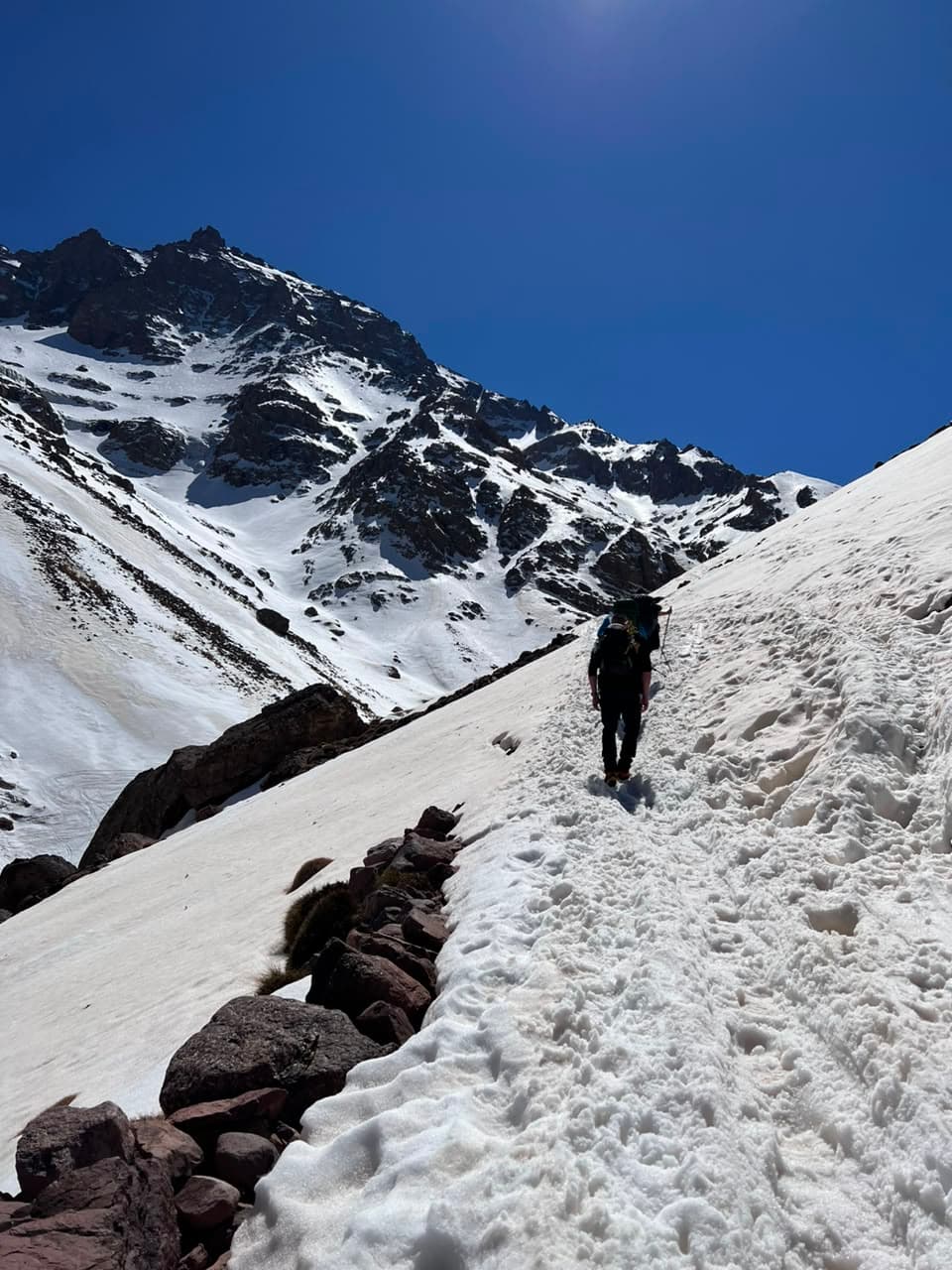
Toubkal is a long walk at altitude, not a climb — but that undersells it. What the trek actually demands of your legs and lungs, and who struggles on it.
"Is Toubkal hard?" gets two unhelpful answers online. One says it is just a walk and anyone can do it. The other treats 4,167 metres as if it were serious mountaineering. Both are wrong in ways that get people into trouble.
Here is the honest version, from guides who walk it constantly.
The short answer
Toubkal is a long, steep walk at altitude. On the normal summer route there is no climbing, no rope, and no exposure that requires technical skill. What there is: two big days on rough ground, a pre-dawn summit push, and enough altitude that your body notices.
If you can walk uphill for five hours with a daypack and still function the next morning, you have the physical base. Whether you summit comfortably depends more on altitude and pacing than on strength.
What the trek actually asks of you
The standard route from Marrakech gives you a transfer of about an hour and a half to Imlil, then the walk in.
- The approach. Up the Aït Mizane valley, past the shrine at Sidi Chamharouch, to the Toubkal Refuge at 3,207 metres. Four to five hours of steady, unrelenting uphill. Not steep enough to need your hands, long enough to be a real day.
- Summit day. A pre-dawn start, roughly three hours up the South Cirque to the summit at 4,167 metres. Loose rock and scree underfoot, thin air, cold and often windy. The gradient is the hardest of the trek.
- The descent. Down to the refuge, then often all the way to Imlil — four to five hours of downhill in total. This is where the difficulty hides, and where most complaints come from afterwards.
That last point deserves emphasis. People train for going up and are ambushed by coming down. Descending on tired legs, on loose ground, for hours, is what leaves knees sore for a week — and there is a real physiological reason it hurts more than the climb, not just perception. Going uphill, your quad muscles shorten as they work, which is a relatively efficient kind of contraction. Going downhill, those same muscles have to lengthen under load with every step, fighting gravity to stop your knee buckling rather than driving you forward — a type of contraction that generates significantly more tension in the muscle and more compressive force behind the kneecap than climbing does. Sports science research on downhill and stair descent consistently finds this eccentric loading is the harder work, even though it feels easier in the moment because you are not gasping for breath. Your lungs stop complaining on the way down. Your knees do not.
Altitude is the real difficulty
Fitness gets you up the valley. Altitude decides how the summit feels.
At 4,167 metres there is meaningfully less oxygen in each breath. The common effects are headache, poor sleep at the refuge, loss of appetite, and everything simply feeling harder than it should. This is normal, and it is not proportional to how fit you are — strong athletes get hit precisely because they push hard early.
The things that actually help:
- Go slowly on the approach. The pace that feels absurdly easy on day one is the correct pace.
- Drink more than you want to. Dehydration and altitude symptoms overlap heavily.
- Give yourself an extra day if you can. This is the single biggest lever available to you.
Two days or four?
Both itineraries reach the same summit. The difference is how much room your body gets.
The two-day trip is efficient: up to the refuge, summit at dawn, back to Marrakech. It works, and fit walkers do it regularly. But you go from city altitude to 4,167 metres in about thirty hours, which is a lot to ask.
The four-day version walks in more gradually and includes time to acclimatise before the summit push. For most people this is the difference between grinding out a summit and enjoying one. We compare them properly in Toubkal in 2 Days or 4, and run both — the 2-day and the 4-day — so the honest advice is to pick by how much time your body gets, not by price.
Winter is a different mountain
Everything above describes summer. From roughly November to March, snow covers the upper route and Toubkal stops being a walk. Crampons, an ice axe, and the knowledge to use them become mandatory, and the consequences of a slip change entirely.
Fit beginners do summit in winter, but only with a guide qualified for winter conditions. See Climbing Toubkal in Winter.
So who finds it hard?
In our experience the people who struggle are, in order:
1. Those who went too fast on the first day.
2. Those on the shortest itinerary with no acclimatisation.
3. Those who did not drink enough.
4. Those who underestimated the descent.
Notice that raw fitness is not on that list. It matters, but pacing and time at altitude matter more, and both are things you can control before you book.
How to train, if you want to
Nothing exotic. Long walks on hilly ground, ideally on consecutive days, carrying the daypack you will actually use. Add hills wherever you can. If you have access to a mountain, walk up and down it.
Strengthening for the descent is the underrated part — quads and knees take the load going down, and that is the half of the trek people forget to prepare for.
The verdict
Toubkal is achievable for a determined person of ordinary fitness who takes the altitude seriously. It is not a stroll, and treating it as one is how people end up turning around below the summit.
Give it the longer itinerary if your schedule allows, walk slower than feels necessary, and the roof of North Africa is well within reach.
Frequently asked questions
Can a beginner climb Toubkal?
Is Toubkal a technical climb?
How long is summit day on Toubkal?
How do I train for Toubkal?
What makes people fail to summit Toubkal?
Trips that go here
Guided by the team who wrote this guide.
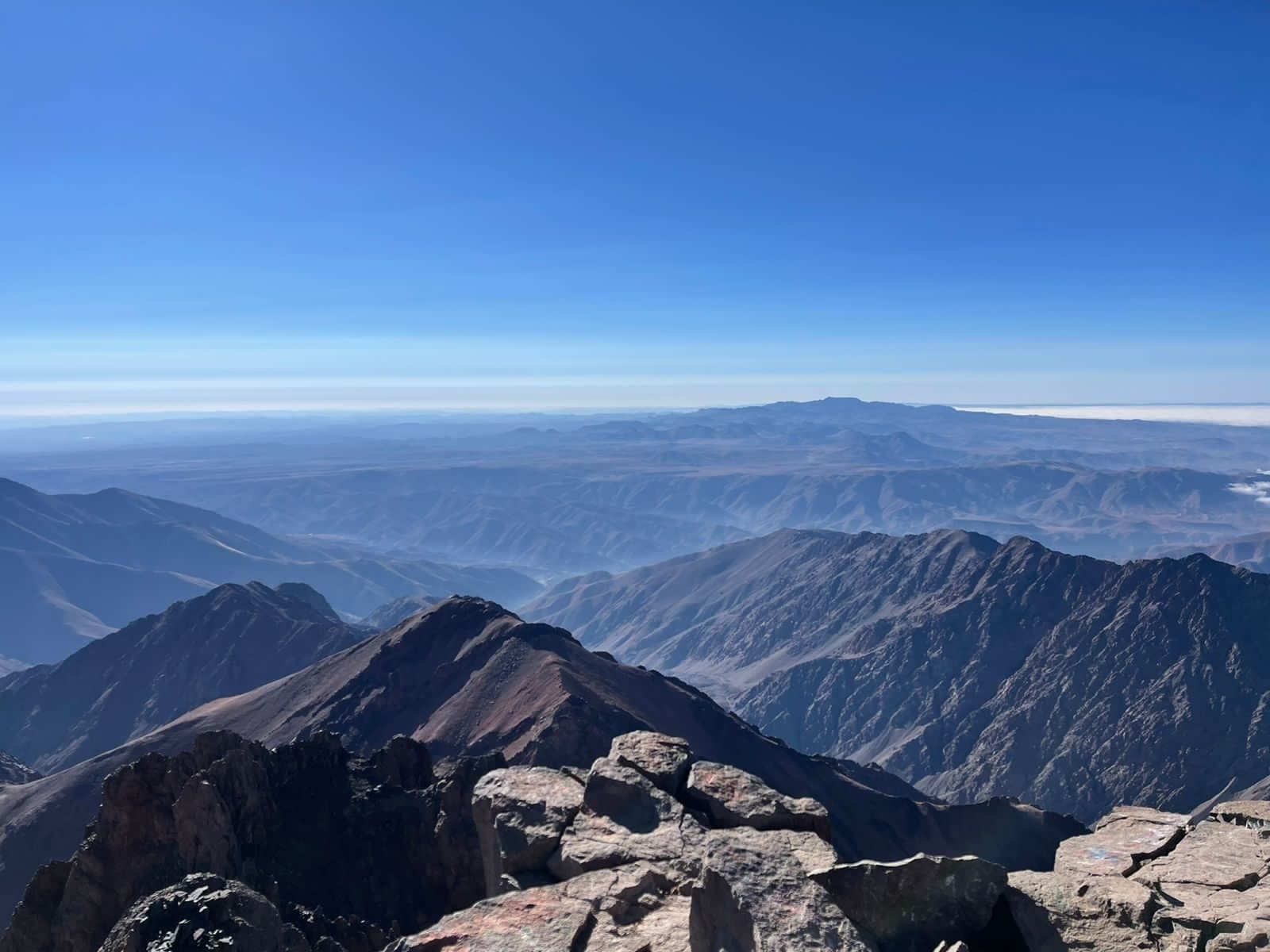
Mount Toubkal Express — 2-Day Summit from Marrakech
- Summit Jbel Toubkal (4,167 m) in just two days from Marrakech
- Overnight in the Toubkal Refuge at 3,207 m
- Pass the Sidi Chamharouch shrine and its waterfall
€153 / person for 6+
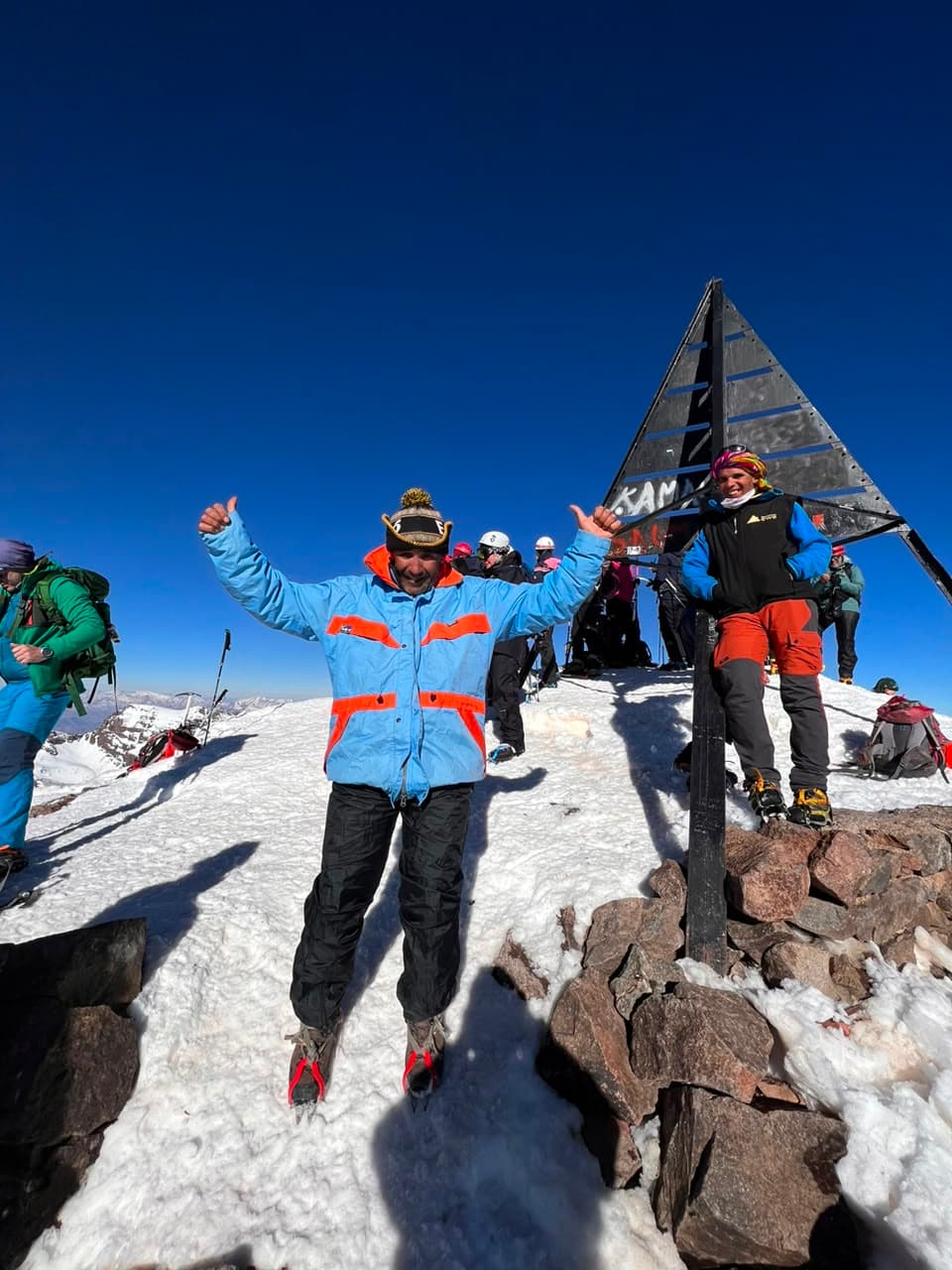
4-Day Toubkal Summit Trek from Marrakech
- Summit Jbel Toubkal at 4,167 m — highest peak in North Africa
- Sleep in traditional Berber mountain refuges at 3,207 m
- Start in the trailhead village of Imlil, deep in the Atlas
€260 / person for 6+
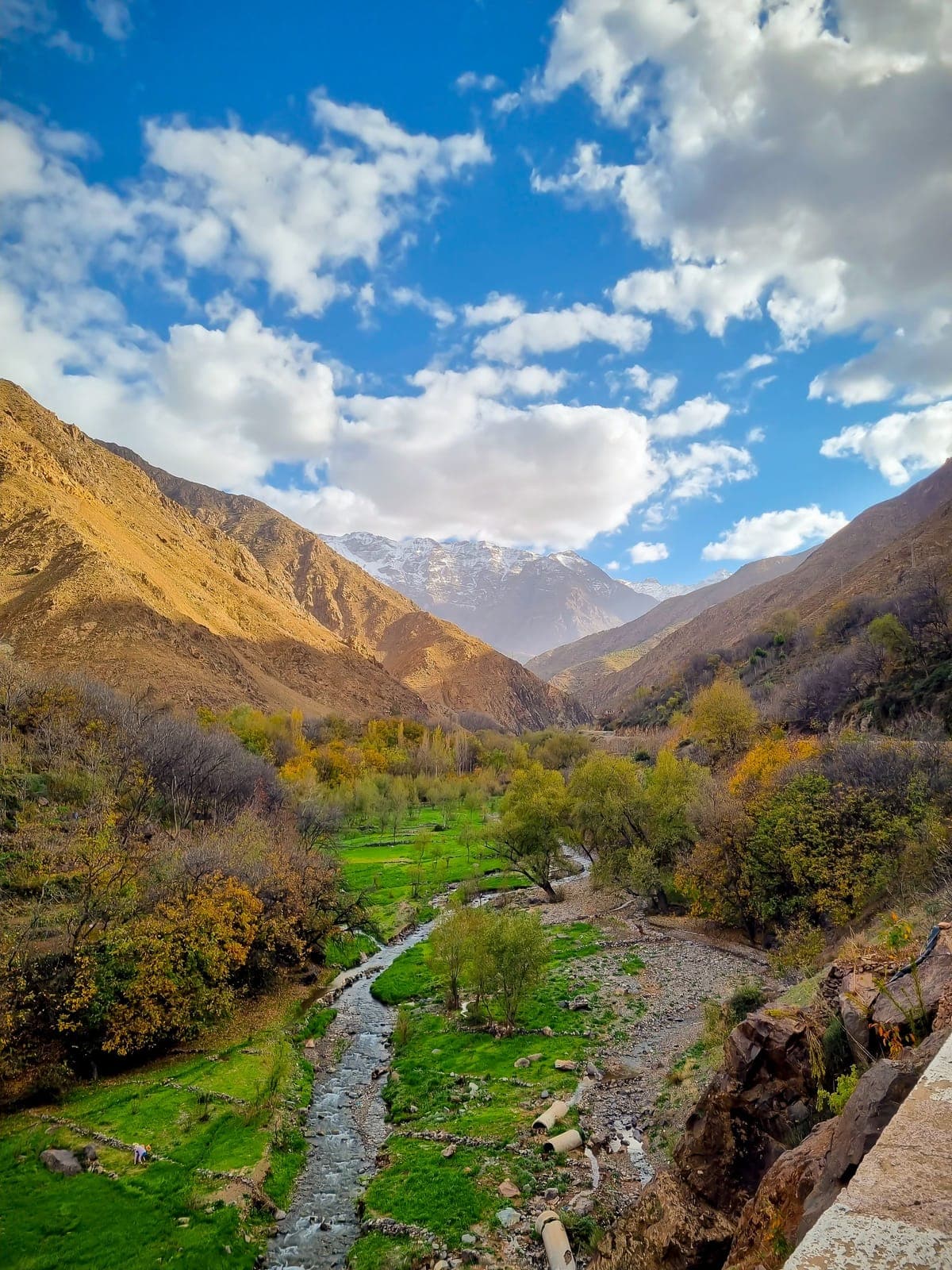
Toubkal via Aguelzim Pass from Marrakech — 3-Day Trek
- Trek the wild Azzaden Valley — quieter and greener than the standard route
- Pass the spectacular Ighouliden (Tamsoult) waterfalls
- Cross the high Aguelzim Pass at 3,560 m
€230 / person for 6+